

AI Render Studio Review: Sketch-to-Image AI for Architecture and Interior Design
AI Render Studio is a browser-based AI rendering platform built specifically for architects and interior designers. It converts hand-drawn sketches, CAD exports, and 3D model screenshots into photorealistic visuals without requiring specialized rendering knowledge or powerful local hardware.
 Sinan Ozen20 March 20267 Mins read240

Table of Contents Show
AI Render Studio is a cloud-based rendering platform trained specifically on architectural and interior design data. It converts hand-drawn sketches, napkin drawings, CAD exports, and 3D model screenshots into photorealistic visuals, typically in under a minute, without requiring local rendering hardware or specialized 3D skills. The company quotes an average of about 12 seconds per render and positions the platform as a practical alternative to time-consuming traditional rendering pipelines.

What Is AI Render Studio and How Does It Work?
At its core, AI Render Studio is an image-to-image AI engine fine-tuned on architectural and interior design content. Unlike general-purpose image generators, it is built to understand spatial relationships, material properties, lighting behavior, and design language specific to architecture.
The workflow is straightforward. You export a viewport screenshot or a sketch from your CAD software, upload it to the platform, select a design style (from Scandinavian minimalist to Baroque maximalist), adjust parameters such as lighting conditions and material preferences, and optionally add a descriptive text prompt. The system then generates one or more photorealistic variations in seconds. From there, you can iterate, fine-tune, or download the result in high resolution for client presentations or portfolio use.
The platform is entirely browser-based, which means no installation is required and it runs on any operating system. This makes it accessible for sole practitioners working on a laptop as much as for larger firms running multiple projects in parallel.
💡 Pro Tip
When uploading a hand-drawn sketch, use a clean black-and-white line drawing rather than a pencil sketch with shading. The AI interprets sketch lines as architectural geometry, so cleaner line work results in more accurate material interpretation and fewer unwanted artifacts in the final render.

Key Features of AI Render Studio
AI Render Studio covers several distinct use cases that are relevant across different phases of an architectural project.
Sketch and CAD-to-Photorealism
The platform accepts hand sketches, concept drawings, and viewport exports from SketchUp, Revit, Rhino, AutoCAD, Blender, 3ds Max, ArchiCAD, and Lumion. Any standard JPG or PNG export from these applications works as input. This is particularly useful during early-stage concept development, when you want to show a client a realistic direction without committing to a full 3D model.
Exterior and Interior Rendering
The tool handles both exterior and interior scenarios. For exteriors, it adds realistic materials, natural lighting, contextual landscaping, and shadows based on the uploaded model. For interiors, it applies furnishing options, finish materials, atmospheric lighting, and spatial mood based on your prompt and style selection. Multiple viewing angles can be generated from the same base input.

Style Library and Design Variations
A broad range of architectural styles is available, covering everything from minimalist Scandinavian and Japanese Wabi-Sabi to maximalist Baroque and industrial aesthetics. Generating three or four style variations from a single sketch takes roughly the same time it used to take to produce one traditional render. This is genuinely useful during client approval stages, where showing multiple directions in a single meeting can accelerate decision-making significantly.
📌 Did You Know?
AI Render Studio says most renders finish in around 12 seconds and that one credit buys one render, against the hours a traditional ray-traced frame can take or the $200 to $2,000 per image it cites for outsourcing to a render studio. These are the company’s own figures (as of October 2026), so test them on your own projects with the free credits.
Prompt-Guided Control
Beyond style presets, users can guide the output using descriptive text prompts. You might specify “exposed concrete facade, warm afternoon light, lush street-level planting” to steer the AI toward a specific material and atmospheric outcome. This preserves your design intent while giving the AI enough flexibility to produce a photorealistic result. Advanced users can layer prompts with parameter adjustments for finer control over composition and mood.
Who Is AI Render Studio Best For?
The platform serves a wide range of users in the architecture and design space, though some roles benefit more than others.
Architects in early-stage design development get the most out of it, since producing convincing concept visuals before a full 3D model exists is exactly where the platform performs best. Interior designers similarly benefit during mood-boarding and client approval phases, when showing materiality and atmosphere in a realistic format can shorten revision cycles.
Architecture students building portfolios can use AI Render Studio to elevate academic projects into presentation-ready visuals without access to expensive rendering hardware. Real estate developers and marketing teams also use it to generate property marketing imagery from CAD files before construction begins.
If your workflow relies heavily on precise material accuracy for final construction documentation or large-format print, a fully manual rendering pipeline using V-Ray or Twinmotion may still be necessary for the final pass. AI Render Studio works best as a concept and client-facing tool rather than a production-grade output for technical submissions.
⚖️ Pros & Cons at a Glance
✔️ Pros: No installation required, works from any CAD export, fast iteration (seconds per render), accepts hand sketches, broad style library, commercial use rights included
✖️ Cons: Output accuracy depends on input quality, may not replace final production renders for highly technical projects, credit-based pricing can add up for high-volume users

Is AI Render Studio Free?
Yes, partially. Every new account receives 3 free renders without requiring a credit card at signup. This is enough to test the platform with a real project and evaluate output quality before committing to a paid plan.
Beyond the free credits, the platform sells one-time credit packs rather than subscriptions: 50 renders for $19, 200 for $39 and 500 for $99, and the credits never expire (as of October 2026). Every pack includes 4K upscaling and full commercial rights, meaning you can use the renders in client presentations, competition submissions, marketing materials, and portfolios without additional fees or attribution requirements.
The pricing page lists no team or enterprise tier, so firms with heavy use should contact the company about volume needs. For most practitioners, the 200-render pack is the middle ground the company marks as its most popular option.
How Does AI Render Studio Compare to Other AI Tools for Architecture?
The market for AI tools for architectural design has expanded quickly, and AI Render Studio sits in a well-defined position within it. Tools like Midjourney and Stable Diffusion are general-purpose image generators that can produce architectural imagery with the right prompting, but they are not trained on spatial or material understanding specific to design workflows. They also lack the ability to take a SketchUp export and preserve its geometry.
Specialized competitors include platforms like ArchiVinci, Rendair AI, and ReRender AI, which follow a similar sketch-to-render model. The differentiating factor for AI Render Studio is its stated architectural domain training and the degree of parameter control it offers, including style transfer, prompt guidance, and 4K upscaling included with every credit pack. It also explicitly supports napkin sketches and hand drawings as inputs, which not every competitor handles well.

Comparison: AI Render Studio vs Traditional Rendering Pipelines
The following table summarizes the key differences between AI Render Studio and conventional rendering approaches for architecture visualization.
| Factor | AI Render Studio | Traditional Rendering (V-Ray, Twinmotion) |
|---|---|---|
| Time per render | Seconds to minutes | Hours to days |
| Hardware required | Browser only (cloud-based) | Powerful GPU workstation |
| Input type | Sketches, screenshots, CAD exports | Full 3D model required |
| 3D modeling skills needed | None required | High proficiency required |
| Iteration speed | Multiple variations in minutes | Each change requires re-render |
| Output precision | High for concept work, variable for details | Precisely controlled by user |
| Best use case | Concept, client presentations, early-stage | Final marketing imagery, technical documentation |
💡 Pro Tip
Many experienced architects use AI Render Studio and traditional rendering in tandem. Use AI renders for early client alignment and concept direction, then switch to V-Ray or Twinmotion for final marketing and construction-phase imagery. This hybrid approach can cut overall visualization cost per project significantly without sacrificing quality at the final delivery stage.
Using AI Render Studio for Interior Design Projects
For interior designers, the tool removes one of the most common bottlenecks in client communication: the gap between a designer’s material specification and a client’s ability to visualize it. Rather than presenting a mood board with fabric swatches and finish chips, you can upload a basic room sketch or a SketchUp interior and show a photorealistic version with the exact material palette you intend to specify.
The platform’s interior rendering module applies furniture, lighting design simulation, and atmospheric mood to the generated image. Styles range from warm residential tones to clean commercial aesthetics, and prompt-based guidance allows for fine-tuning. For interior designers working on residential projects, being able to show three kitchen material schemes in a single client meeting rather than one polished board per revision is a practical workflow shift.
If you work regularly with clients on interior fitouts, this type of tool connects well with the broader shift toward AI trends for architects and interior designers, where speed of visualization directly influences the pace of project decisions.
⚠️ Common Mistake to Avoid
A common mistake when first using AI rendering tools is treating the AI output as a finished product for technical submissions. AI-generated renders are excellent for client-facing communication and concept alignment, but they should not replace coordinated construction drawings or specification-accurate visualizations for contractors. The AI interpolates material appearances rather than calculating them from physical properties, so surface finishes and proportions may differ slightly from your actual specification.

Final Thoughts: Is AI Render Studio Worth It for Architects?
AI Render Studio is a well-designed platform that addresses a real pain point in architectural practice: the cost and time involved in producing client-ready visuals during the concept and design development phases. Its browser-based workflow, broad software compatibility, and support for hand sketches make it genuinely accessible regardless of your existing toolset.
The 3 free renders available on signup make it easy to test with your own projects before any financial commitment. For practitioners who regularly present design options to clients, the platform can accelerate proposal approval and reduce revision cycles, which has a measurable impact on project economics.
For those looking at broader best AI for architecture comparisons, AI Render Studio holds up well specifically in the sketch-to-render and early-stage visualization categories. It is not the right tool for every phase of a project, but for the phases where it fits, it fits well. You can explore the platform at airender.studio.
✅ Key Takeaways
- AI Render Studio is specifically trained on architectural data, giving it a meaningful edge over general-purpose AI image tools for design visualization.
- The platform accepts hand sketches, CAD exports, and 3D model screenshots from all major design software including SketchUp, Revit, Rhino, and Blender.
- 3 free renders are available at signup with no credit card required, making it practical to test with real projects before committing.
- It works best as a concept and client-facing tool during early design phases, rather than as a replacement for final production renders.
- The hybrid approach of using AI rendering for concept work alongside traditional tools for final deliverables maximizes both speed and output quality.



Notion Alternatives for Architects: 7 Tools That Fit Studio Work
Notion works until a studio needs fee tracking, phase budgets and timesheets....
 Furkan Sen7 Mins read

Why Every Practice Ends Up With Five Versions of the Same Revit Family
Let’s learn why Revit family libraries accumulate duplicates, break schedules and slow...
 illustrarch Editoral Team5 Mins read
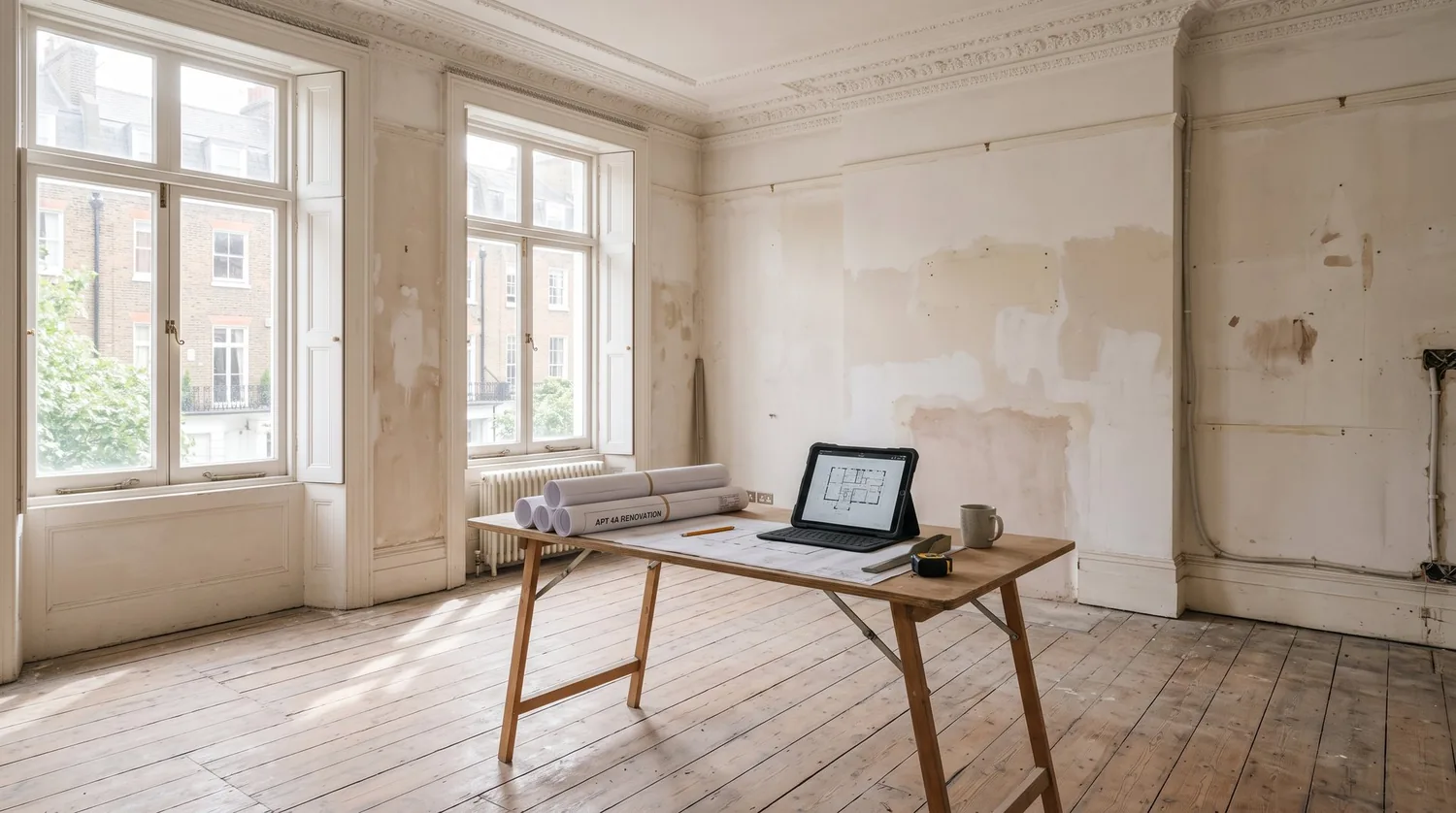
Visualizing Renovation Projects From Photographs: A Workflow for Existing-Building Work
Photo-based visualization turns a photograph of a building that already exists into...
illustrarch Editoral Team7 Mins read

Best Free CAD Blocks and Resources for Architects
A working guide to free CAD blocks for architects, covering ARCAT, CAD-Blocks.net,...
Furkan Sen7 Mins read


Leave a comment