



The Office and Housing Complex by Joe Mihanovic reimagines mixed-use density in Los Angeles as a loose collage of geometrically similar yet contextually distinct masses, each one offering a diversity of experience and unexpected moments of socialization. Rather than stacking a single repeated block, the scheme spreads a family of related volumes across the site, letting the spaces between them do as much work as the buildings themselves.
Every volume is derived from the same operative strategy: the aggregation of truncated cones and the Boolean subtraction and subsequent rearrangement of prismatic masses. The newly created voids become semi-protected gathering spaces, while the curvilinear building envelope invokes a sense of spontaneity. Because each mass varies in orientation, scale and the angle of its subtractive cut, the major volumes hold their own distinct presences on the site even though they share a common genetic logic. The hull-like forms accommodate housing, while the more gestural moments act as urban landmarks. Each is distinct, yet none is segregated from the whole.
Connection as a design principle
The volumes are tied together by an often-cantilevering network of tubes, hulls and spikes that both link separate masses and lend a general sense of interconnectivity through forced alignment. This emphasis on connective tissue speaks to one of the central problems of mixed-use development: how to combine workplaces and dwellings so that residents gain privacy without the project turning into a set of isolated silos. By making circulation visible and sculptural, the design keeps neighbours aware of one another while still protecting the quieter pockets reserved for home life.
Housing of this kind also has to respond to its city. Los Angeles rewards architecture that engages the street and the sun, and the complex’s curving envelope and carved voids create shaded thresholds and informal courtyards well suited to the local climate. The looseness of the arrangement leaves room for ground-level activity, a quality that strong apartment and workplace schemes rely on to feel alive at different hours of the day.
What lingers about Mihanovic’s proposal is its refusal to choose between order and surprise. A single repeatable operation generates the family of forms, yet the result reads as a small, animated district rather than a uniform block, and that balance is exactly what gives the complex its character.




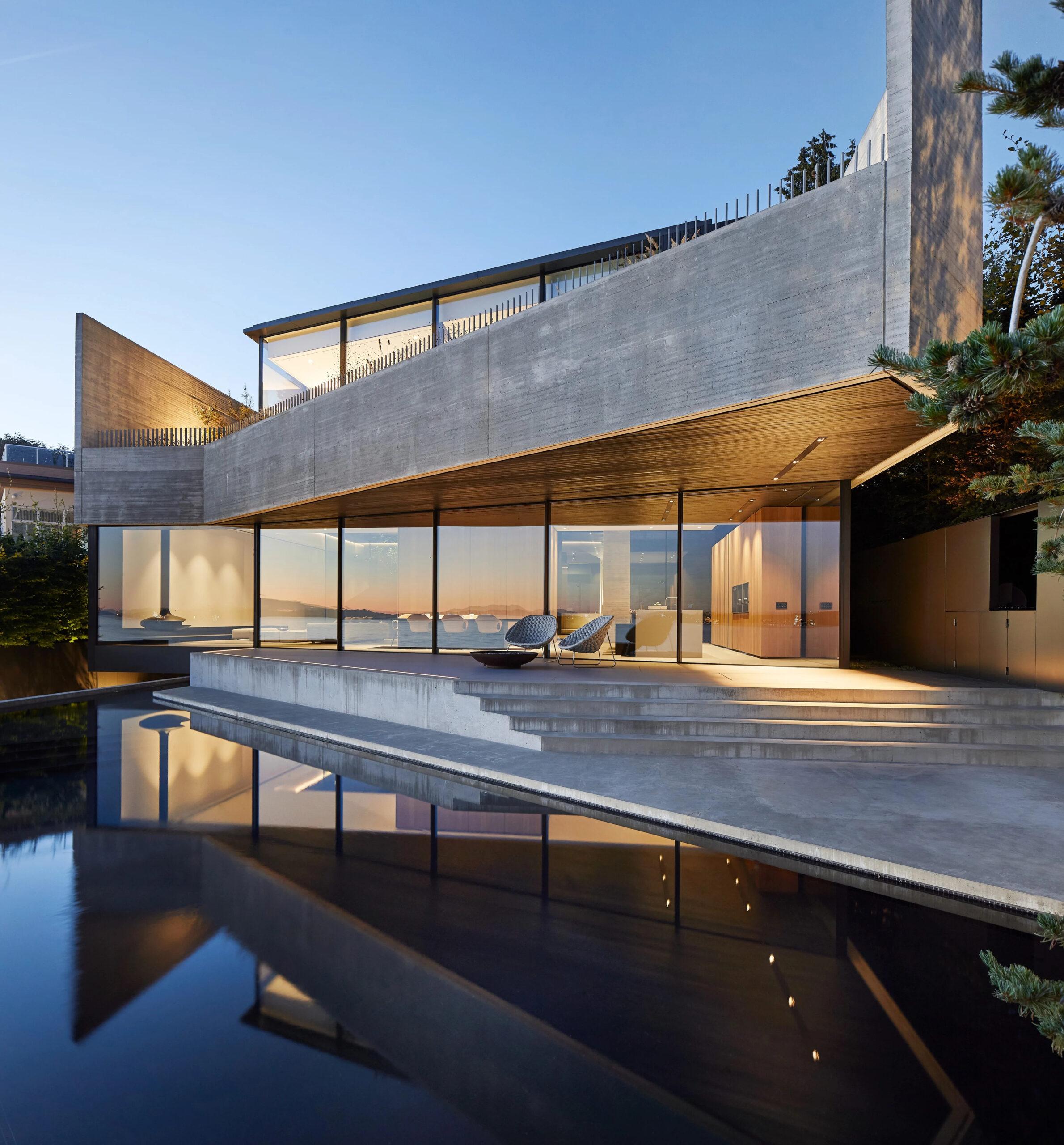
Designing a Liminal Space Where Urban Meets Coastal
The Liminal House by Mcleod Bovell Modern Houses in West Vancouver is...
 Elif Ayse Sen5 Mins read

NAB 3 Parramatta Square & NAB 2 Carrington St. Offices by Woods Bagot
NAB 3 Parramatta Square and NAB 2 Carrington Street by Woods Bagot...
 Begum Gumusel4 Mins read
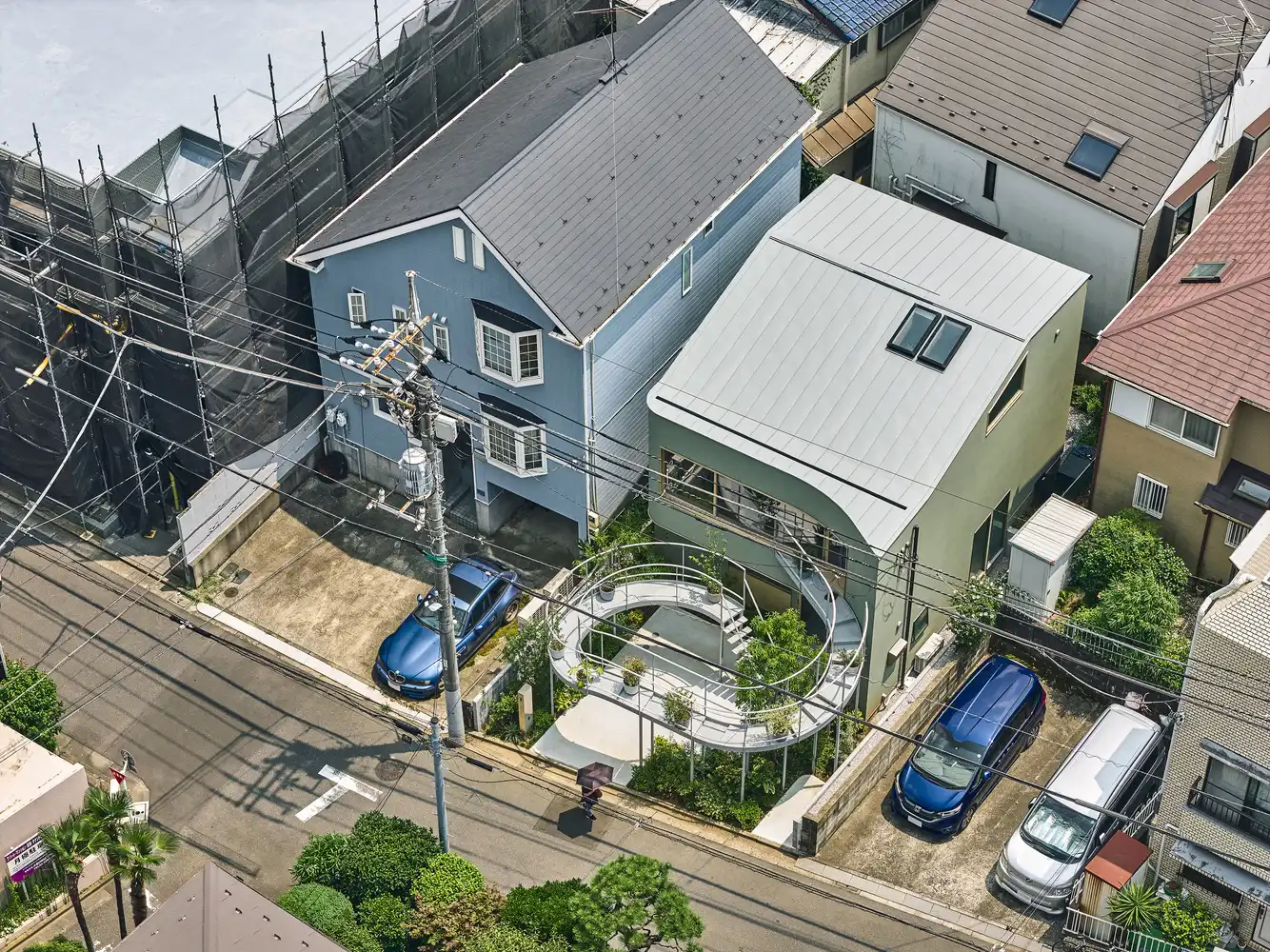
House in Nakano: A 96 m² Tokyo Architecture Marvel by HOAA
Project Completed Architect HOAA (Hiroyuki Oinuma) Location 🇯🇵 Nakano, Tokyo, Japan Typology...
 Bahattin Duran5 Mins read

Bridleway House by Guttfield Architecture
Bridleway House by Guttfield Architecture is a barn-inspired timber extension that reframes...
Begum Gumusel3 Mins read


Leave a comment