

Architectural Styles History: Why Some Styles Fail and Others Endure
A look at architectural styles history through the decisions that actually keep buildings standing: the critics who named each movement, the listing thresholds that saved or condemned it, and why some styles come back while others stay buried.
 Furkan Sen13 August 20266 Mins read155

Table of Contents Show
Architectural styles history shows that styles rarely die on their own. A style fails when its buildings stop being maintained, when its name turns into an insult, and when no institution steps in to protect what is left. A style endures when someone with authority decides it is worth keeping and writes that decision down.
Two London housing estates were completed within a decade of each other. One is protected by law and photographed constantly. The other came down in stages between 2017 and 2025, and a fragment of it now sits in a museum collection. The architecture alone did not decide either outcome. That gap is the real subject of architectural styles history: not which movement was better, but which decisions kept the buildings standing. Before going further, it helps to have the sequence of movements in mind, and our overview of the 10 architectural styles that shaped history covers that ground.
What Does It Mean for an Architectural Style to Fail?

A style fails when three things happen at once: its buildings stop being maintained, its plans cannot absorb new uses, and its name becomes shorthand for a mistake. Any one of those is survivable. Together they clear a movement off the map inside a generation, which is why some styles are now studied mostly in photographs.
Physical failure is the least interesting of the three, because it is usually a detailing problem rather than a stylistic one. Postwar system-built panel housing suffered from bad joints and water ingress, and a partial collapse in east London in 1968 hardened opinion against every concrete estate in the country, including carefully built ones that shared nothing with panel systems except the material. The label did the damage, not the engineering.
Functional failure is harder to reverse. A plan that only works for one program dies with that program. Roman basilicas became churches, then courts, and the columnar language kept earning its keep across new uses, which is one reason ancient architectural styles keep resurfacing. Deep-plan speculative offices from the 1970s have no equivalent second life, and many are now demolished rather than converted.
Reputational failure is the one architects underestimate, and it usually starts with the name.
Most Styles Are Named by Their Critics
Very few movements chose their own labels. Medieval builders called their work opus francigenum, French work. The word Gothic arrived centuries later, from an Italian painter who meant it as an insult, and it stuck for two hundred years before anyone tried to reclaim it. Baroque comes from a term for an irregular pearl, applied by critics who found the style deformed. Brutalism derives from beton brut, raw concrete, but the English ear hears something closer to brutality, and that mishearing has shaped public opinion ever since.
📌 Did You Know?
The word Gothic was coined as an insult. Giorgio Vasari, writing in his Lives of the Artists in 1550, described medieval pointed architecture as barbarous German work and blamed the Goths, the tribes he held responsible for wrecking classical Rome. The builders themselves never used the term. It took the Gothic Revival of the 18th and 19th centuries to turn the slur into a badge of honour.
Naming matters because policy follows vocabulary. Once a word carries a verdict, planning committees, developers, and newspaper editors inherit that verdict without examining it. Gothic recovered because Romantic writers and Victorian architects spent decades arguing for it. Brutalism has had a harder time, partly because the name keeps doing the arguing for the other side, as the long fight over concrete modernism shows. The origins of the Gothic label are a useful reminder that first verdicts are rarely final.
The Death of Modernism Was a Claim, Not an Event

The most quoted sentence in modern architectural criticism is a death certificate that was partly invented. Charles Jencks opened The Language of Post-Modern Architecture in 1977 by dating the end of an entire movement to a single afternoon in St. Louis, when slab blocks at the Pruitt-Igoe housing project were dynamited.
🎓 Expert Insight
“Modern Architecture died in St. Louis, Missouri on July 15, 1972”, Charles Jencks, The Language of Post-Modern Architecture (1977)
Jencks later admitted he invented the precise minute for effect. The line worked anyway, which is the point: a critic with a good sentence can close a chapter of architectural history faster than any building committee.
The details do not survive checking. The famous demolition images come from a test blast carried out in March 1972 to compare dynamite against a wrecking ball, not from the July date in the quotation, and the site was not fully cleared until 1976. Pruitt-Igoe is also widely described as an award-winning scheme that failed, although it never won the awards attributed to it. As Dezeen argued on the fiftieth anniversary of the demolition, the story served the critics who told it, and modernism carried on building for another fifty years. Jencks did something rarer than describe a movement. He announced one into existence, a pattern our piece on modernism versus postmodernism traces in more detail.
Labels, Low Points, and Where Those Styles Stand Now
The record of hostile names and later reversals is remarkably consistent:
| Style | Where the name came from | Low point | Status today |
|---|---|---|---|
| Gothic | Vasari, 1550, meaning barbarous | Dismissed across the Renaissance | Protected heritage across Europe |
| Baroque | A word for a misshapen pearl | Rejected by Neoclassical critics | Core of the European canon |
| Art Deco | Named retrospectively in the 1960s | Demolition pressure in the 1970s | UNESCO inscribed Mumbai in 2018 |
| Brutalism | Beton brut, raw concrete | Estate clearances from the 1980s | Split, some listed, some cleared |
| Postmodernism | Popularised by Jencks in 1977 | Ridiculed through the 1990s | Listing began with No 1 Poultry in 2016 |
Listing, Not Taste, Decides What Survives
Public opinion swings. Statutory protection does not, and it is the mechanism that actually settles the question. In England, two estates by respected architects received opposite verdicts. The Barbican was listed and remains one of the most sought-after addresses in London. Robin Hood Gardens was assessed twice, refused both times, and cleared.
🏗️ Real-World Example
Robin Hood Gardens (London, 1972): Alison and Peter Smithson’s streets in the sky estate was refused listed status despite campaigns backed by Zaha Hadid, Toyo Ito, and Richard Rogers. Historic England judged that it did not equal the achievement of listed estates such as the Barbican and Park Hill. Demolition ran from 2017, and the V&A acquired a three-storey section, complete with a stretch of raised walkway, which was exhibited at the 2018 Venice Biennale.
The reasoning matters more than the outcome. Historic England’s published assessment turned on stairwell width, the performance of the raised walkways, and the estate’s boundary wall. Nobody argued the Smithsons were unimportant. The building simply did not clear a threshold, and a threshold is a policy instrument, not an aesthetic judgment. Meanwhile, the same architects’ school at Hunstanton has been listed since 1993.
Protection also works at city scale. In 2018, UNESCO inscribed the Victorian Gothic and Art Deco ensembles of Mumbai, covering roughly 66 hectares around the Oval Maidan and Marine Drive. A style that had been under demolition pressure for decades became, in one committee session, a liability to knock down. Elsewhere the pattern runs in reverse, and the survival of Soviet-era architecture across the former republics has depended almost entirely on whether local preservation bodies got organised before the developers did.
Why Do Some Styles Come Back?

Revivals need three things: forms that photograph well, a short set of rules anyone can recognise, and no unbroken tie to a discredited political program. Gothic came back through Romantic writing and Victorian church building. Art Deco came back because its geometry reads instantly in a photograph and it was never welded to one regime, a durability our Art Nouveau and Art Deco comparison unpacks. Brutalism is mid-revival right now, driven less by scholarship than by a decade of photography accounts.
The styles that stay dead are usually the ones tied to a state that lost. Fascist-era civic architecture in Europe is technically competent and structurally sound, yet almost nothing about it is proposed for revival, because the association never detached from the form. That political weight, along with material durability and plan flexibility, is the third variable in why some styles endure and others fade.
💡 Pro Tip
If you are asked to work on a building from an out-of-favour period, commission a measured survey and a dated photographic record before you submit anything. Consent decisions on 20th century buildings turn on documented condition and the history of alterations, not on the style label. Once original fabric has been stripped out, the case for retention is much harder to make, and the survey is the only evidence you will have that it existed.
Heritage designation rules differ by country and change over time. Confirm the current position with the relevant national authority before relying on it for a project.
The Bigger Picture
Ask which of today’s buildings will still be standing in 2126, and the honest answer has less to do with design quality than with land values, listing thresholds, and whoever happens to be writing the criticism. The best-detailed building in a city can come down because it sits on the wrong plot, while a mediocre one survives because a committee drew a line around it. If you want your work to last, the drawings matter, and so does the paperwork that outlives them.






Florence Renaissance Architecture: How Building Became an Authored Art
Florence Renaissance architecture is usually told as a list of buildings. The...
Furkan Sen6 Mins read
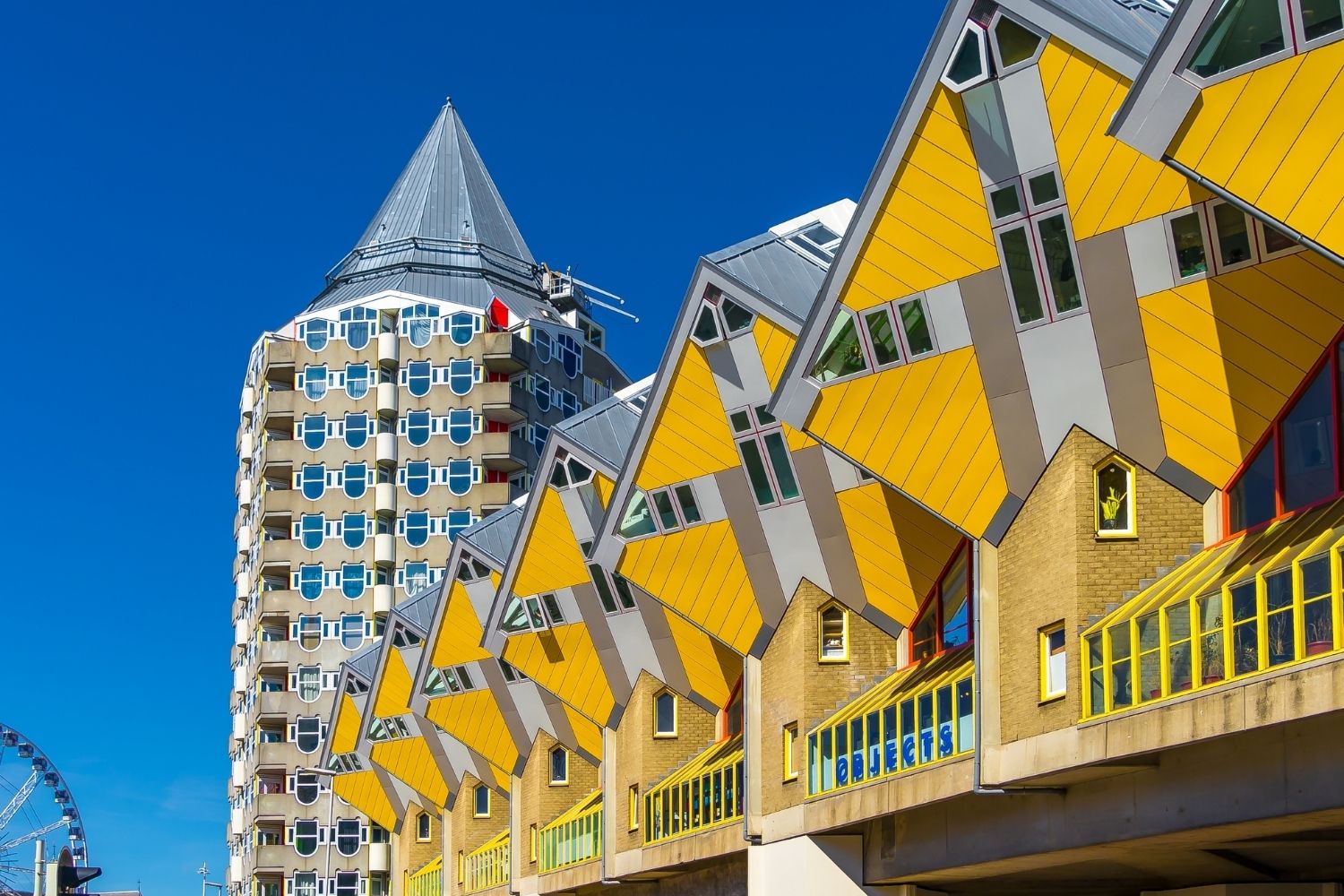
Architectural Styles: Why Some Endure and Others Fade
Some architectural styles last for centuries while others are demolished within a...
Furkan Sen5 Mins read
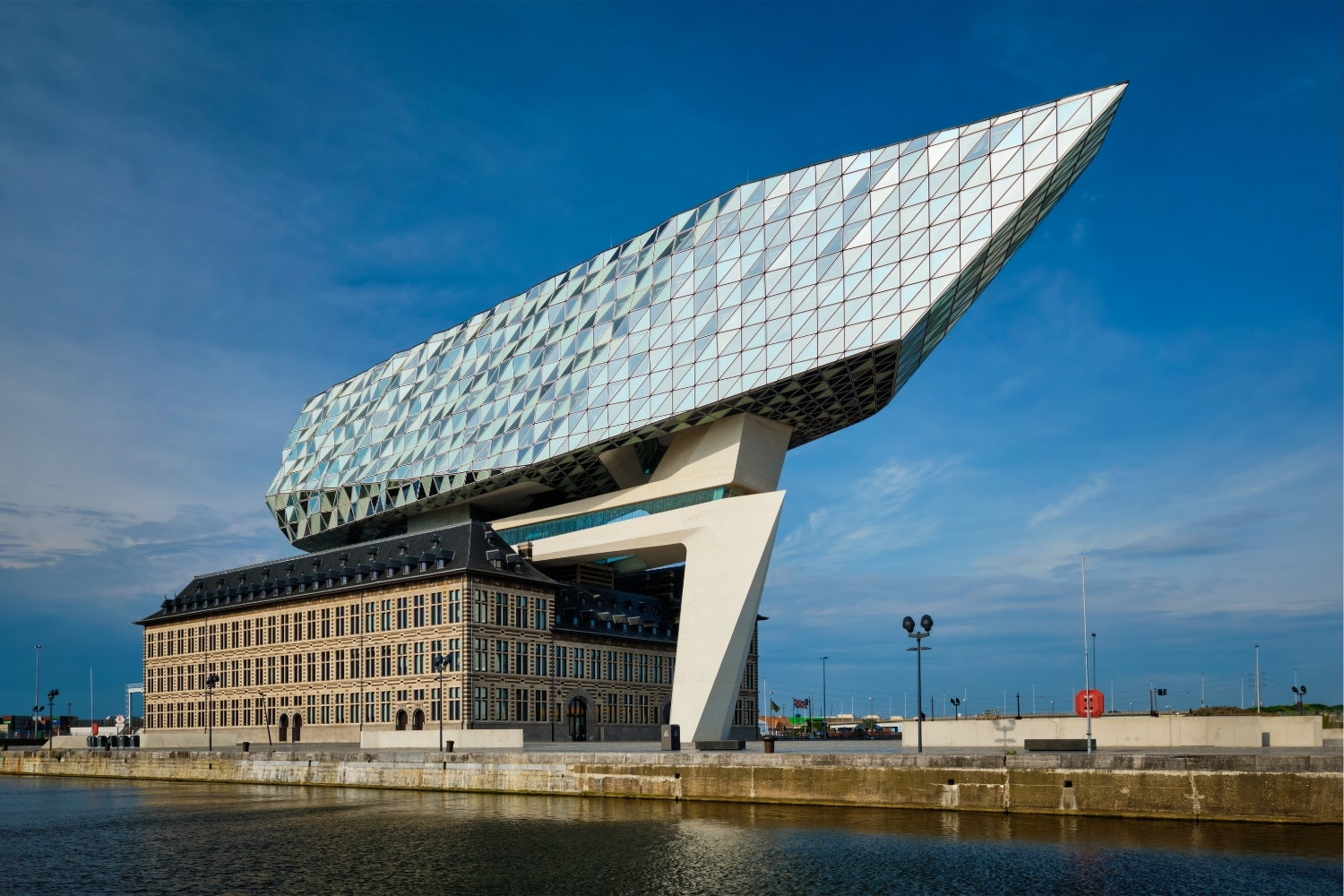
Postmodern Architecture vs Deconstructivism: Playful Irony or Radical Disruption?
Postmodern architecture and deconstructivism both rejected modernism but took opposite paths. This...
 Sinan Ozen5 Mins read

Scandinavian Design vs Japanese Minimalism: Nordic Light Meets Zen Simplicity
A side-by-side comparison of Scandinavian and Japanese minimalism covering origins, color palettes,...
Furkan Sen7 Mins read


Leave a comment