

Famous Architects and Their Cars: What They Drove and Why It Mattered
Eight documented pairings of famous architects and the cars they owned, designed, or used as arguments, covering Wright's rebodied Lincoln, Le Corbusier's Voisin, the lost Gropius Adlers, and where each object stands today.
 Elif Ayse Sen21 August 202610 Mins read37
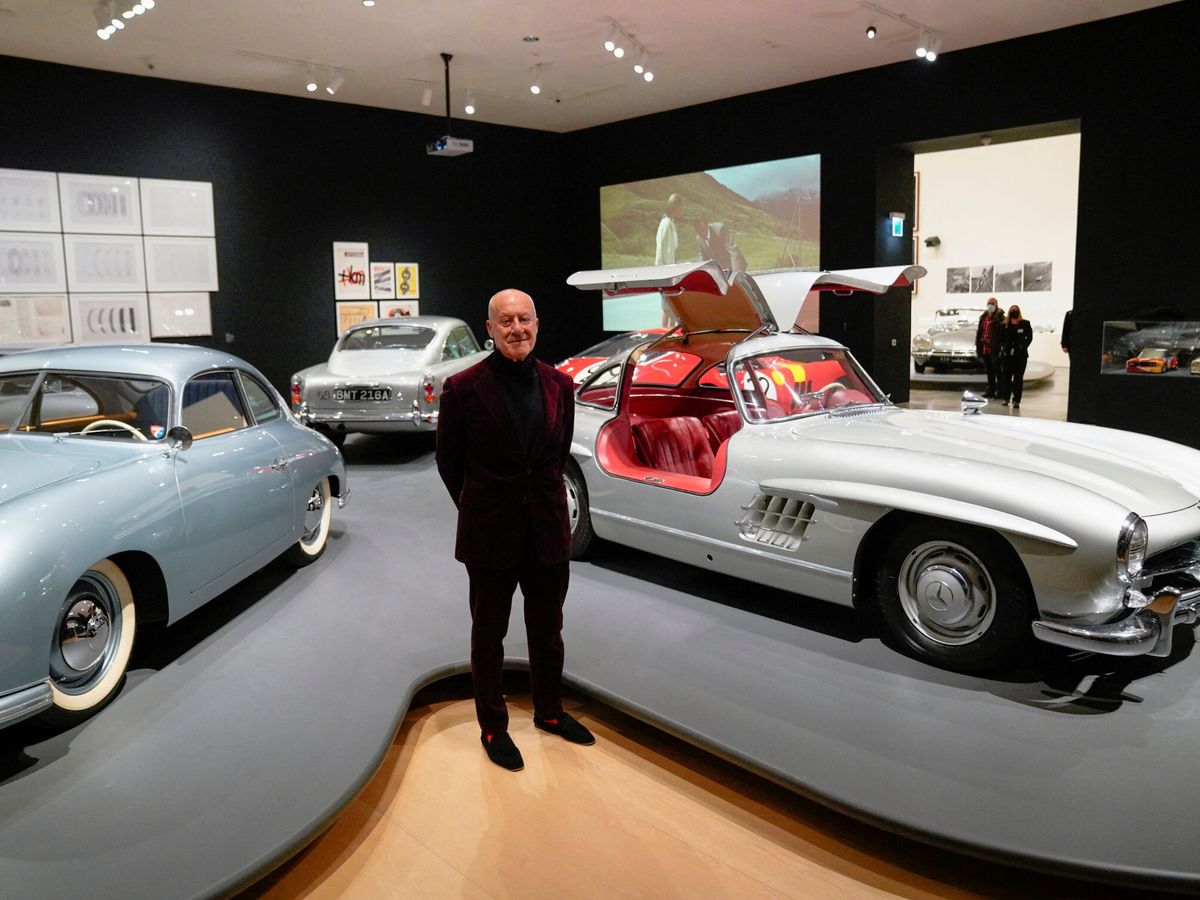
Table of Contents Show
Famous architects have rarely treated cars as transport. Frank Lloyd Wright ordered his in Cherokee Red, Le Corbusier parked a Voisin in front of every white villa he photographed, Walter Gropius drew bodywork for Adler, and Norman Foster has assembled one of the largest private car collections in the profession.
The pattern is consistent enough to be worth taking seriously. Between roughly 1925 and 1940, the automobile was the most advanced mass-produced object most people would ever touch, and architects who were arguing for machine-age building had an obvious interest in being photographed next to one. What follows is a look at the specific cars, who owned them, which ones still exist, and what the choices say about how these architects worked.
Why Cars Mattered So Much to Famous Architects

Three separate relationships get flattened into one when people talk about architects and cars, and separating them makes the whole subject easier to read.
The first is the car as argument. Le Corbusier did not simply own a Voisin; he instructed his photographers to put it in the frame. A modern car in front of a modern house told the viewer, before they read a single caption, that the building belonged to the same century as the machine. It also gave the image a reliable scale reference, which is why the trick survives in architectural photography today.
The second is the car as product. Gropius drew coachwork for a Frankfurt manufacturer. Le Corbusier and Pierre Jeanneret entered a national design competition. Buckminster Fuller built a three-wheeled prototype. None of these projects reached volume production, and the reasons are instructive for anyone who has ever tried to move a design idea into an industry with its own tooling, suppliers, and crash requirements.
The third is simply ownership, at a scale that goes past transport and becomes collecting. Wright and Foster sit in this group, seventy years apart, and their choices track their architecture closely.
Famous Architects and Their Cars at a Glance
The table below sets out the best documented pairings, including whether the architect owned the car, designed it, or both, and where the object stands today.
| Architect | Car | Year | Relationship | Where it stands now |
|---|---|---|---|---|
| Frank Lloyd Wright | Cord L-29 Cabriolet | 1929 | Owned, repainted Cherokee Red | Auburn Cord Duesenberg Automobile Museum, Indiana |
| Frank Lloyd Wright | Lincoln Continental | 1940 | Owned and rebodied to his own design | Privately owned, restored |
| Le Corbusier | Voisin C7 Lumineuse | 1925 | Owned, used as a photographic device | Foster Family Collection |
| Le Corbusier and Pierre Jeanneret | Voiture Minimum | 1936 | Designed, never produced | Full-scale models only |
| Walter Gropius | Adler Standard 8 Cabriolet | 1930 | Designed and drove privately | No surviving example known |
| Buckminster Fuller | Dymaxion | 1933 | Designed, three prototypes built | Dymaxion 4, a 2010 recreation, in the Foster collection |
| Zaha Hadid | Z.Car | 2005 onward | Designed on commission | Prototype shown at design fairs and museums |
| Norman Foster | Chrysler Airflow, Jaguar E-Type | 1934, 1961 | Owned | Foster Family Collection |
Frank Lloyd Wright: Cherokee Red and a Continental With No Rear Window
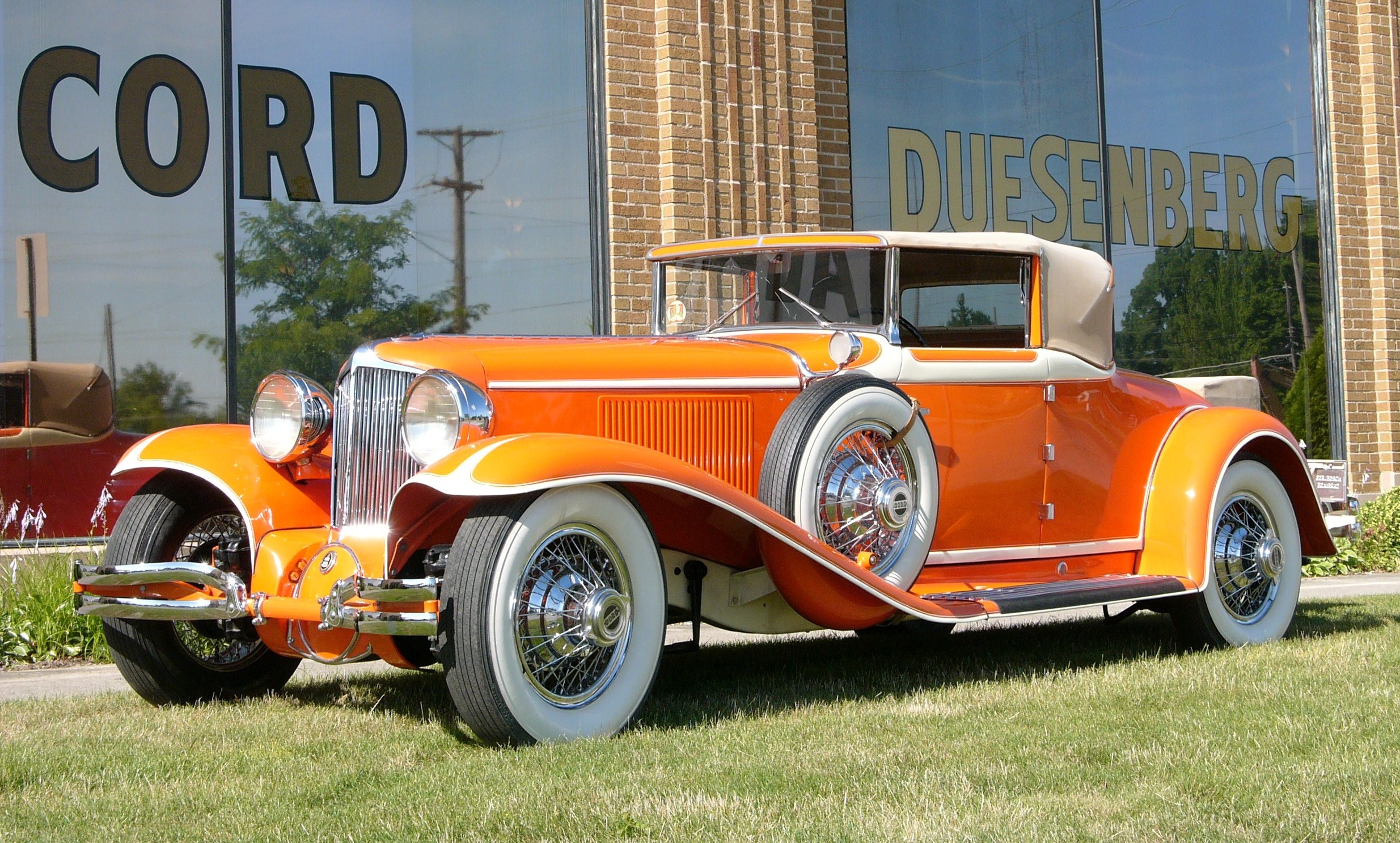
Wright bought cars the way he bought Japanese prints. Over his career he ran Jaguars, Packards, Cadillacs, and Mercedes-Benzes, plus a 1937 AC 16/80 Competition Sports, five 1949 Crosleys, two Cord L-29s in phaeton and cabriolet form, and a 1953 Bentley R-Type convertible, according to Hagerty’s account of his collection. A great many of them were repainted in Cherokee Red, the same colour he used on floors, roofs, and drawing boards, and which he called the colour of creation.
The clearest example of Wright treating a car as an unfinished commission is the 1940 Lincoln Continental. After the convertible top was damaged, he had the car rebuilt at a Madison workshop rather than repaired. The soft top gave way to a fixed half roof over the rear compartment only, leaving the driver in the open. Semicircular opera windows went into the sides. The rear window was deleted altogether, a decision he explained in terms of only being interested in where he was going. His approach to the automobile mirrors what he did with buildings, which is covered in more depth in this look at Frank Lloyd Wright’s organic architecture.
🎓 Expert Insight
Wright said the Cord’s proportion and lines came closer than any other car to expressing “the beauty of both science and logic”, Frank Lloyd Wright, quoted by the Frank Lloyd Wright Foundation
The remark explains the choice better than any styling analysis would. The front-wheel-drive L-29 had no propeller shaft running to the rear axle, so it sat lower than its rivals. Wright was praising a proportion that came directly out of an engineering decision, which is exactly the argument he made about his own buildings.
The cars were also teaching equipment. Wright’s Taliesin Fellows drove them between the Wisconsin estate and Taliesin West in Arizona twice a year, were encouraged to take unfamiliar routes, and had to report back on the country and the architecture they had seen. Few architecture schools have run a field-study programme with a fleet attached. For the wider career this sits inside, see the profile of Wright’s architectural career.
Two of his cars are on public display. The 1929 Cord L-29 Cabriolet and a 1952 Crosley Super Roadster are held in the permanent collection of the Auburn Cord Duesenberg Automobile Museum in Auburn, Indiana, which makes them among the very few architect-owned vehicles anyone can go and stand next to.
Le Corbusier and the Voisin That Appeared in Every Photograph
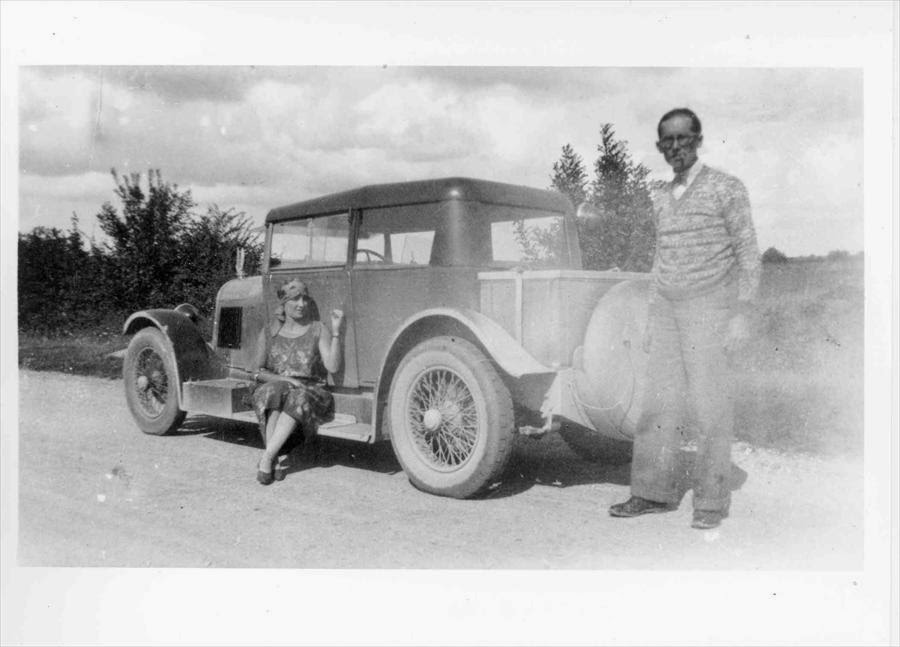
Le Corbusier bought a Voisin C7 Lumineuse in 1925 and then used it relentlessly. The car appears in the foreground of the photographs of his white-period houses because he asked for it to be there. It supplied scale, it dated the image to the present rather than the past, and it made the argument about machine-age living without a word of text.
The relationship went further than staging. At Villa Savoye the curved ground floor is set out around the turning circle of a period car, so the automobile is not just in the photograph, it is in the plan. That logic is unpacked in this guide to Le Corbusier’s design philosophy, and the house sits alongside other landmarks in this survey of steel and glass modernism.
💡 Pro Tip
Le Corbusier’s habit cuts both ways on a modern shoot. A contemporary car in frame fixes the photograph to a three or four year window, so an image that will sit in a portfolio or on a practice website for a decade starts ageing immediately. Shoot the clean plate first with the forecourt empty, then shoot the version with the car for press and social use.
In 1936 he and Pierre Jeanneret entered a competition run by France’s Société des Ingénieurs de l’Automobile for a low-cost people’s car capped at 8,000 francs. Their Voiture Minimum put the wheels at the extreme corners, mounted the engine behind the seats, and freed the cabin for two adults and luggage. It did not win, Fiat and Tatra passed on it, and the design existed only on paper until Giorgetto Giugiaro commissioned a full-scale model in 1987.
Walter Gropius and the Adler Standard 8 Cabriolet
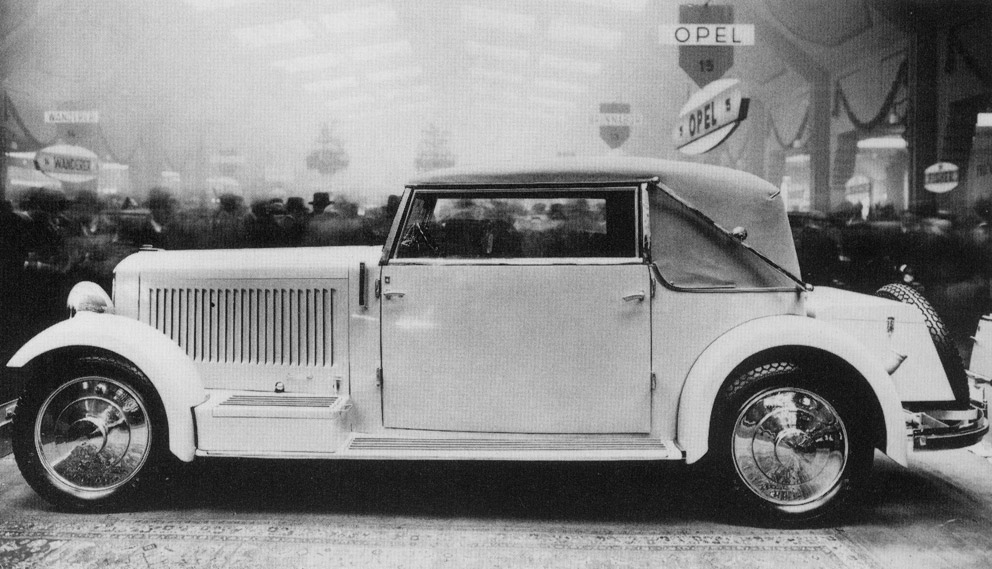
Gropius knew Erwin and Otto Kleyer, who ran the Frankfurt manufacturer Adler, and that friendship turned into a commission. He designed special bodies for the Standard 6 and Standard 8, and three of the results appeared at the Paris motor show in October 1930: two saloons and one cabriolet. The bodywork was flat-sided and stripped of period decoration, with the radiator grille redrawn as well.
The timing could hardly have been worse. The Depression closed the window for series production, and no Gropius-bodied Adler is known to have survived. He kept one for himself, a Standard 8 Cabriolet, and drove it as his private car until he left Germany in 1932. Its most quietly radical feature was a driver’s door that could be hinged at either the front or the rear edge, a detail closer to his thinking about flexible standardisation than anything in the silhouette. The record of the Gropius and Adler collaboration shows how far a manufacturer’s tooling constrained him compared with the freedom he had on a building.
That constraint is the real lesson of the episode. In architecture Gropius could question the structure itself, as the campus at Dessau shows. Working inside an existing chassis and production line, he could restyle a body and improve a door, but not rethink the car. Readers following the school’s built work will find the key projects in this guide to iconic Bauhaus buildings and the broader arc in modern architecture from Bauhaus to Brutalism.
The Norman Foster Car Collection
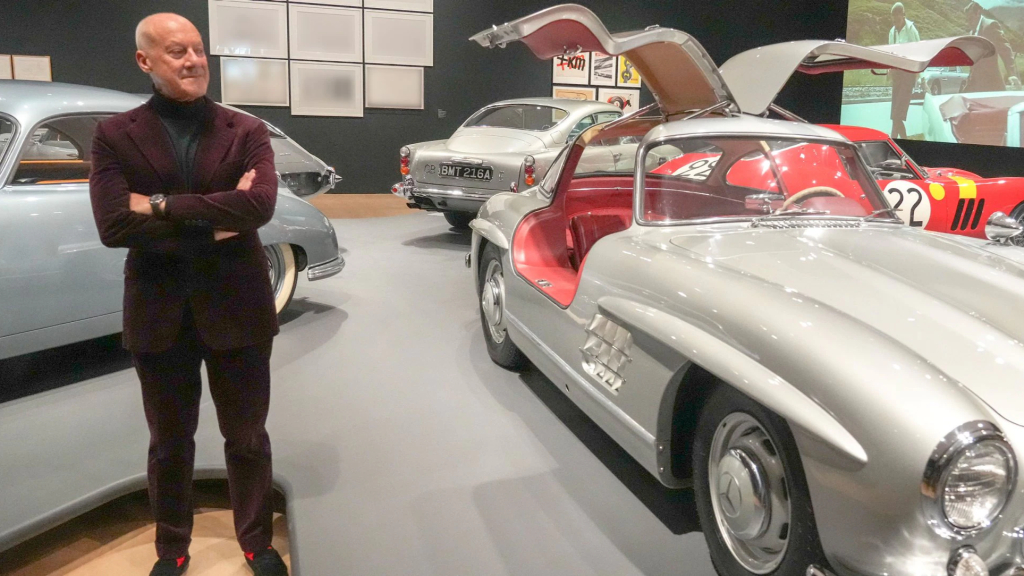
The most substantial Norman Foster car collection story is not a rumour about a garage, it is a museum exhibition he built out of his own holdings. Foster conceived and designed Motion: Autos, Art, Architecture at the Guggenheim Museum Bilbao, produced with the Norman Foster Foundation and open from 8 April to 18 September 2022. It brought together close to forty cars across seven themed galleries, set among paintings, sculpture, and architecture.
Cars from his own collection anchored the show. Museum-side accounts and Dezeen’s coverage of the exhibition name nine, including a 1934 Chrysler Airflow, a 1961 Jaguar E-Type, and Dymaxion 4, the Buckminster Fuller recreation Foster had built in 2010. Wallpaper counted eleven from the Foster Family Collection, so the exact figure depends on which loans are attributed to the family rather than to Foster personally. He has also said the first car he drove was a 1935 Morris Eight.
📌 Did You Know?
Le Corbusier’s own Voisin C7 Lumineuse now belongs to the Foster collection and was exhibited at Bilbao in 2022. The car that Le Corbusier positioned in front of his houses in the 1920s to argue for machine-age architecture is now owned by another Pritzker laureate, and it went on display inside a Frank Gehry building.
The selection tells you something about how Foster reads objects. The Airflow was a commercial failure whose aerodynamic thinking was vindicated later, the E-Type is a monocoque wrapped in a shape derived from wind tunnel work, and the Dymaxion was an unbuildable proposal by an engineer-architect. Each one is a case of engineering logic surfacing as form, which is the same reading you get from the buildings in this list of iconic Norman Foster projects.
The Architects Who Designed Cars Instead of Buying Them
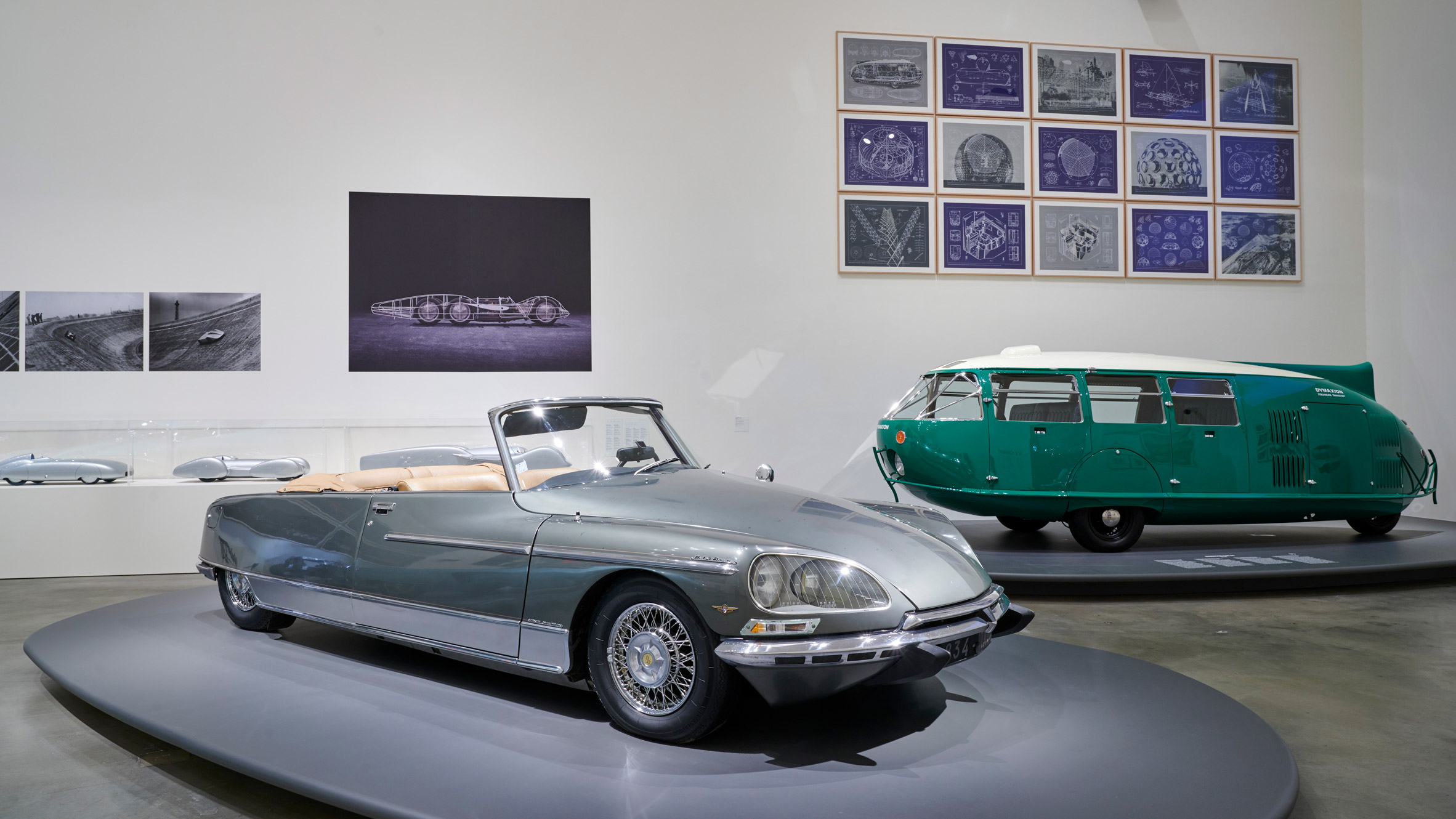
Buckminster Fuller’s Dymaxion of 1933 was the most radical of the architect-designed cars: three wheels, rear steering, a body shaped for airflow, and room for eleven people. Its handling in crosswinds and a fatal crash outside the Chicago World’s Fair ended commercial interest almost immediately. Only three were built, and the version most people have now seen is Foster’s 2010 recreation.
Zaha Hadid’s Z.Car, begun in 2005 for the art dealer Kenny Schachter, was a three-wheeled hydrogen city car whose hydraulic suspension changed the wheelbase, standing tall and short for city driving and dropping low and long for the open road. A running prototype has been shown at the Design Museum in London and at Design Miami/Basel. It belongs firmly in the tradition covered in this survey of the most influential architects of the 20th century, several of whom tried the same jump between disciplines.
None of these designs reached production, and the shared reason is worth stating plainly. An architect controls the structure, the envelope, and the plan of a building. A car body is the last layer added to a package of engine, gearbox, crash structure, and regulatory requirements that is already fixed before a designer draws a line. The architects who worked inside that constraint produced restyling. The ones who ignored it, like Fuller, produced prototypes.
What Are the Best Cars for Architects Today?
The best cars for architects are decided by load length and site access rather than by badge. An A1 board measures 594 by 841 millimetres, an A0 sheet 841 by 1189 millimetres, and a presentation model in its transit box is usually taller than a boot lip. Any car that swallows those three things without a fight is a better working tool than a faster one that does not.
The practical checklist comes down to four things. First, a flat load floor with the rear seats folded, which is where estates and hatchbacks beat saloons outright. Second, a boot aperture wide enough for a 1.2 metre sample board, since depth is useless if the opening is narrow. Third, enough ground clearance and tyre sidewall for an unmade site access road, because kerbs and rutted ground are what actually damage a car on a construction visit. Fourth, an interior you are willing to put a client in twenty minutes after loading a bag of concrete samples, which in practice means a rubber boot liner and a habit of using it.
Electric vehicles change one variable worth planning around. Rural sites rarely have charging, and a site visit can involve two or three hours of running climate control while you wait for a contractor. Treat range on a site day as roughly two thirds of the quoted figure and the question resolves itself.
Which Architect Car Collection Are You Actually Looking For?
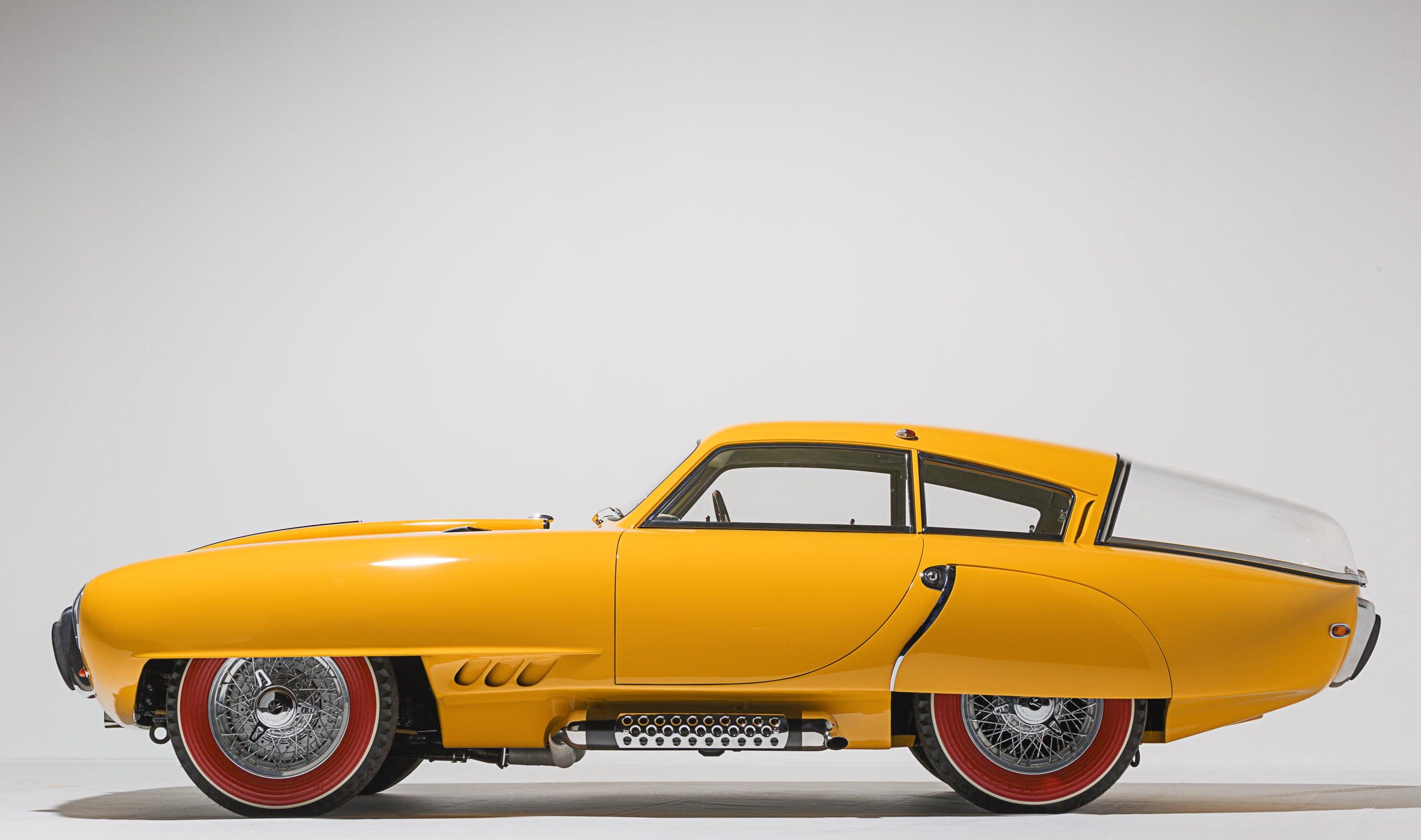
Search traffic around architects and cars tends to funnel into a few names, and two of them cause repeated confusion.
The first is the Eddie McGuire architect car collection query, which does not lead to a practising architect. The name belongs to a historic racing driver who campaigns a Scarab Offenhauser in pre-1966 Grand Prix events at Silverstone and Monaco, and separately to a well-known Australian broadcaster. Anyone looking for a working architect with a serious car collection is almost certainly looking for Norman Foster.
The second is Sergio Goldvarg, an Argentinian architect based in Miami whose collection is real but is made of scale models rather than cars. It has been recognised by Guinness World Records, and he was inducted into the Model Car Hall of Fame in 2014. He is the reason a search for an architect car collection sometimes returns results about miniatures.
Putting It All Together
Read across the whole group and the cars stop being trivia. They are the clearest surviving evidence of how these architects thought about industrial production at the exact moment they were asking clients to accept it in buildings. Wright rebodied a Lincoln because a factory design was not finished until he said so. Le Corbusier used a Voisin as an argument. Gropius found out what a production line will and will not allow. Foster turned a private collection into a curatorial thesis. The same instincts appear in the houses gathered in this look at iconic houses by world-famous architects.
Quick Recap:
- Wright owned dozens of cars, repainted them Cherokee Red, and rebuilt a 1940 Lincoln Continental without a rear window.
- Le Corbusier’s 1925 Voisin C7 was a photographic and planning device before it was transport, and it now sits in Norman Foster’s collection.
- Gropius and Fuller both designed cars that never reached volume production, for opposite reasons: too little freedom and too much.
- Foster’s Bilbao exhibition in 2022 remains the fullest public account of what an architect’s car collection can be used to argue.







Integrating Durable Building Systems with Magnum Diaphragm Pumps and Mud Hog Repair Parts in Modern Construction Projects
Mud hog repair parts may seem like a small detail in the...
 illustrarch Editoral Team6 Mins read

R-49 or R-60? Untangling Denver’s Attic Insulation Code Rule
Ask three people what the attic insulation code requires in Denver, and...
illustrarch Editoral Team3 Mins read

What Every Homeowner Should Look for in an Interior Decorator in Santa Monica Before Starting a Remodel
Hiring an interior decorator in Santa Monica can shape whether a remodel...
illustrarch Editoral Team5 Mins read
What Architects Should Know About Stucco Repair in Pasadena, Stucco Water Damage, and EIFS Installation
Stucco water damage can turn what looks like a minor exterior blemish...
illustrarch Editoral Team5 Mins read


Leave a comment