

Neuschwanstein Castle: Romanticism and Fairy Tale Architecture in the Bavarian Alps
A detailed look at Neuschwanstein Castle's architectural design, from its Romanesque Revival exterior and Wagner-inspired interiors to the construction challenges on a Bavarian Alpine ridge. Covers King Ludwig II's vision, the Singers' Hall and Throne Room, Disney's adaptation, and the castle's 2025 UNESCO World Heritage inscription.
 Sinan Ozen21 June 20266 Mins read309
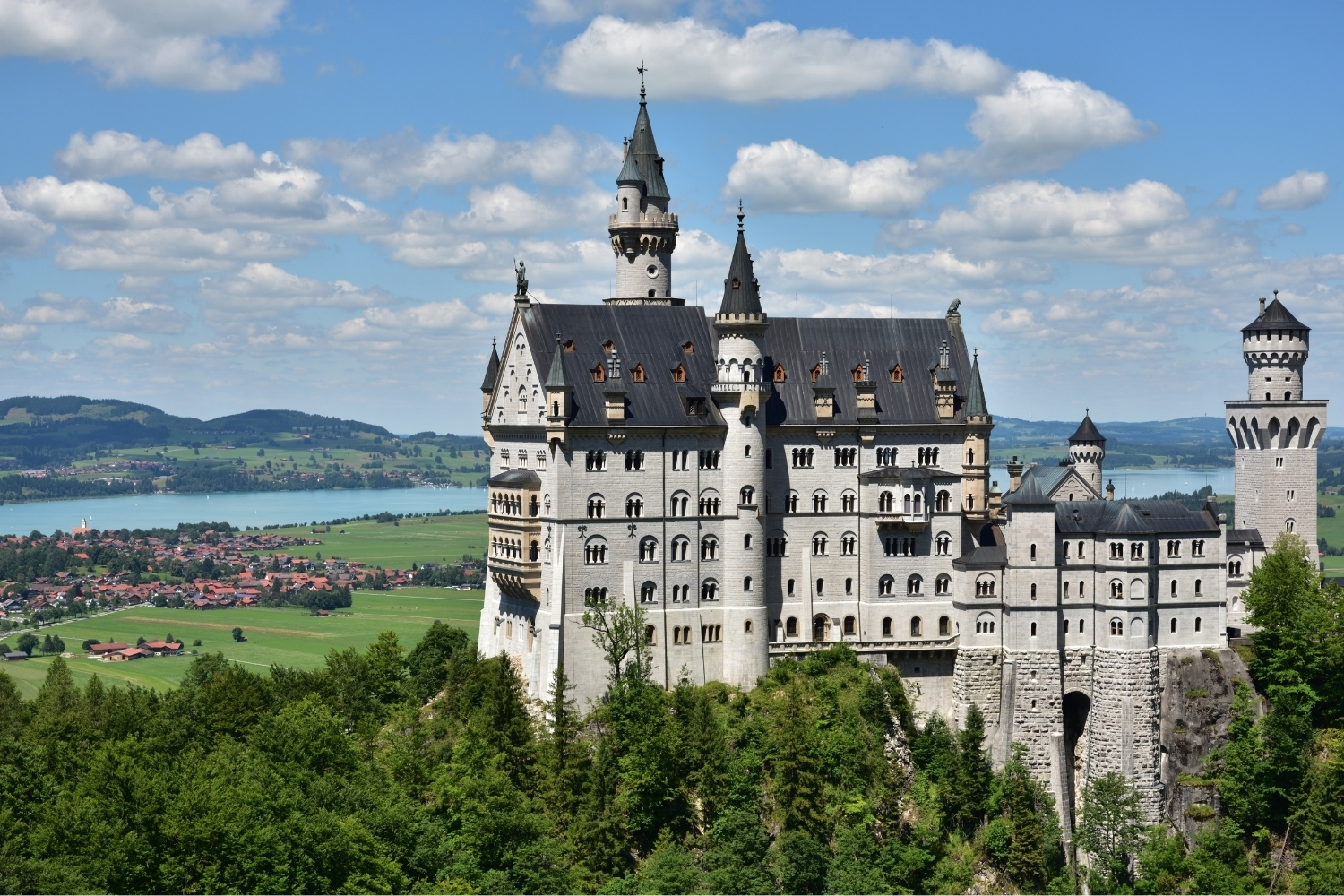
Table of Contents Show
Neuschwanstein Castle is a 19th-century historicist palace perched on a rugged hilltop in Bavaria, Germany, commissioned by King Ludwig II as a personal retreat inspired by medieval legends and the operas of Richard Wagner. Completed in stages from 1869 to 1886 but never fully finished, the castle of Neuschwanstein now attracts roughly 1.4 million visitors per year and holds UNESCO World Heritage status as of 2025.
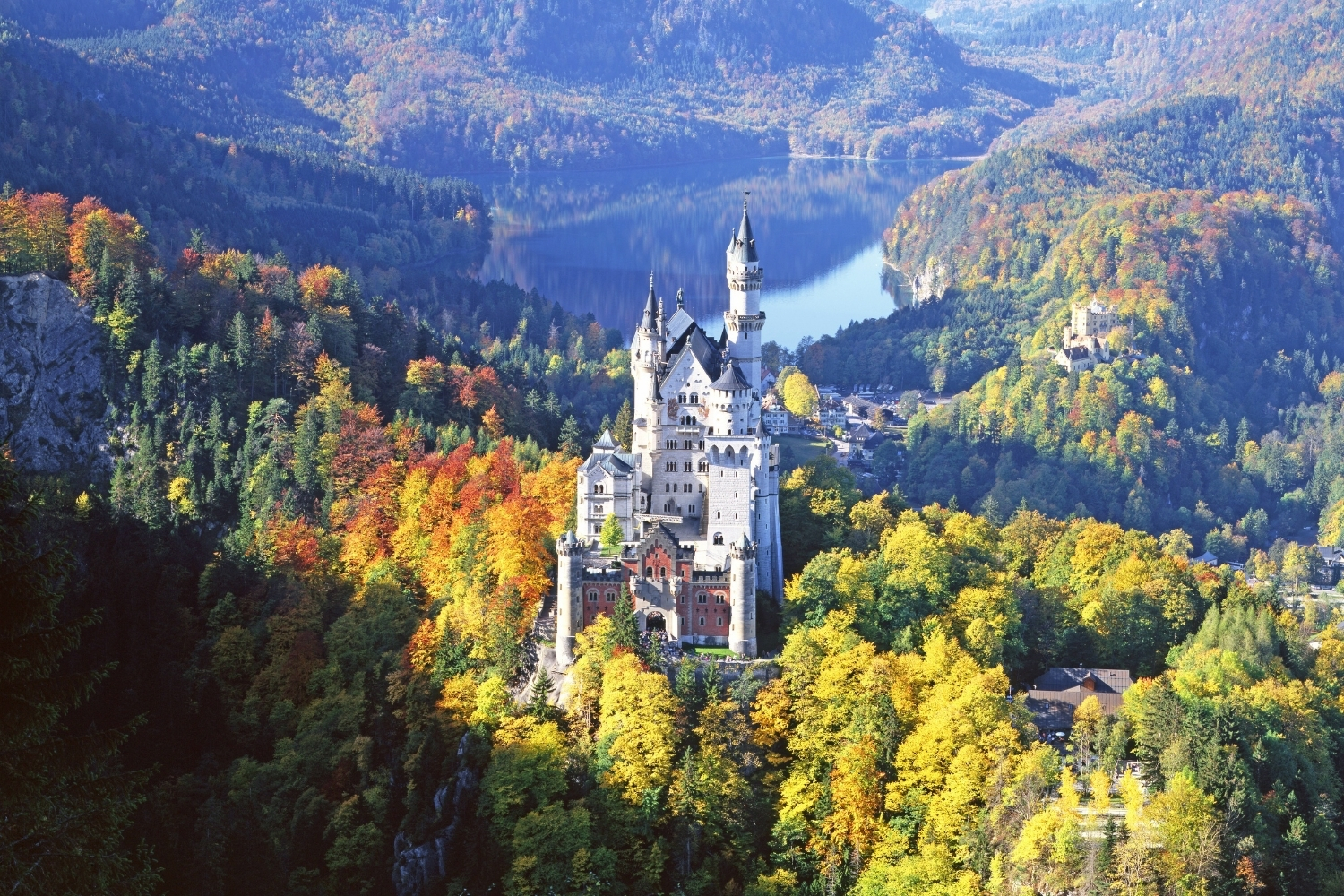
Few buildings blur the line between architecture and fantasy the way Neuschwanstein Castle does. Rising from a forested ridge above Hohenschwangau near Fussen in southwest Bavaria, this palace was never meant to defend a border or house a court. It was one man’s attempt to build a world shaped by imagination, opera, and a longing for a past that never quite existed. The location of Neuschwanstein Castle, overlooking Alpine lakes against the Bavarian mountains, was chosen for its dramatic isolation. Ludwig II wanted a stage, not a seat of government.
King Ludwig II and the Vision Behind the Castle
Ludwig II became King of Bavaria in 1864 at the age of 18, during a period when Bavaria was losing its political independence to Prussia. Rather than engage in the power struggles of German unification, Ludwig retreated into art, music, and building. He was a devoted patron of composer Richard Wagner, and that relationship shaped nearly every decision behind Neuschwanstein Castle Germany.
Ludwig grew up at nearby Hohenschwangau Castle, a neo-Gothic residence decorated with scenes from German legends and poetry. Those childhood surroundings planted the idea that architecture could tell stories. When Ludwig commissioned his own castle in 1868, he described it in a letter to Wagner as a place that would evoke the medieval Wartburg, the legendary castle associated with the Tannhauser saga and the Singers’ Contest.
🎓 Expert Insight
“I wish to build a castle in the style of the old German knights’ castles.”
King Ludwig II, letter to Richard Wagner, May 1868
This well-documented letter reveals that Ludwig conceived the project not as a functional royal residence but as an architectural tribute to a romanticized medieval past. The castle was always intended as an artistic statement first and a habitable building second.
The king did not hire a conventional architect to lead the project. Instead, he turned to Christian Jank, a theatrical stage designer from the Munich Court Theatre. Jank produced the initial watercolor renderings, and architects Eduard Riedel, Georg von Dollmann, and Julius Hofmann translated those theatrical visions into buildable plans. This unusual process explains why the castle at Neuschwanstein looks more like a painted backdrop than a typical 19th-century palace. Ludwig personally approved every detail and frequently demanded changes during construction, driving up costs and extending timelines.
Architectural Style: Where Romanesque Revival Meets Theatrical Fantasy
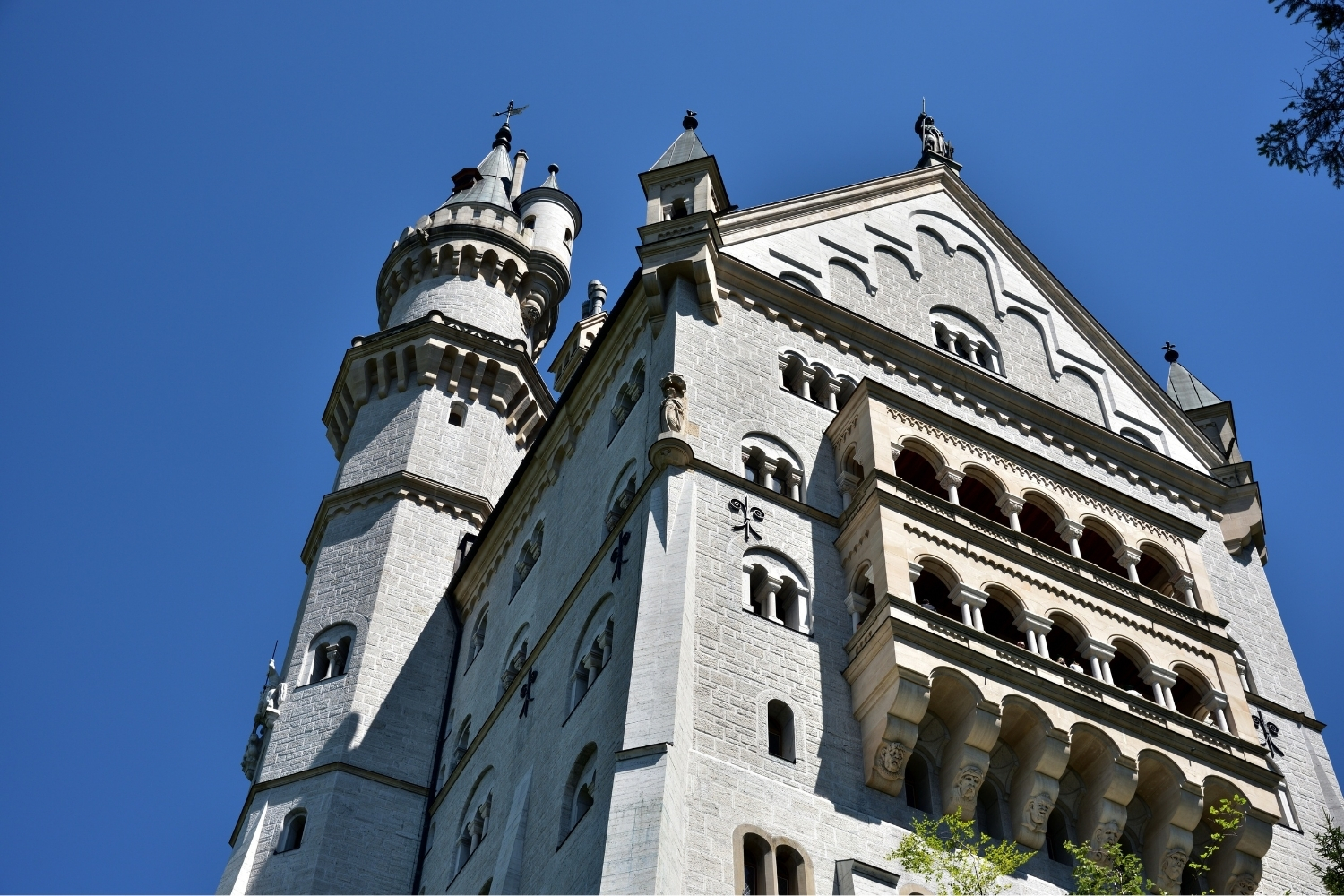
Neuschwanstein Castle does not fit neatly into a single architectural category. The Encyclopaedia Britannica classifies its style as Romanesque Revival, and the round arches, heavy towers, and fortress-like massing support that label. But the building also borrows freely from Gothic forms, Byzantine decorative traditions, and pure theatrical invention. The result is a historicist composition where multiple medieval vocabularies overlap in ways that no actual medieval builder would have combined.
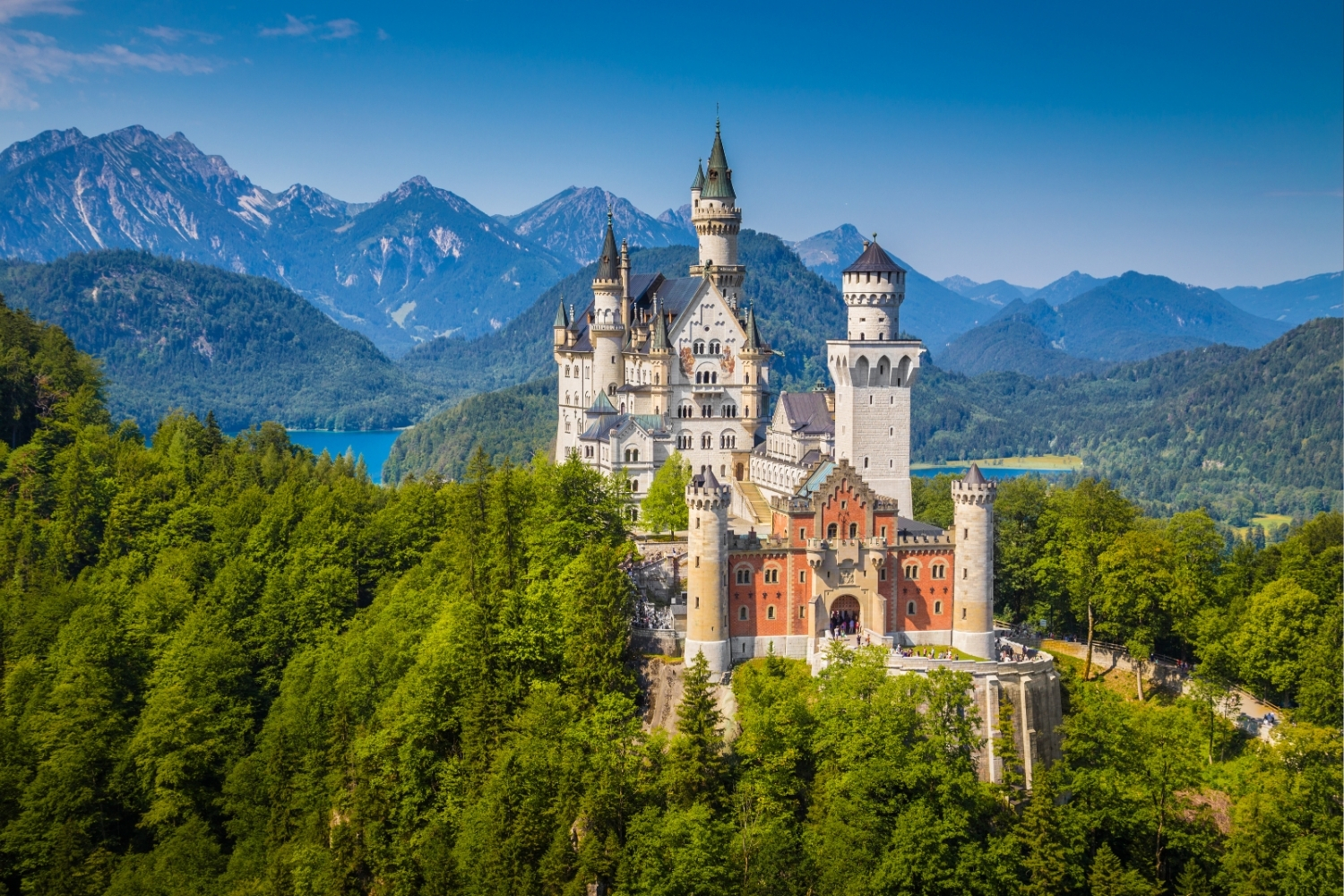
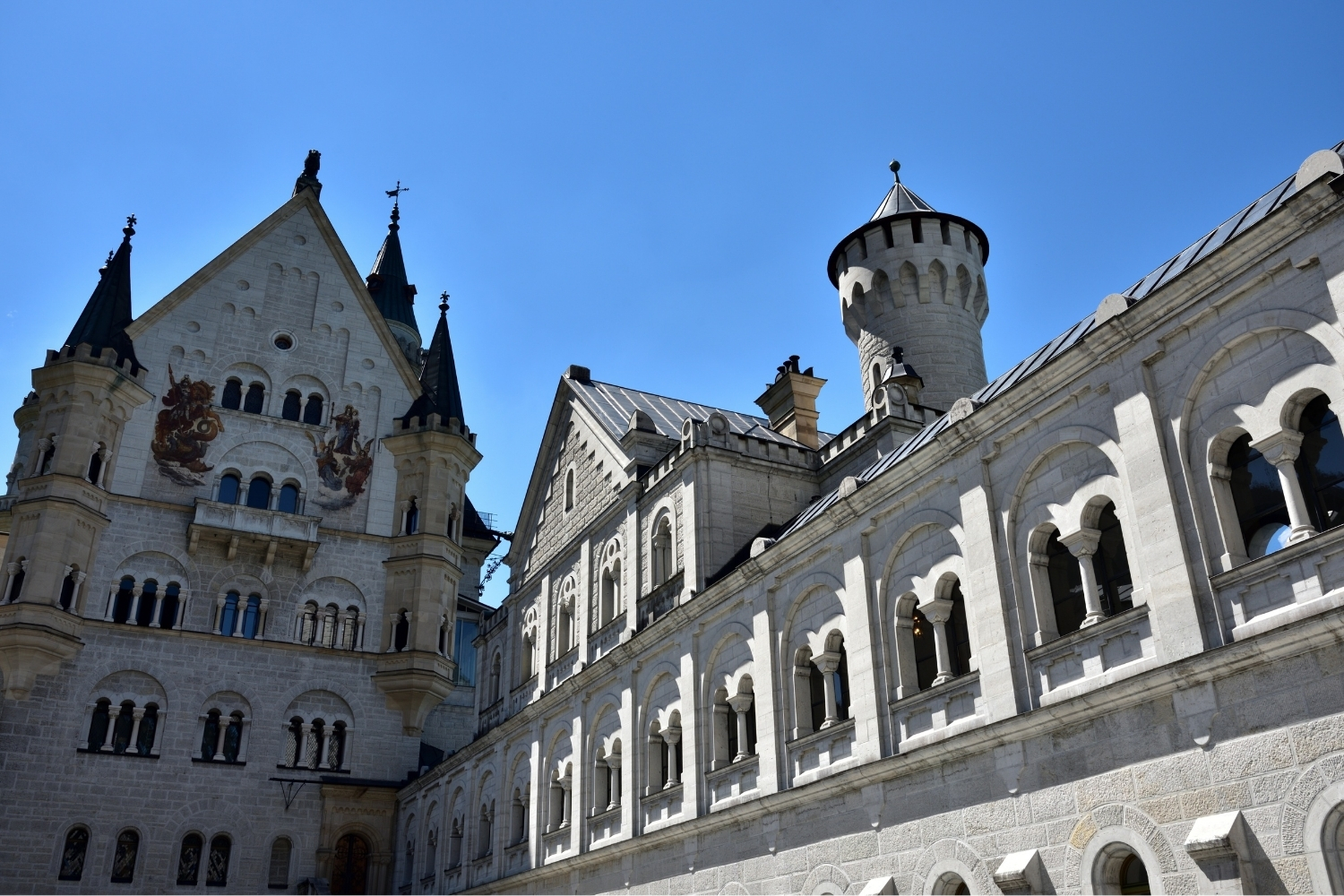
The exterior features clustered towers, cantilevered balconies, pointed gables, and a dramatic roofline of red brick and pale limestone. The tallest tower rises to about 65 meters. Unlike genuine medieval fortifications, these towers serve no defensive purpose. They exist to create a silhouette, visible from the valley below, that reads as the ideal medieval castle of Romantic imagination. The Gothic Revival movement of the 19th century, heavily influenced by literary Romanticism and the writings of critics like John Ruskin, provided the broader cultural context in which Ludwig’s project made sense.
What separates castle Neuschwanstein from other Romanesque Revival projects of the era is its relationship to landscape. The building sits on an exposed ridge above the Pollat Gorge, with sheer drops on two sides. The plan follows the irregular shape of the rock ledge rather than imposing a symmetrical layout, giving the castle an organic quality that purely historicist buildings often lack.
📐 Technical Note
Despite its medieval appearance, Neuschwanstein was built with 19th-century technology. The structure uses a steel frame concealed behind stone cladding, the rooms had central hot-air heating, running water on every floor, and electric lighting powered by a dynamo. The Throne Room alone required approximately 500,000 bricks for its construction (Bavarian Palace Administration).
What Does Neuschwanstein Castle Look Like Inside?
The Neuschwanstein Castle interior is where Ludwig’s obsession with Wagner’s operas becomes most visible. Only 14 of the planned rooms were completed before Ludwig’s death in 1886, but those finished spaces are some of the most elaborately decorated interiors of the 19th century.
The Throne Room, designed in a Byzantine style with gold mosaic floors, blue-starred ceiling vaults, and columns of imitation porphyry and lapis lazuli, occupies two full stories of the palace. Paradoxically, the room never received its throne. The design draws on the Allerheiligen-Hofkirche in Munich and the Hagia Sophia in Istanbul, filtered through Ludwig’s personal taste for sacred grandeur applied to secular spaces.
The Singers’ Hall, located on the fourth floor, is perhaps the most architecturally ambitious room inside Neuschwanstein Castle. Modeled after the festival hall at the Wartburg, it stretches the full length of the east wing. Wall paintings by Josef Aigner depict the legend of Parsifal, the Grail Knight central to Wagner’s final opera. The coffered wooden ceiling, arcade gallery, and candelabra create a space that feels like a stage set brought to permanent life. Ludwig never hosted a performance here during his lifetime; the first concert in the hall took place in 1933.
Other notable rooms include the king’s bedroom, where 14 wood carvers worked for four and a half years to complete the Gothic-style canopy bed and paneling. The study features paintings of the Tannhauser legend, while the living room depicts Lohengrin, the opera that first connected Ludwig to Wagner. Every surface inside Neuschwanstein Castle tells a story from Germanic mythology and Wagnerian drama.
Construction, Cost, and the King’s Downfall
Construction began on September 5, 1869, with the blasting and leveling of the hilltop. The Gatehouse was finished in 1873, and Ludwig moved into the partially completed Palas (main building) in 1884. According to the Bavarian Palace Administration, the project consumed 6.2 million marks by the time of Ludwig’s death, roughly 470 million euros in today’s terms. This was not state money but drawn from Ludwig’s personal civil list and heavy borrowing. Neuschwanstein was one of three palace projects Ludwig pursued at the same time, alongside Linderhof and Herrenchiemsee.
By 1886, Ludwig’s debts were unmanageable. A government commission declared him mentally unfit to rule without personal examination, and he was deposed on June 10, 1886. The next day, Ludwig and his psychiatrist were found dead in Lake Starnberg under unexplained circumstances. Seven weeks later, the castle he had kept entirely private was opened to paying visitors.
🏗️ Real-World Example
Sleeping Beauty Castle, Disneyland (Anaheim, 1955): Walt Disney visited Neuschwanstein during a European tour in 1935, and its silhouette directly influenced the design of Disneyland’s centerpiece castle twenty years later. The connection between Ludwig’s private fantasy and the world’s most recognized theme park icon demonstrates how one building can reshape an entire visual vocabulary of what a “castle” looks like in popular culture.
UNESCO World Heritage Status and Preservation
In July 2025, Neuschwanstein was inscribed as a UNESCO World Heritage Site as part of a group nomination that also includes Linderhof, Herrenchiemsee, and the King’s House on Schachen. The UNESCO designation recognizes these palaces collectively as outstanding examples of 19th-century historicist architecture reflecting the cultural aspirations of their era.
The Bavarian Palace Administration has managed the castle since the monarchy ended. With approximately 1.4 million visitors per year and up to 6,000 per day in summer, the building faces real conservation pressure. Room-by-room restoration has been underway since 2017, addressing fragile murals, textiles, and stone elements stressed by humidity and foot traffic. Access is restricted to 30-minute guided tours, and interior photography is not permitted.
For architects and students of architectural history, Neuschwanstein raises an interesting preservation question: how do you maintain a building that was never finished? Several rooms remain as bare brick shells, exactly as they were left in 1886. The decision to preserve these unfinished spaces rather than complete them has itself become part of the castle’s story.
Video: Neuschwanstein as Architectural Icon
This DW Documentary examines Neuschwanstein’s architectural significance and the story of King Ludwig II, covering the construction process, interior design, and the castle’s lasting cultural influence.
The Bigger Picture
Neuschwanstein Castle was built for an audience of one, by a king who wanted to live inside a story rather than rule a country. That the building became one of the most visited and most photographed structures in Europe is an irony Ludwig could not have predicted. But it also suggests something architects have always understood: buildings carry emotional weight beyond their function. A castle that was never a real castle ended up defining what castles look like in the modern imagination, from Disneyland to every illustrated fairy tale printed since. The line between architecture and myth, it turns out, was always thinner than it seemed.





Restorers Uncover 16th-Century Murals Hidden by Nuns in Villa Silvestri Rivaldi
Conservators in Rome are uncovering 16th-century murals hidden for 300 years inside...
 illustrarch Editoral Team3 Mins read

A 2,500-Year-Old Solar Observatory in Puebla Is the First Group E Complex Found Outside the Maya Area
Archaeologists working for Mexico's INAH have confirmed that two platforms at Teteles...
illustrarch Editoral Team2 Mins read
Donald Insall, the Conservation Architect Who Led Windsor Castle’s Restoration, Dies at 100
Donald Insall, the British architect who turned conservation into a planning discipline...
illustrarch Editoral Team2 Mins read
New Digging Season at the Mieza Gymnasium Uncovers Alexander’s School Complex
New digs at Mieza uncover teaching halls and mosaic banquet rooms at...
illustrarch Editoral Team2 Mins read


Leave a comment