

Sagrada Família Becomes the World’s Tallest Church After 144 Years
On June 10, 2026, Pope Leo XIV blessed the Tower of Jesus Christ at Barcelona's Sagrada Família, marking the basilica's rise to 172.5 meters and its new status as the tallest church on Earth. After 144 years of construction, Gaudí's vision reached its peak, surpassing Germany's Ulm Minster by more than 10 meters.
 Elif Ayse Sen12 June 202610 Mins read367
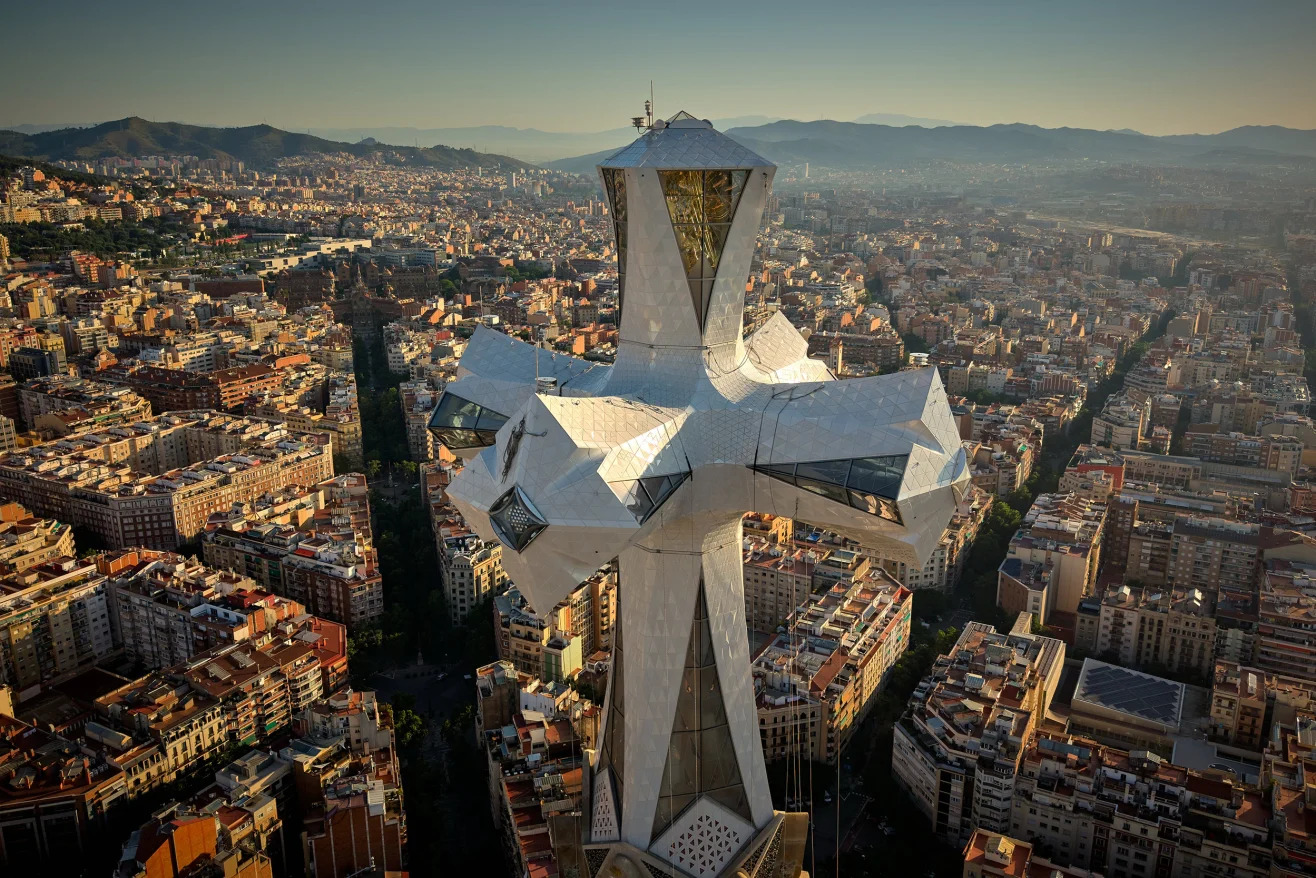
Table of Contents Show
The Basílica de la Sagrada Família in Barcelona now stands at 172.5 meters (566 feet), making it the tallest church in the world. On June 10, 2026, Pope Leo XIV blessed the Tower of Jesus Christ during a ceremony marking the centenary of architect Antoni Gaudí’s death. The tower surpasses Germany’s Ulm Minster, which held the record at 161.5 meters since 1890.
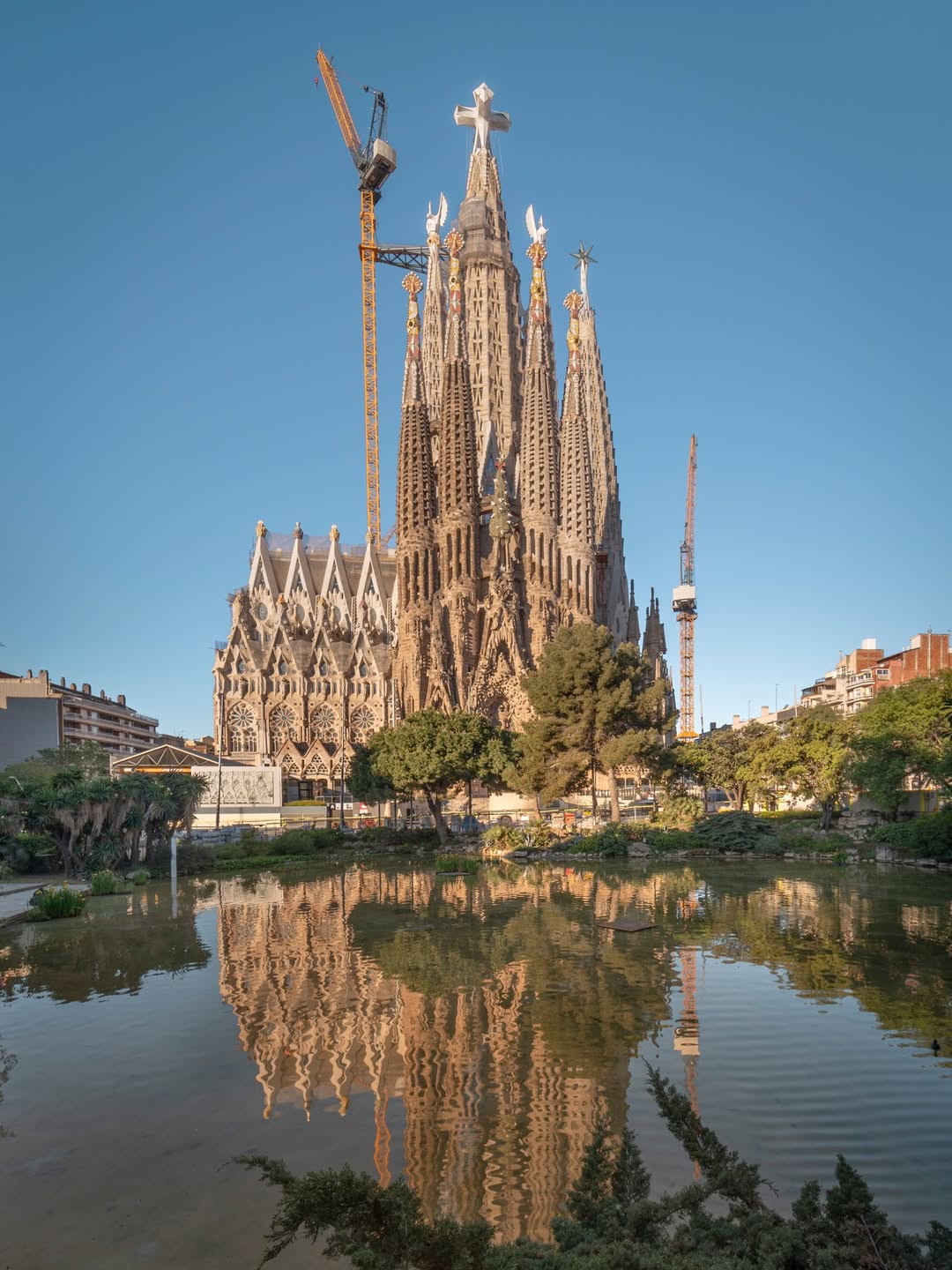
Barcelona’s most famous building just reached a height that no church on Earth has matched. The Sagrada Família, Antoni Gaudí’s unfinished masterpiece that has been under construction since 1882, officially became the world’s tallest church when the Tower of Jesus Christ received its crowning cross in February 2026. On June 10, exactly 100 years after Gaudí was struck by a tram and killed on Barcelona’s streets, Pope Leo XIV traveled to the basilica to bless the completed tower in front of thousands of spectators. The moment brought together architecture, faith, and a construction saga that has outlasted two world wars, a civil war, a pandemic, and nine chief architects.
How Tall Is the Sagrada Familia?
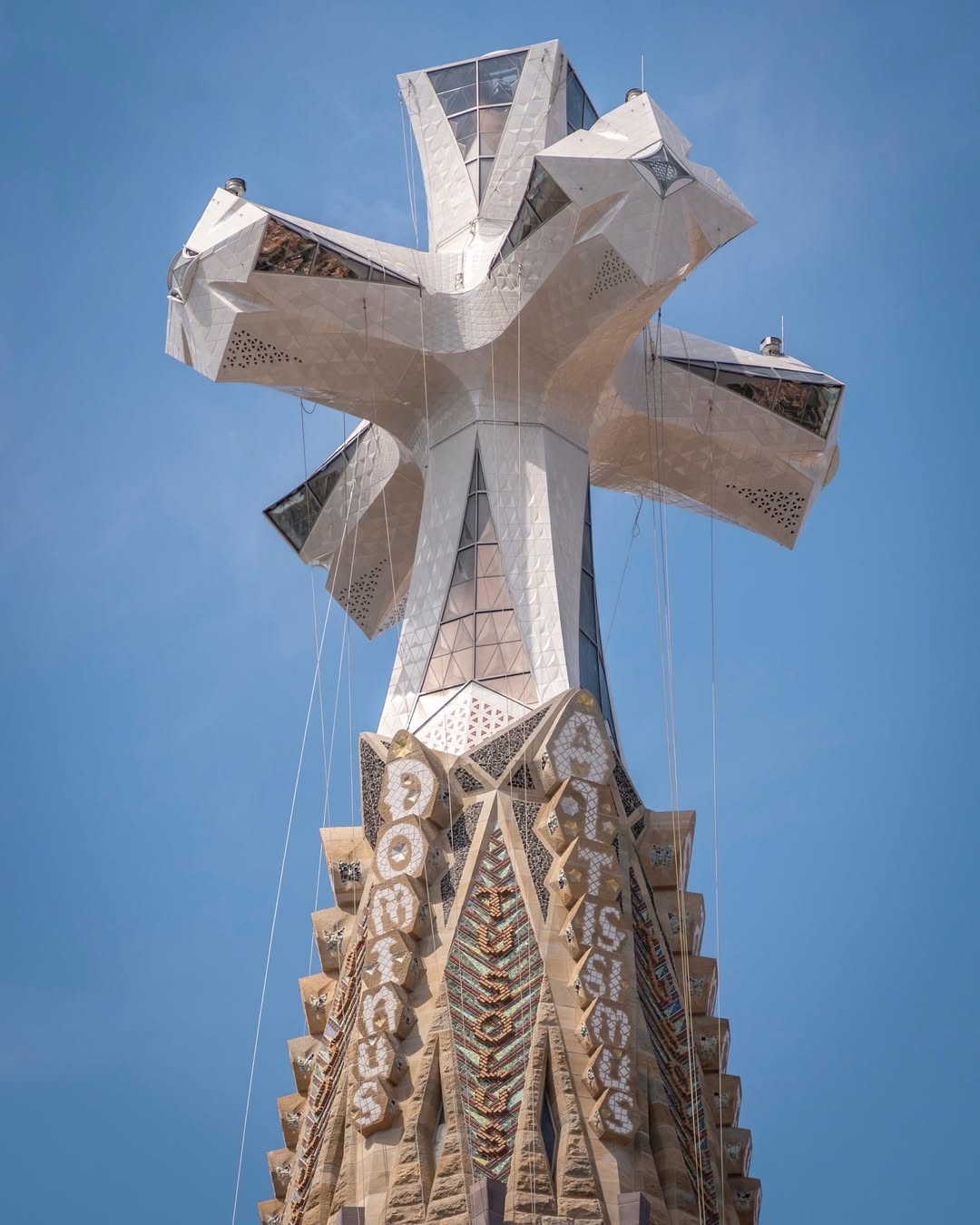
The Sagrada Família now reaches 172.5 meters from ground level to the tip of the cross on the Tower of Jesus Christ. That figure includes the tower structure itself and the monumental cross at its peak, which measures 17 meters in height and 13.5 meters in width. To put that in perspective, the cross alone is roughly as tall as a five-story apartment building.
The basilica surpassed Ulm Minster in Germany, which had been the world’s tallest church since its completion in 1890. Ulm Minster stands at 161.53 meters, meaning the Sagrada Família exceeds it by about 11 meters. For further comparison, St. Peter’s Basilica in Rome reaches 137 meters, and Milan Cathedral tops out at 108 meters. Among Gothic cathedrals and major churches, no structure has ever reached the height that Gaudí envisioned more than a century ago.
📌 Did You Know?
Gaudí deliberately set the Sagrada Família’s maximum height at 172.5 meters, one meter shorter than Barcelona’s Montjuïc hill (173.2 meters). He believed that human creation should never exceed the height of God’s natural creation. This decision, made over a century ago, still governs the tower’s final dimensions today.
The Tower of Jesus Christ: Construction and Design
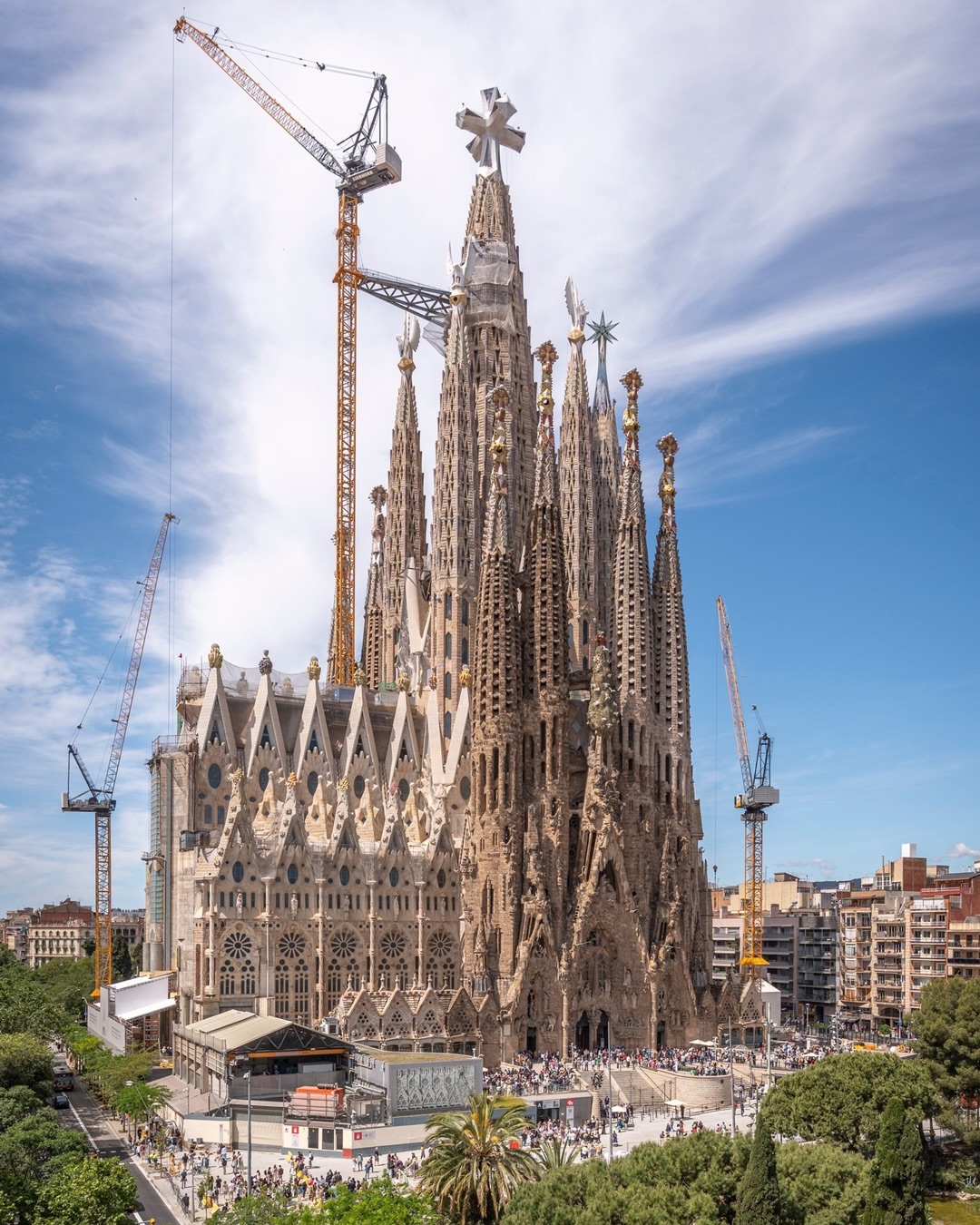
The Tower of Jesus Christ is the central and tallest of 18 planned towers at the Sagrada Família. Construction on this specific tower began in October 2018, starting from an initial height of 85 meters where existing structure already stood. By December 2024, builders reached 142.5 meters, setting the stage for the pinnacle elements that would bring the tower to its full height.
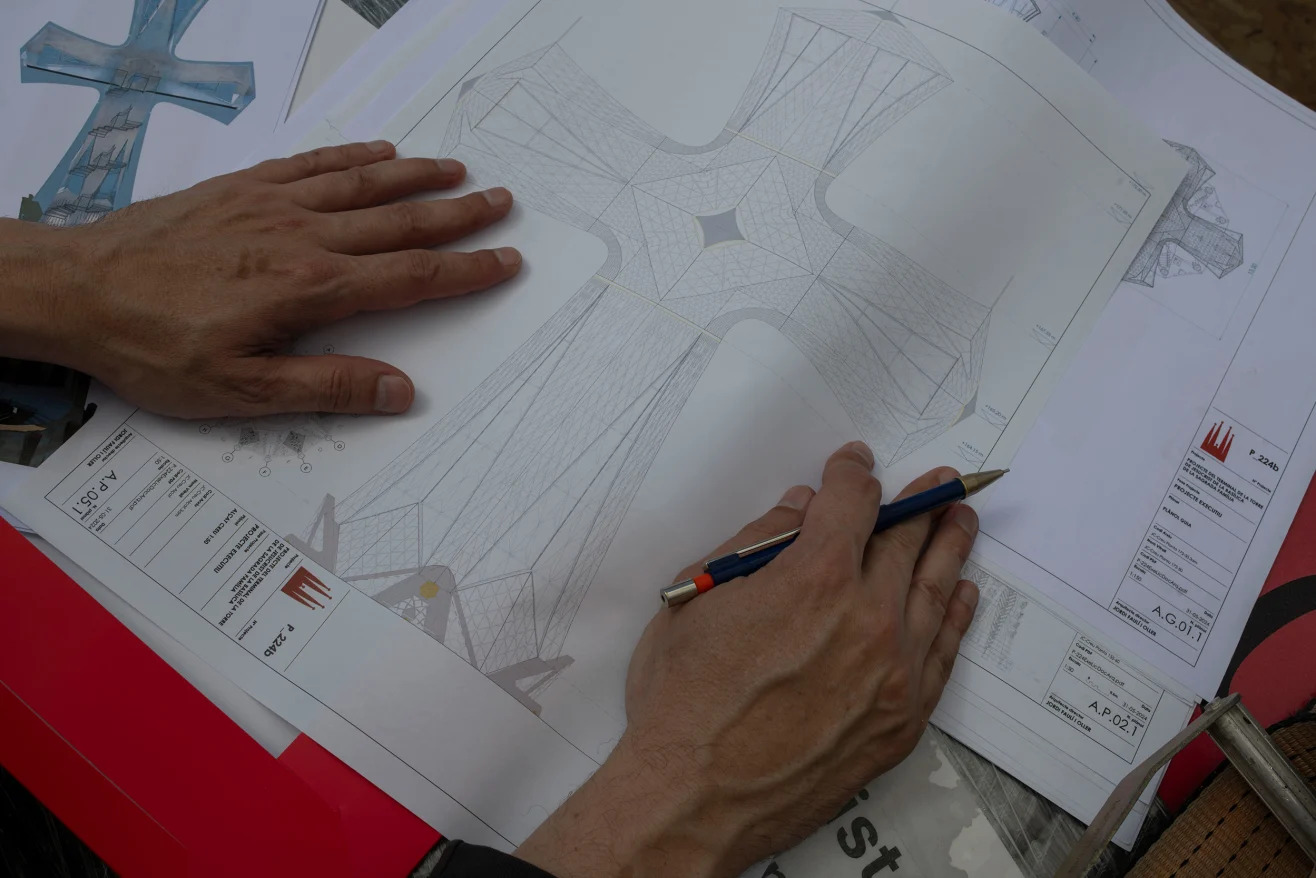
The crowning cross consists of four corrugated arms clad in glass and white enameled ceramic. These components were fabricated in Germany throughout 2025 and then shipped to Barcelona for assembly. Installation happened in seven carefully planned stages, with the final upper arm fitted into position on February 20, 2026. Thousands of spectators watched from the streets below as a crane lifted the last piece, which measured 4.5 by 4.5 by 4.9 meters, into place.
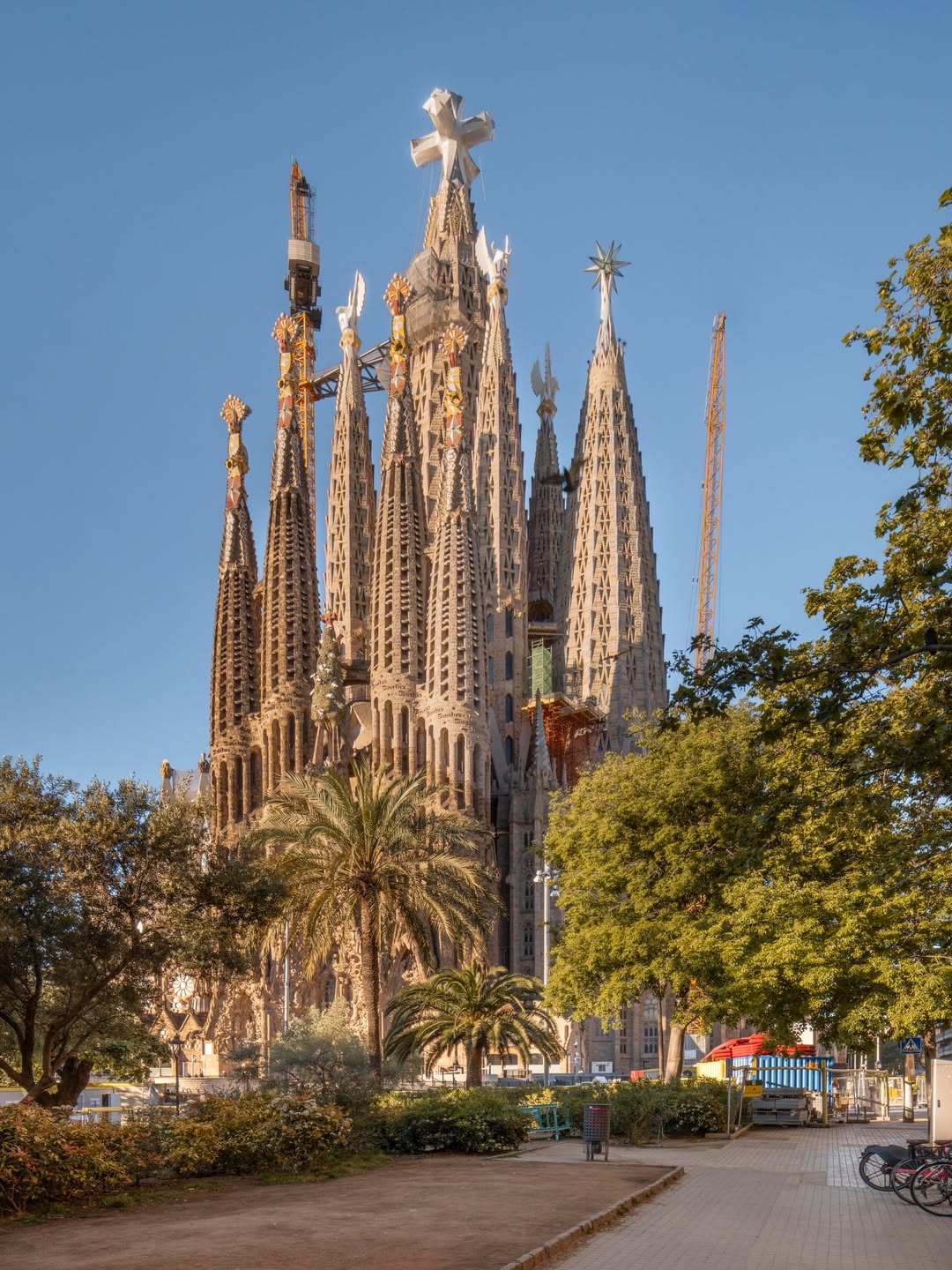
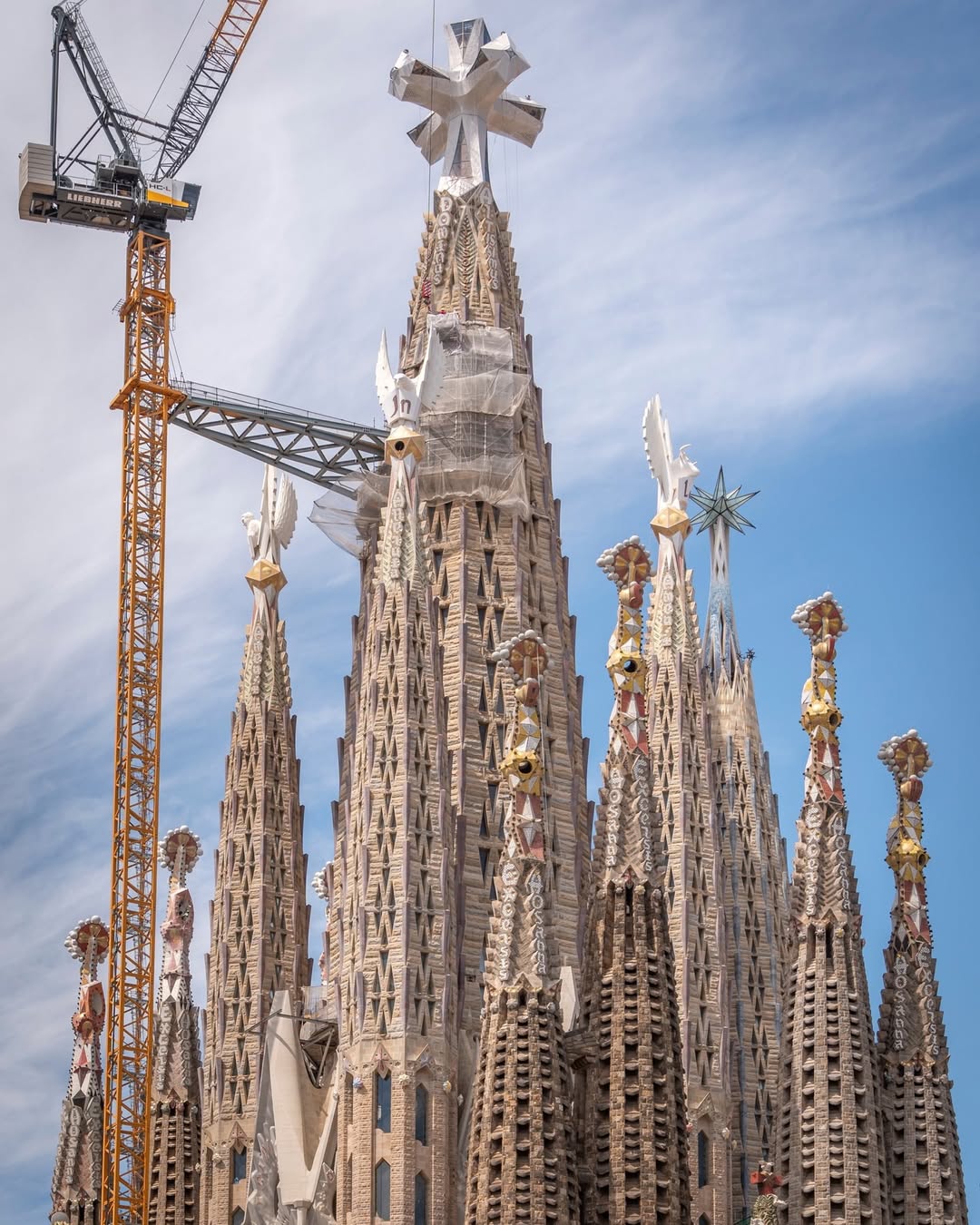
Head architect Jordi Faulí described the milestone in measured terms, noting that the completion of the cross represents years of studying the legacy Gaudí left behind. The tower is surrounded by four towers dedicated to the Evangelists and one tower honoring the Virgin Mary, all of which connect to the central structure internally. Together, they form the basilica’s distinctive skyline profile that Gaudí sketched in his original drawings.
📐 Technical Note
The Tower of Jesus Christ uses prefabricated stone panels up to 6 by 5 meters per section, tensioned with internal steel rods to resist wind loads at heights above 140 meters. This hybrid stone-and-steel approach allowed builders to achieve structural heights that traditional masonry alone could not safely support, while maintaining the stone aesthetic Gaudí specified in his original plans.
Pope Leo XIV Blesses the Tower on Gaudí’s Centenary
The papal visit to Barcelona on June 10, 2026, was timed to coincide with the 100th anniversary of Gaudí’s death. Pope Leo XIV presided over a Solemn Mass inside the basilica before blessing the Tower of Jesus Christ in a ceremony that drew global media coverage. The event was accompanied by a light display that turned the completed tower into a luminous vertical spectacle visible across the city.
During his homily, the pope highlighted the basilica’s open doors and outstretched arms as symbols of welcome. He pointed to the tower and its cross as signs of hope and divine love, then urged the faithful to look upward. The ceremony represented one of the most significant moments in the Sagrada Família’s recent history, given the presence of the pontiff and the architectural weight of the occasion.
The Gaudí Year celebrations extend well beyond this single event. The Fundació Junta Constructora planned 31 events spread between the fall of 2025 and Christmas 2026, with a total budget of 3.2 million euros covered entirely by a patronage plan promoted by the basilica. In 2025, the Vatican also recognized Gaudí’s “heroic virtues,” placing him on the official path toward sainthood, a rare distinction for an architect whose faith shaped every design decision.
🎓 Expert Insight
“Completion of the cross on the tower of Jesus Christ represents much more than the culmination of a phase of construction: it is the result of years of work and studying the legacy Antoni Gaudí left us.” Jordi Faulí, Chief Architect, Sagrada Família
Faulí has led the project since 2012 and oversaw the transition from traditional building methods to digital modeling, 3D printing, and industrial robotics. His remark captures the tension between preserving Gaudí’s intent and adapting it to modern engineering realities.
From 1882 to 2026: A 144-Year Construction Timeline
The first stone was laid on March 19, 1882, under architect Francisco de Paula del Villar. After disagreements with the building committee, Villar resigned in 1883, and the 31-year-old Gaudí took over. He would spend the remaining 43 years of his life working on the project, eventually moving into a workshop on site and dedicating himself to the basilica full time during his final years.
At the time of his death in 1926, only one tower and the crypt were complete. Gaudí knew he would never see the finished building. He reportedly told colleagues that his client, referring to God, was in no hurry. The project passed through multiple chief architects, each interpreting Gaudí’s vision with whatever documentation survived.
That documentation nearly vanished entirely. In July 1936, at the start of the Spanish Civil War, anti-clericalist groups stormed the basilica and set fire to the crypt and Gaudí’s workshop. They destroyed many of his plaster models and construction plans. Gaudí’s collaborators later reconstructed the lost information from memory and fragments, giving future generations enough to continue. This reconstruction effort is one of the least celebrated but most important chapters in the basilica’s story.
For decades, progress was slow. Funding came entirely from private donations, with no government support. The pace accelerated dramatically in the late 20th and early 21st centuries as tourism revenue transformed the financial picture. The Sagrada Família sold 4.8 million tickets in 2024, making it Spain’s most visited church that charges admission. That revenue stream, along with private contributions, now funds a construction budget that keeps hundreds of workers and specialists employed year-round.
💡 Pro Tip
If you are studying long-duration construction projects, the Sagrada Família offers a case study in how funding models determine timelines. Unlike most major civic or religious buildings, this basilica has never received government funding. Its entire construction budget depends on visitor ticket sales and donations, which means economic downturns and events like COVID-19 directly translate into construction delays.
Why Did the Sagrada Família Take So Long to Build?
Three factors explain the 144-year timeline. First, Gaudí’s design complexity exceeded anything conventional construction methods could deliver at reasonable speed. His organic forms, ruled surfaces, and hyperboloid structures required builders to solve engineering problems that had no precedent. Second, funding was never guaranteed. The basilica operated as an expiatory temple, meaning it relied on atonement-driven donations rather than institutional budgets. Third, external disruptions kept setting the project back. The Spanish Civil War destroyed critical plans. Construction halted during both World Wars. And the COVID-19 pandemic, which shut down tourism for months, deprived the project of its primary income source and pushed back a previous target to complete the tower by 2026.
Technology eventually became the accelerator. Faulí has credited digital modeling software, 3D printing, and industrial robots with enabling his team to interpret Gaudí’s remaining sketches and models at a pace that would have been unthinkable even 30 years ago. Gaudí himself anticipated this, designing a system of structural logic rather than fixed blueprints, equipping his successors with principles they could apply as tools improved.
The construction approach also evolved from hand-cut stone to prefabricated components produced off-site, transported to Barcelona, and assembled with crane systems. The cross atop the Tower of Jesus Christ followed exactly this method: fabricated in Germany, shipped to Spain, and installed piece by piece over seven stages. This industrial approach compressed what might have taken years of on-site carving into months of factory production and on-site assembly.
Video: The Sagrada Família Reaches Its Full Height
This video covers the February 2026 milestone when the final cross piece was installed atop the Tower of Jesus Christ, bringing the Sagrada Família to 172.5 meters.
What Remains Unfinished at the Sagrada Família?
Despite the tower milestone, the Sagrada Família is far from complete. The Glory Facade, the largest and most symbolically important of the three facades, remains under construction. This entrance, facing southeast toward the sea, is meant to represent the path from death to glory and will eventually serve as the basilica’s main entry point.
The Glory Facade project has generated tension with local residents. Plans call for a monumental stairway that would require demolishing several existing residential buildings on Carrer de Mallorca. Neighbors have organized opposition, fearing displacement from homes and businesses they have occupied for decades. The conflict highlights a friction that often accompanies long-duration public projects: a building conceived 144 years ago must now negotiate with a living neighborhood that grew up around it.
Interior work, facade detailing, and decorative elements across all three facades also remain on the schedule. Chief architect Faulí has estimated that full completion, including every decorative and finishing detail Gaudí envisioned, may not arrive until 2030 or 2032. Some observers have suggested even that timeline may be optimistic. The distinction matters: the tower’s structural completion in 2026 is a milestone, but the basilica as Gaudí imagined it, with every sculptural program, every stained glass panel, and every facade detail in place, is still years away.
💡 Pro Tip
Architects studying sacred architecture and symbolism should pay close attention to how the Sagrada Família distributes meaning across its three facades. The Nativity Facade (completed under Gaudí), the Passion Facade (by sculptor Josep Maria Subirachs), and the unfinished Glory Facade each use radically different sculptural languages to depict stages of Christ’s life, creating a theological narrative that visitors read as they walk around the building.
Gaudí’s Design Logic: Nature as Structure
What makes the Sagrada Família structurally unique is not just its height but how it achieves that height. Gaudí rejected the flying buttresses that Gothic cathedrals like Notre-Dame relied on to support tall walls and large windows. Instead, he designed a system of branching columns that transfer loads directly to the ground, much like a tree distributes the weight of its canopy through trunk and roots.
These columns, visible inside the basilica’s nave, split and branch at calculated angles, creating a forest-like interior bathed in colored light from the stained glass windows. The structural system eliminates the need for external buttressing, which is why the Sagrada Família’s exterior lacks the skeletal framework visible on traditional Gothic churches. Gaudí arrived at these forms through physical experiments with hanging chain models, inverting them to discover the ideal compression shapes for stone arches and vaults. Modern computational analysis has confirmed that his intuitive methods produced structurally efficient results.
The 18 towers themselves carry symbolic weight. Twelve represent the Apostles, four represent the Evangelists, one honors the Virgin Mary, and the tallest, the Tower of Jesus Christ, represents Christ. Gaudí designed a height hierarchy among them: the Apostle towers are the shortest, the Evangelist towers rise higher, the Virgin Mary tower higher still, and the Jesus Christ tower stands above all. This vertical ranking maps theological hierarchy onto physical form, a design principle that connects the Sagrada Família to centuries of Gaudí’s broader architectural philosophy.
🏗️ Real-World Example
Ulm Minster (Ulm, Germany, 1890): Before the Sagrada Família claimed the record, Ulm Minster held the title of world’s tallest church for 135 years. Its single Gothic spire reaches 161.53 meters and was completed using traditional masonry techniques. The contrast with the Sagrada Família is instructive: Ulm achieved its height through a conventional Gothic spire, while Gaudí’s tower uses an entirely original structural system inspired by natural forms rather than historical precedent.
Visiting the Sagrada Família in Barcelona
The basilica is located in Barcelona’s Eixample district and is accessible via the Sagrada Família metro station on Lines 2 and 5. Sagrada Família tickets should be purchased in advance through the official website, as daily capacity is limited and slots sell out quickly, especially during peak tourist season.
In 2024, 4.9 million people visited the basilica, with 15% of them arriving from the United States. The revenue from these visits directly funds ongoing construction. Several ticket tiers are available, ranging from basic entry with an audio guide to guided tours and tower access. Free admission is available for Sunday Mass, though capacity is limited and no reservation is required.
The basilica was designated a UNESCO World Heritage Site in 2005 as part of the broader “Works of Antoni Gaudí” inscription. Seven of Gaudí’s Barcelona buildings carry this designation, including Casa Batlló and Park Güell.
Comparison of the World’s Tallest Churches
The following table shows how the Sagrada Família compares with other major churches by height:
| Church | Location | Height | Completed |
|---|---|---|---|
| Sagrada Família | Barcelona, Spain | 172.5 m (566 ft) | 2026 (tower) |
| Ulm Minster | Ulm, Germany | 161.5 m (530 ft) | 1890 |
| St. Peter’s Basilica | Vatican City | 137 m (449 ft) | 1626 |
| Cologne Cathedral | Cologne, Germany | 157 m (515 ft) | 1880 |
| Milan Cathedral | Milan, Italy | 108 m (354 ft) | 1965 |
✅ Key Takeaways
- The Sagrada Família now stands at 172.5 meters, surpassing Ulm Minster to become the world’s tallest church.
- The Tower of Jesus Christ was crowned with a 17-meter cross on February 20, 2026, and blessed by Pope Leo XIV on June 10, the centenary of Gaudí’s death.
- Construction began in 1882 and was delayed by the Spanish Civil War, funding gaps, and the COVID-19 pandemic over its 144-year history.
- The basilica funds itself through ticket sales (4.8 million in 2024) and private donations, with no government support.
- Full completion, including the Glory Facade and all decorative work, is estimated for 2030 to 2032.
For a deeper look at Gaudí’s structural philosophy and how sacred geometry shapes every element of this basilica, see our full guide to Sagrada Família architecture and Gaudí’s design principles. To explore more of Gaudí’s Barcelona, including the recently restored Casa Batlló and six other UNESCO-listed buildings, read our guide to Gaudí’s Barcelona buildings.
- barcelona church sagrada de familia
- basílica de la sagrada família
- basilica de la sagrada familia
- basilica de sagrada familia barcelona
- how tall is the sagrada familia
- la sagrada familia
- sagrada família
- Sagrada Familia
- sagrada familia barcelona
- Sagrada Família Barcelona
- sagrada familia church
- sagrada familia tickets



MoMA’s Full Disclosure Exhibition Traces Information Design from Hand-Drawn Data to AI Memories
Full Disclosure: The Edge of Information Design, curated by Paola Antonelli, is...
 illustrarch Editoral Team2 Mins read
Zumthor’s Three New Buildings Open at Fondation Beyeler in Riehen
Peter Zumthor's Wyss Museum, Ammann Pavilion and Erlen Torhaus open at Fondation...
illustrarch Editoral Team4 Mins read

Benthem Crouwel Completes the Afsluitdijk Revamp with a Fish Passage and Domed Pumping Stations
The 32 km Afsluitdijk in the Netherlands has been raised, armoured and...
illustrarch Editoral Team2 Mins read
Luxembourg Pavilion Tackles the Overconsumption of Living Space at the 2027 Venice Biennale
Curated by Céline Zimmer and Exutoire, the Luxembourg Pavilion's Excess! will compare...
illustrarch Editoral Team2 Mins read


Leave a comment