

Restorers Uncover 16th-Century Murals Hidden by Nuns in Villa Silvestri Rivaldi
Conservators in Rome are uncovering 16th-century murals hidden for 300 years inside the Villa Silvestri Rivaldi.
 illustrarch Editoral Team22 October 20263 Mins read8
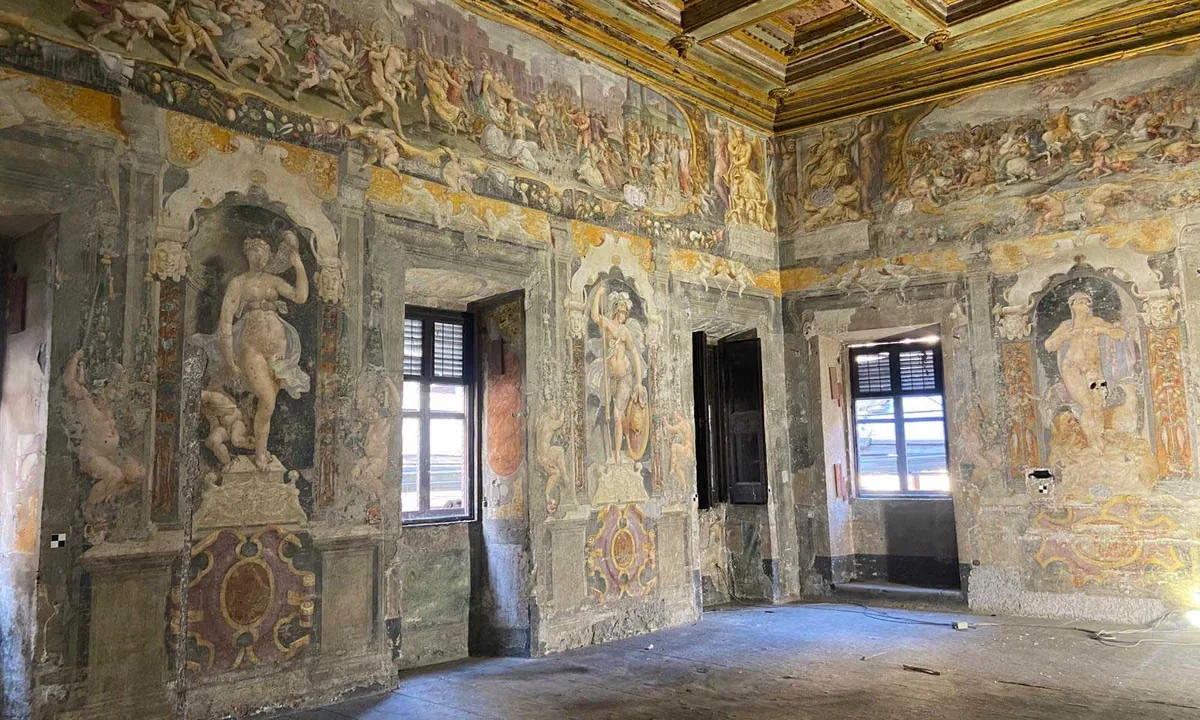
Behind scaffolding on Rome’s Via dei Fori Imperiali, a team of conservators is peeling back centuries of plaster to reveal an extensive set of 16th-century frescoes inside the Villa Silvestri Rivaldi, a once-grand residence that has sat largely unnoticed by the tourists heading to the nearby Colosseum. The paintings, attributed to some of the era’s most sought-after artists, were hidden from view for roughly 300 years after nuns who later occupied the building found the nude figures objectionable.
Restoration work only began in earnest this year, following the Lazio region’s purchase of the property in 2024 for 25 million euros. Inside, walls that are still largely coated in plain brown plaster occasionally give way to fragments of the murals underneath: an armored arm, a line of putti, a soldier mid-battle. In fully uncovered sections, researchers have found gods and goddesses, zodiac symbols and combat scenes with cavalry and lions.
The Villa Silvestri Rivaldi and its hidden murals
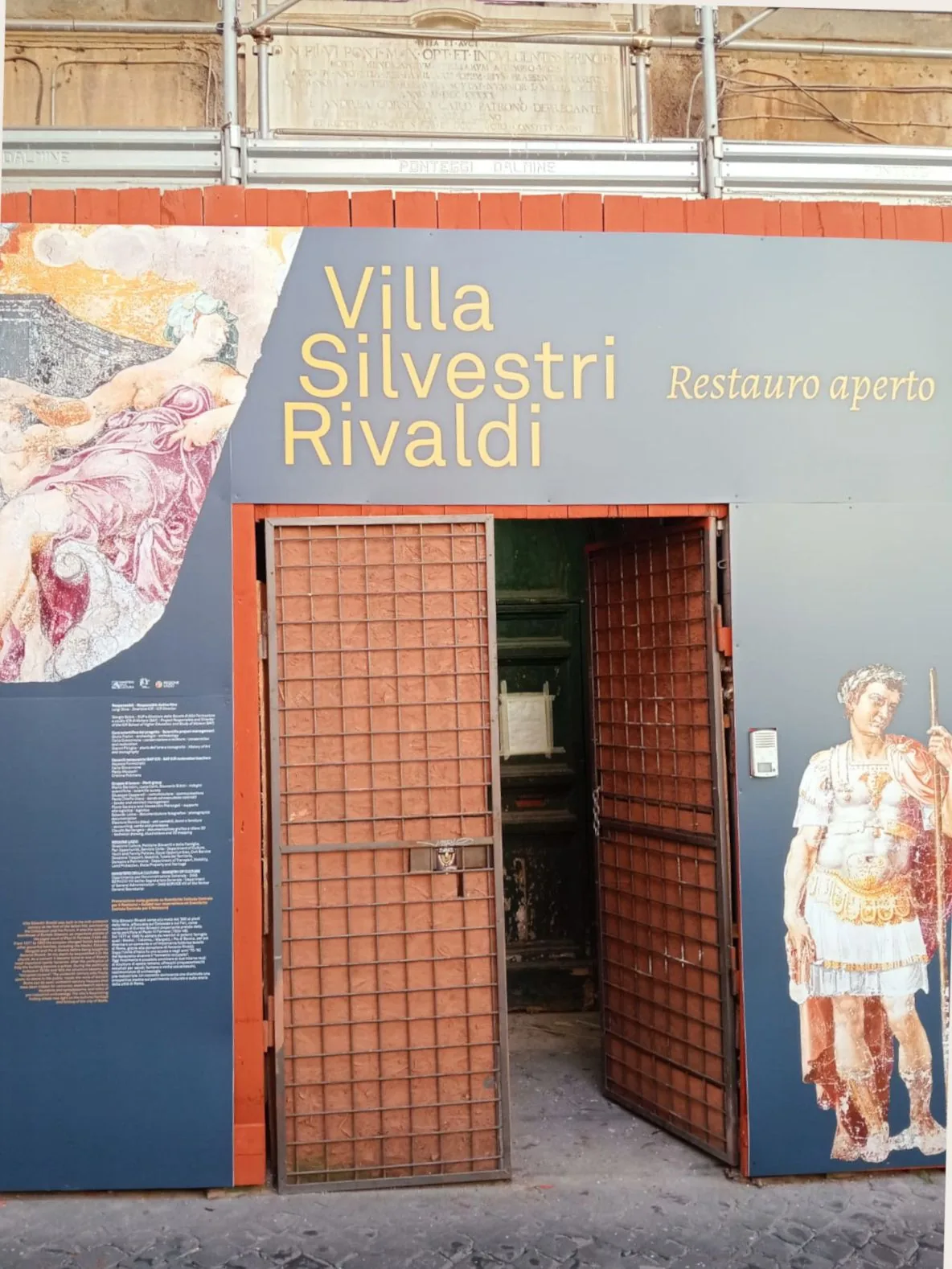
The villa was constructed in the mid-1500s by Eurialo Silvestri, a wealthy cleric who hoped the building’s grandeur would help him secure a cardinal’s post. That ambition never materialized, but the property passed through a succession of prominent owners, including a future pope and members of the Medici and Colonna families, all of whom added their own decorative touches. Because the villa overlooks both the Colosseum and the Roman Forum, its owners favored imagery drawn from classical mythology throughout the interior and in an elaborate garden that once featured a nymphaeum with a dozen fountains and shell-covered alcoves.
That changed in 1660, when ownership shifted to a religious order, the Conservatory of the Mendicant Spinsters, which used the building to run an orphanage and a girls’ school. The order’s nuns, offended by the nude mythological figures on the walls, had them painted over, and held the property for three centuries, at one point running a textile workshop out of it. After the nuns departed around 1970, the villa became a hub for community arts and activism, and was squatted in for a time, a period reflected in 20th-century graffiti the restoration team has found layered near the older paintings.
Paola Mezzadri, a conservator with the Istituto Centrale per il Restauro who is co-leading the research, said the presence of murals beneath the plaster was suspected long before funding allowed a proper restoration. “We were sure there was a mural there, and we did a cleaning test,” she said. “And it was clear that there was a lot to uncover. But at the time the building was owned by a religious order, and they didn’t have the funds to restore it.”
Identifying the artists behind the frescoes
Much of the recent progress has centered on the villa’s Hall of Divinities, where large semi-nude goddess figures appear in robes rendered in orange, yellow and green, some carrying weapons or armor. Art historian Gianni Pittiglio of the Istituto Centrale per il Restauro said research conducted partly at London’s British Library has helped narrow down authorship. “Work at the British Library in London has helped identify the probable artist as Prospero Fontana, we found drawings there that link him to these paintings,” Pittiglio said, adding that earlier work in the space was likely overseen by Perino del Vaga, whose paintings also appear at the Castel Sant’Angelo.
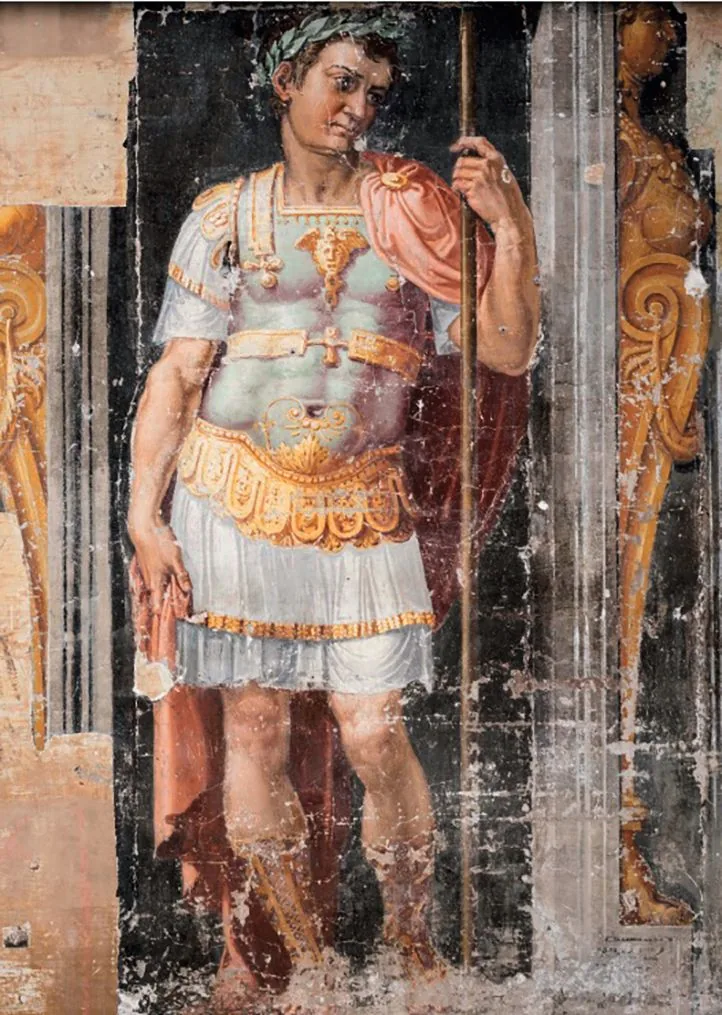
Restoration is continuing next door in the Hall of the Emperors, which features battle scenes and portraits of Roman rulers including Titus and Hadrian. Pittiglio described the space as a source of constant discovery. “We’re still finding out about the Hall of the Emperors. I come in here every few days and there are always new things to see and discover, it’s the most exciting project for me in the last 25 years,” he said. A further room, the Hall of Cupid and Psyche, has not yet been examined in depth.
What comes next for the restoration
Mezzadri said the pace of the work will depend heavily on funding, and it is too early to say when the restoration will be finished or how the villa will eventually be used. The team is deliberately avoiding harsh chemical cleaning methods. “We’re also working as much as possible without chemicals, using ‘green’, water-based techniques to clean the overpaint, and also lasers,” she said. She also noted the project is drawing on residents who remember the villa from its mid-20th-century community era.
Mezzadri said she expects the site to eventually take its place among Rome’s major attractions. “But one day, this will again be one of the most important places to visit in Rome, similar to the Villa Borghese, or the Castel Sant’Angelo,” she said. “It’s a remarkable project to be working on, we feel very fortunate to be part of it.”





A New Book Records the 1970s Interiors of Ebony and Jet’s Chicago Headquarters
820 Ebony/Jet collects Barbara Karant's photographs of the empty Johnson Publishing Company...
illustrarch Editoral Team2 Mins read

A 2,500-Year-Old Solar Observatory in Puebla Is the First Group E Complex Found Outside the Maya Area
Archaeologists working for Mexico's INAH have confirmed that two platforms at Teteles...
illustrarch Editoral Team2 Mins read
India Art, Architecture & Design Biennale 2026: Ministry of Culture Opens Delhi Monuments
Delhi's monuments, including Purana Quila and the Red Fort, will host the...
illustrarch Editoral Team2 Mins read
Allentown Art Museum Leaves Its Venturi, Scott Brown Addition for a New Studios Architecture Building
The Allentown Art Museum is moving to a new Studios Architecture building...
illustrarch Editoral Team2 Mins read


Leave a comment