

Rain Rhizome by TANAT and Rizoma del Agua
TANAT and Rizoma del Agua install Rain Rhizome, a public drinking fountain that collects, filters and serves rainwater at a community sports ground in Chimalhuacán, Mexico.
 illustrarch Editoral Team8 November 20262 Mins read1
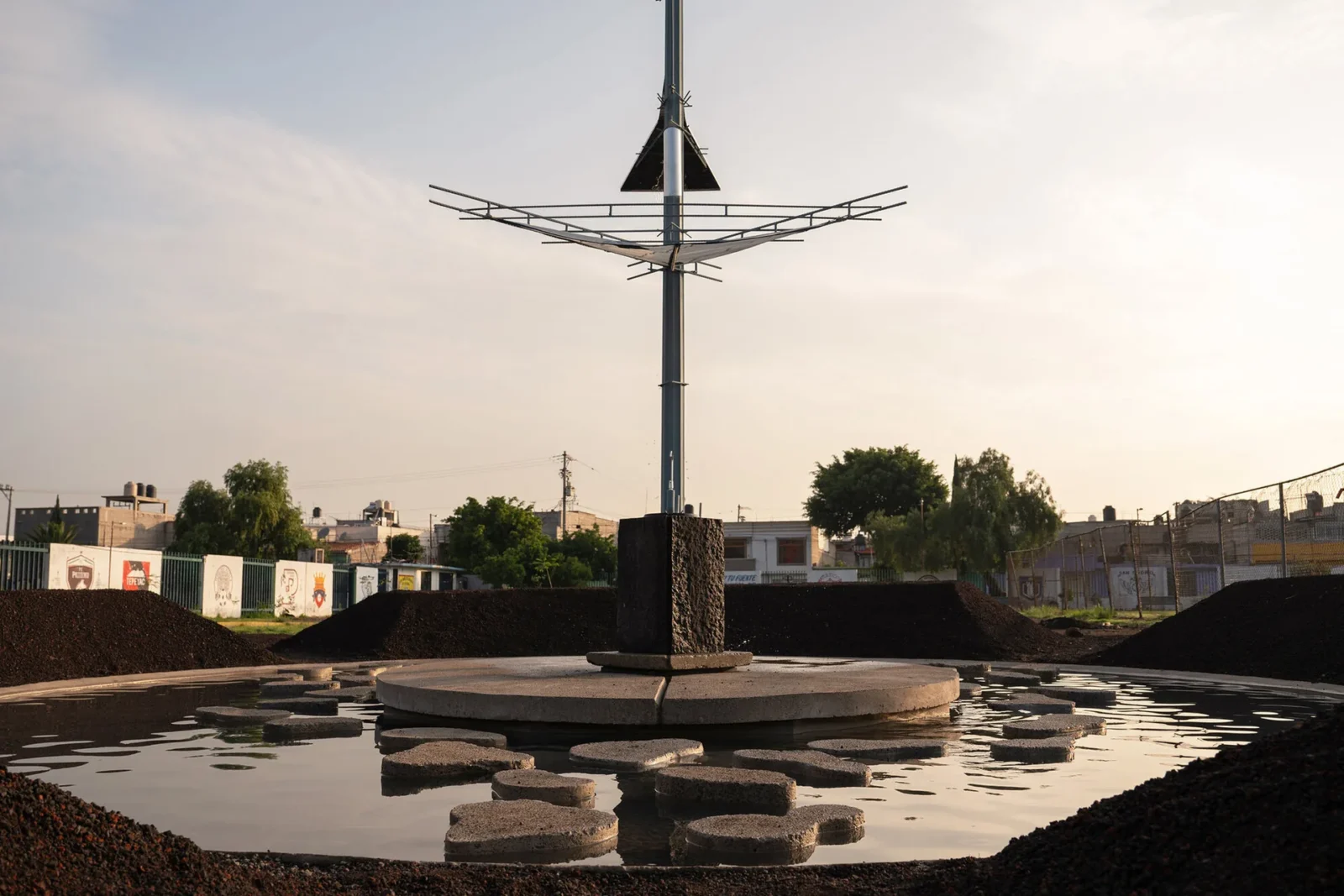
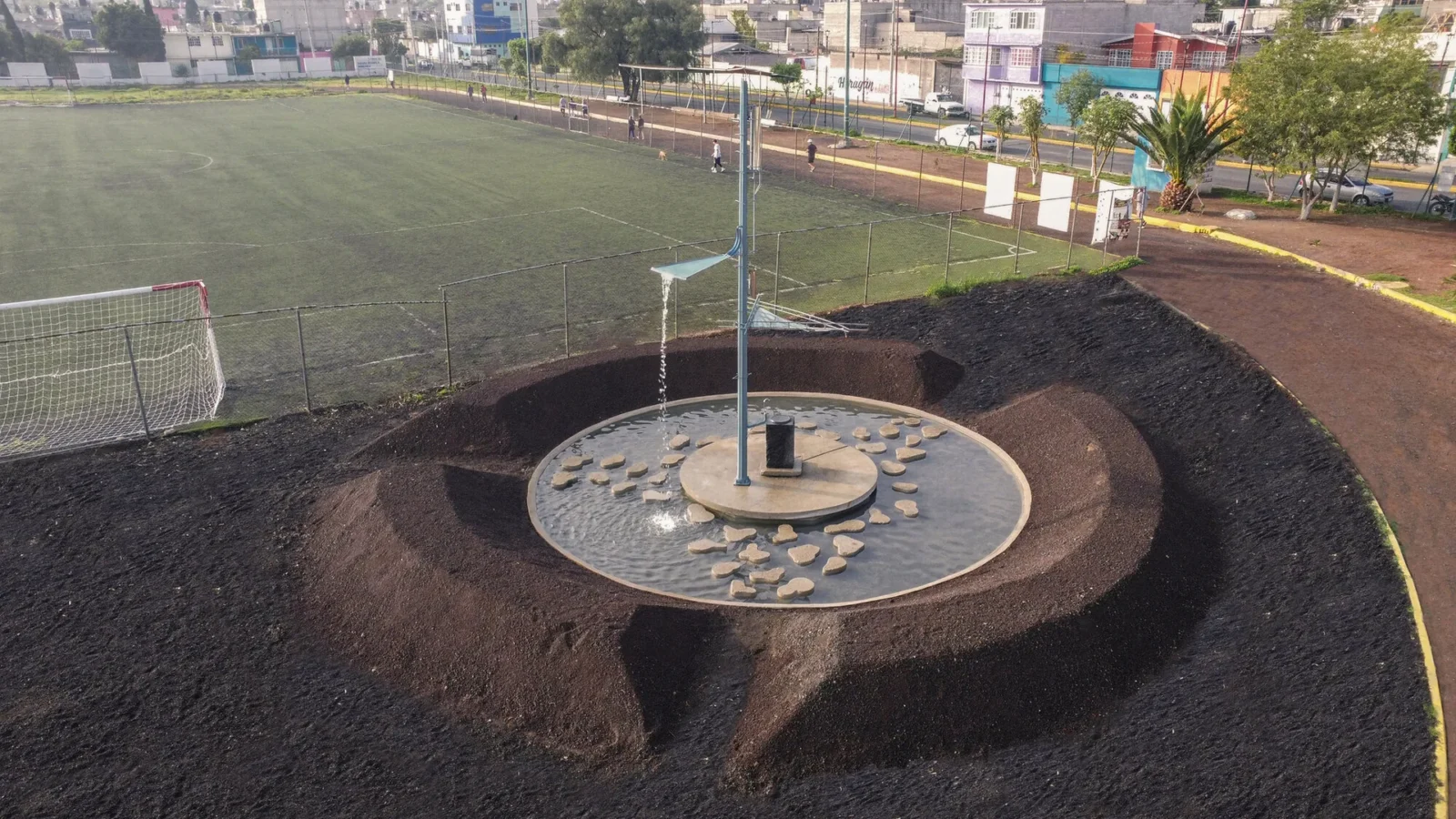
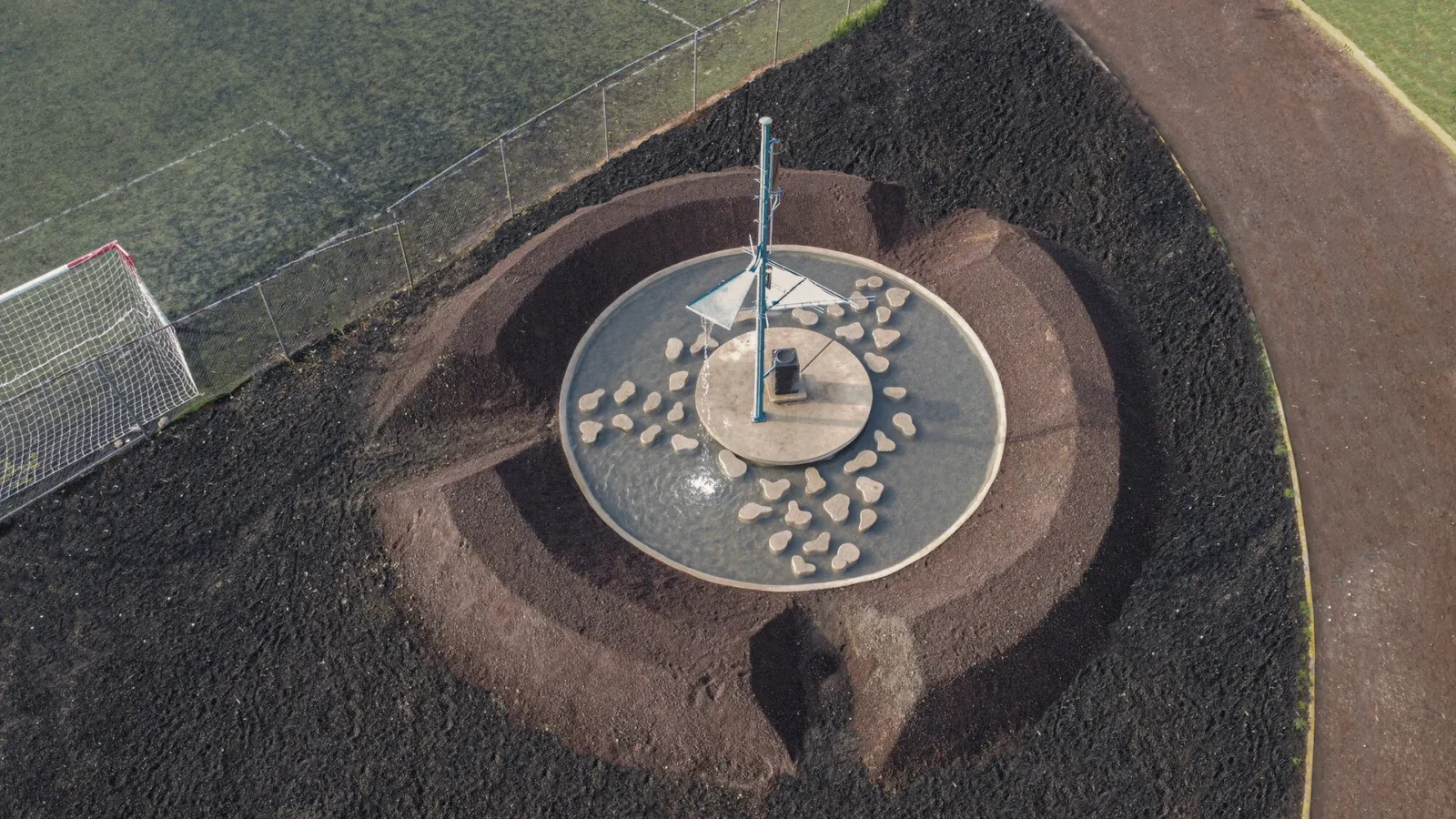

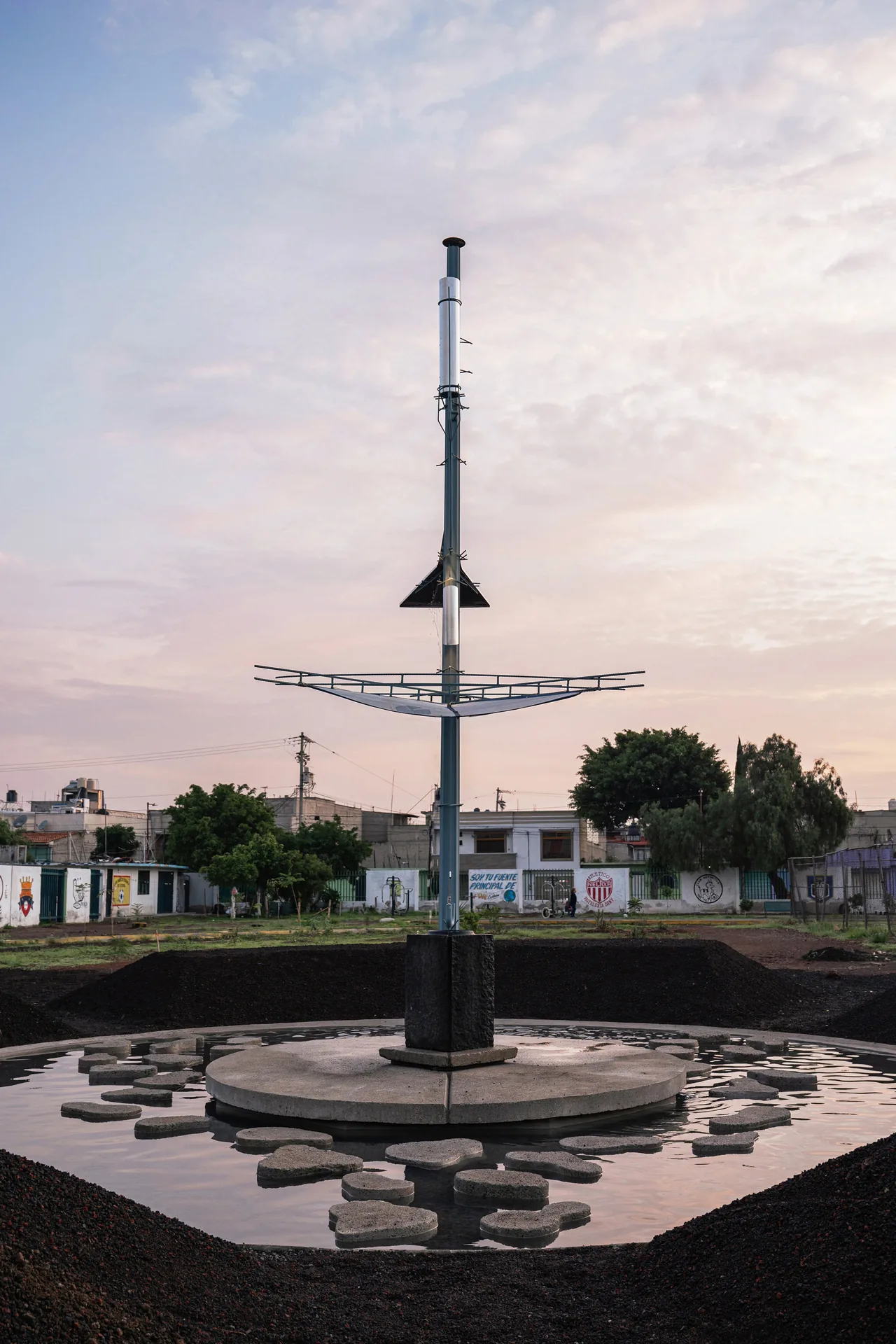
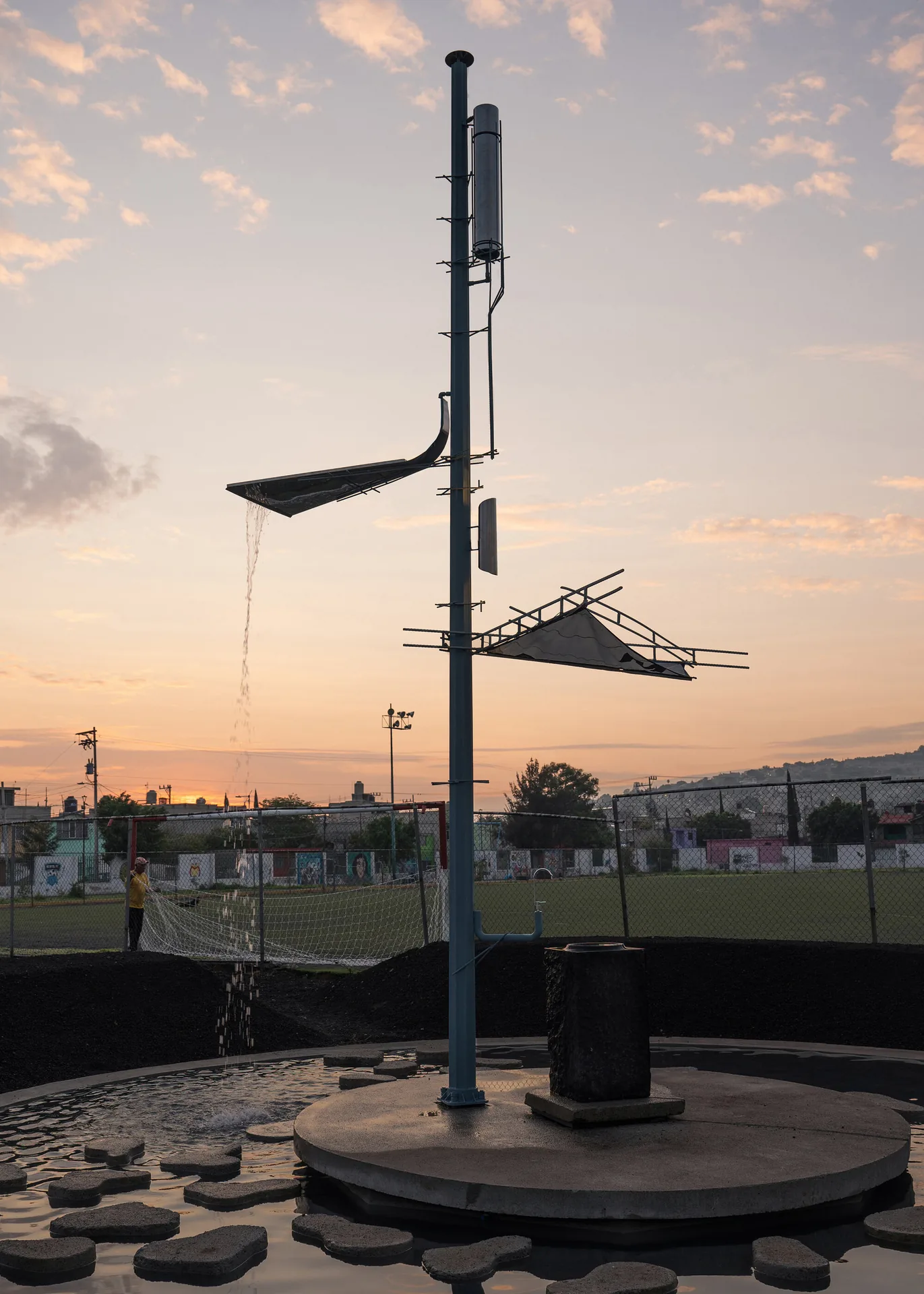


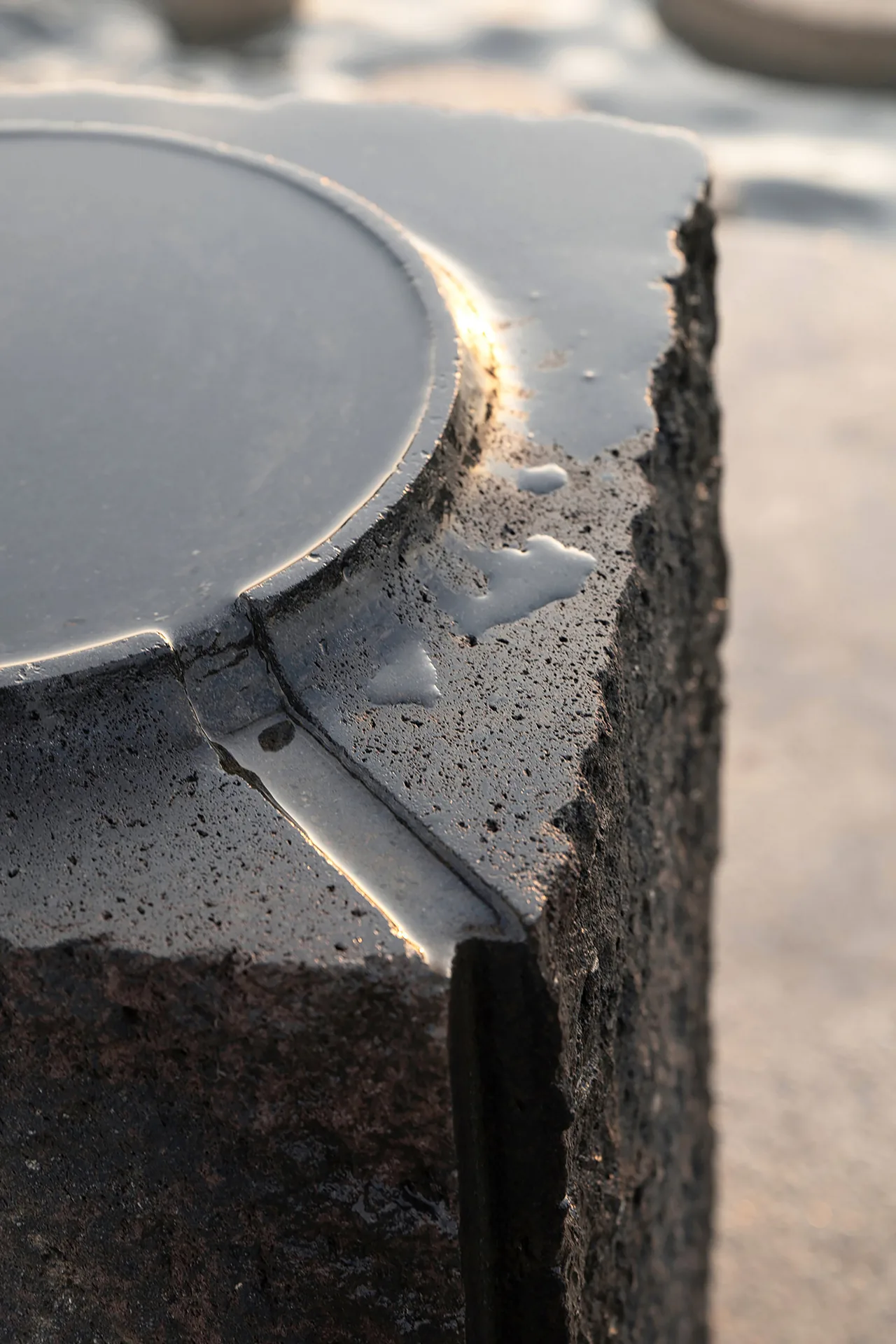

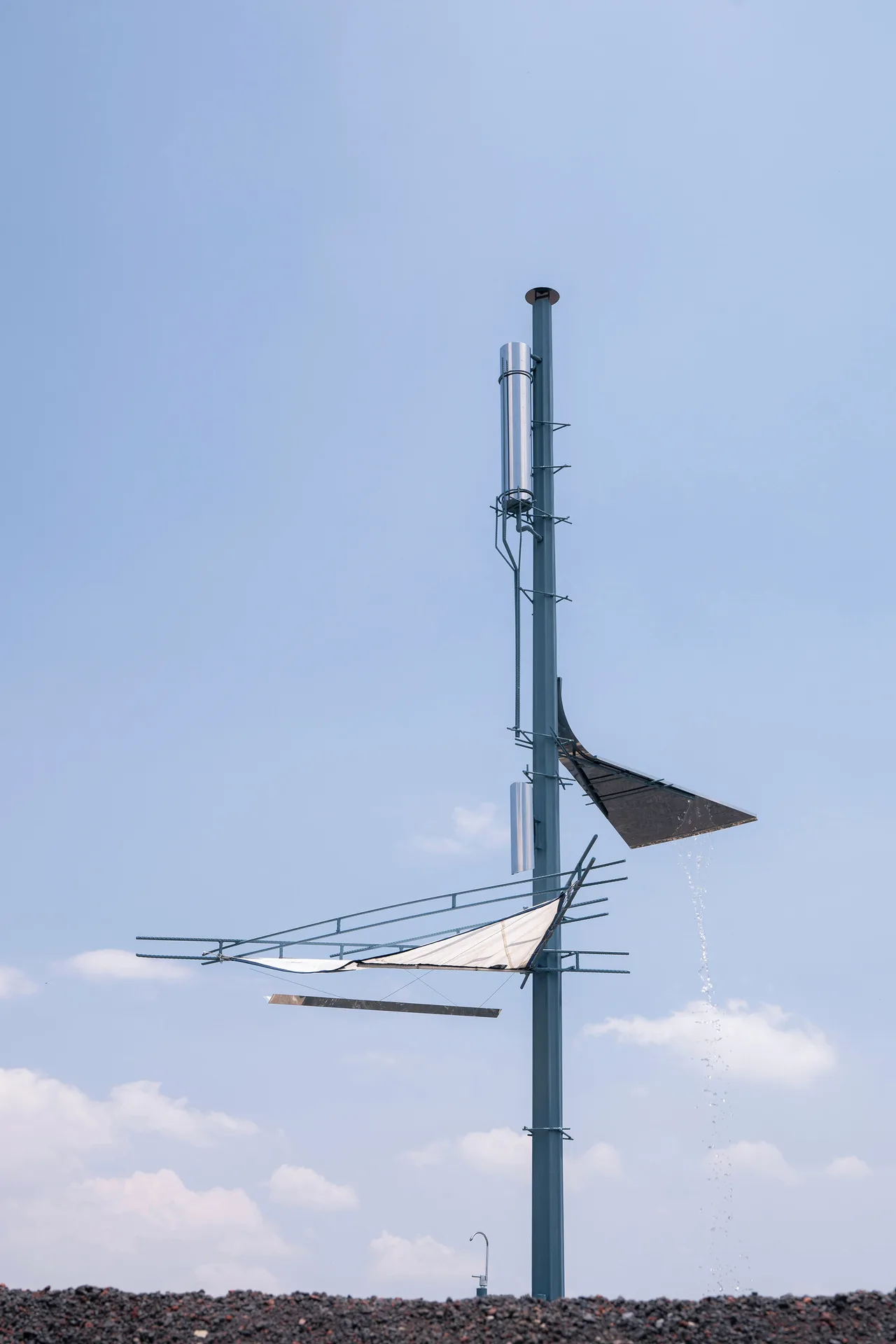
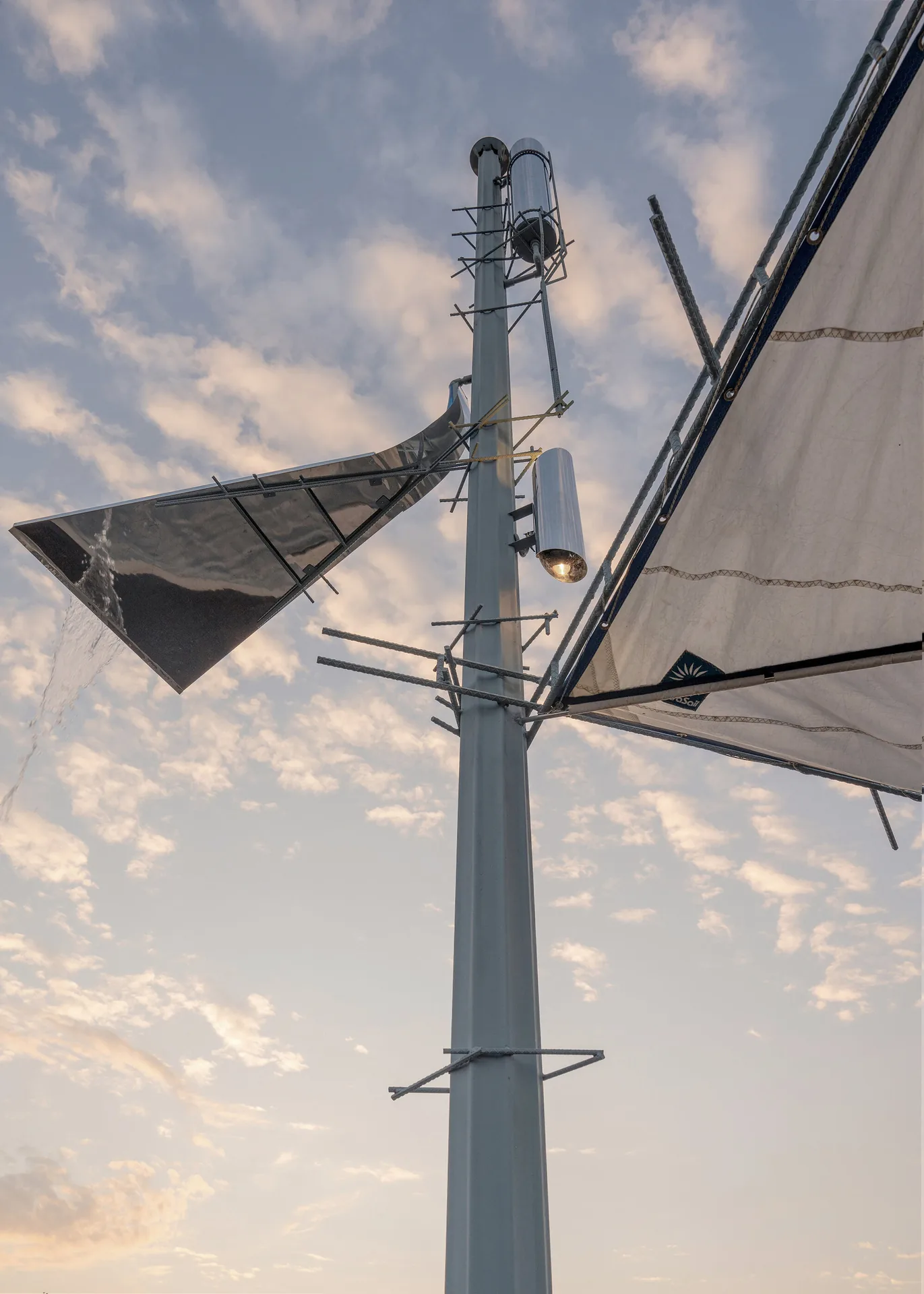
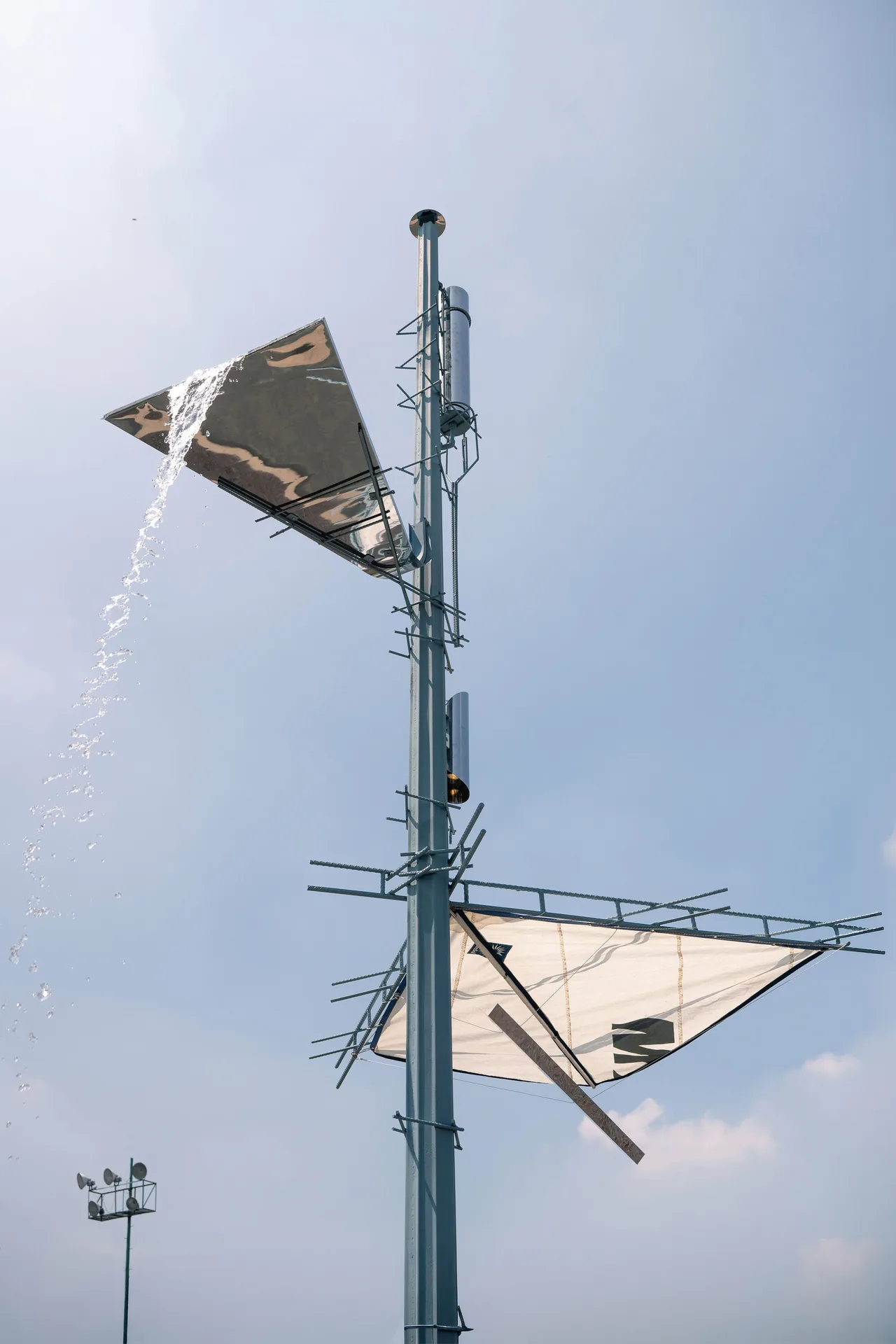
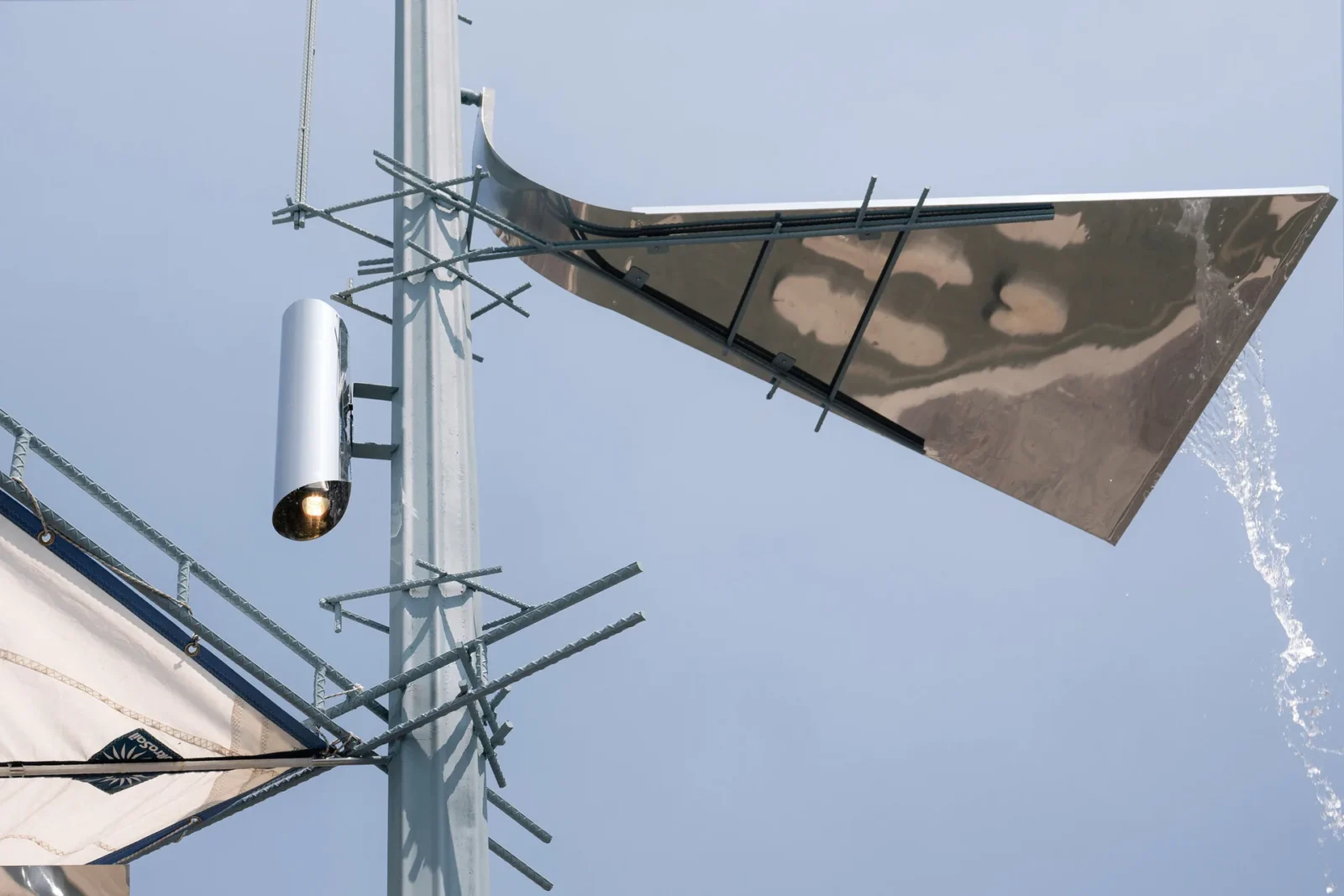
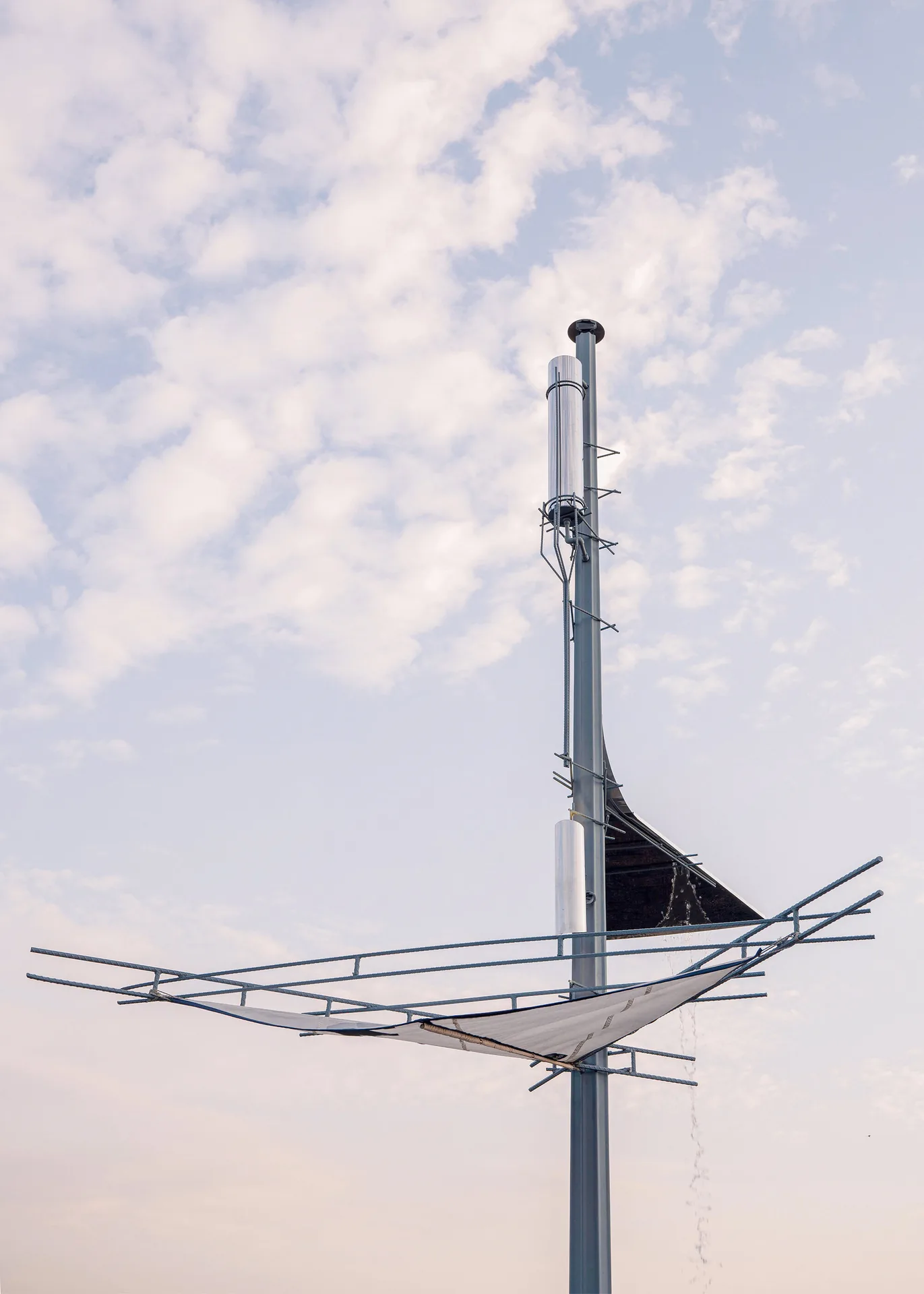
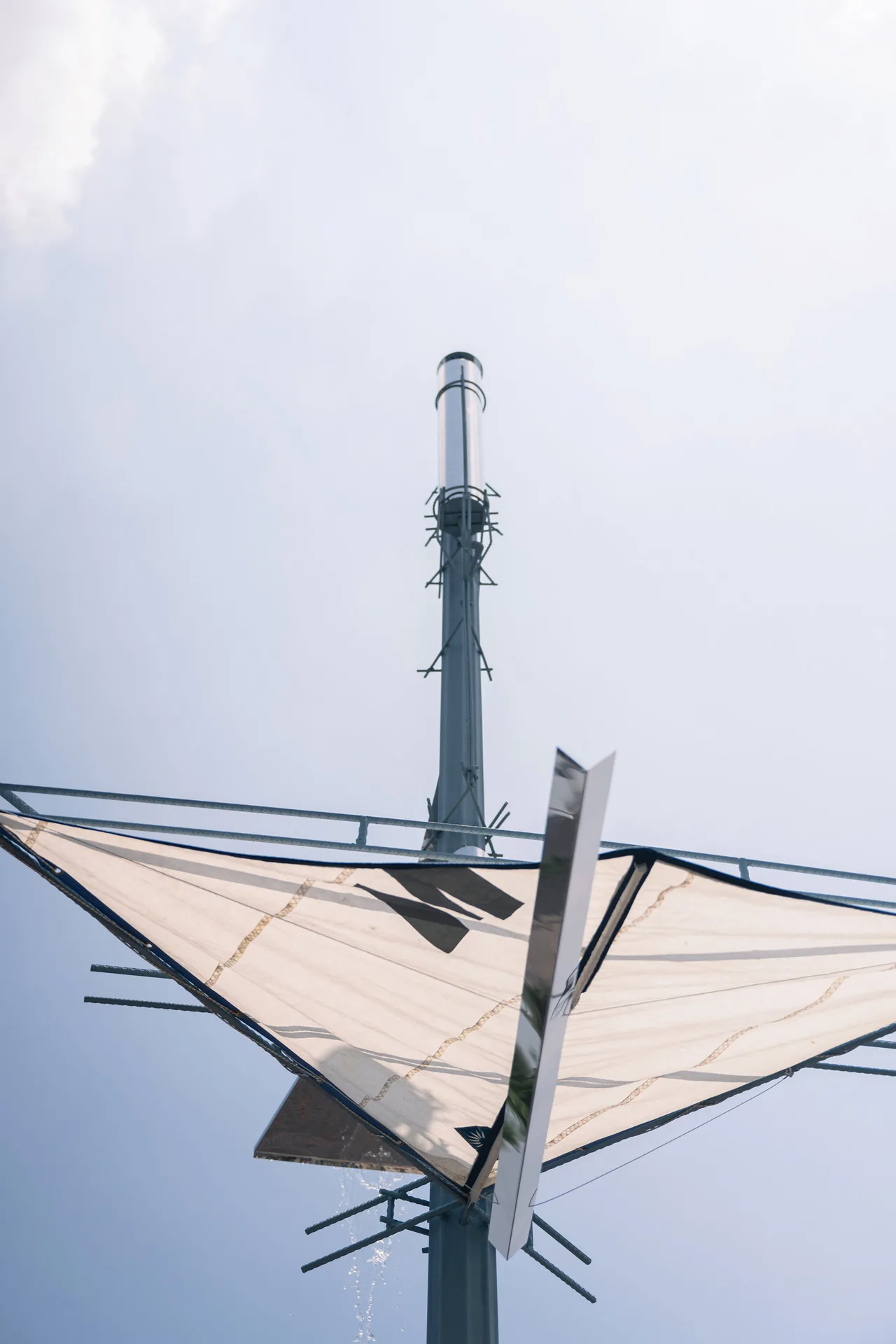
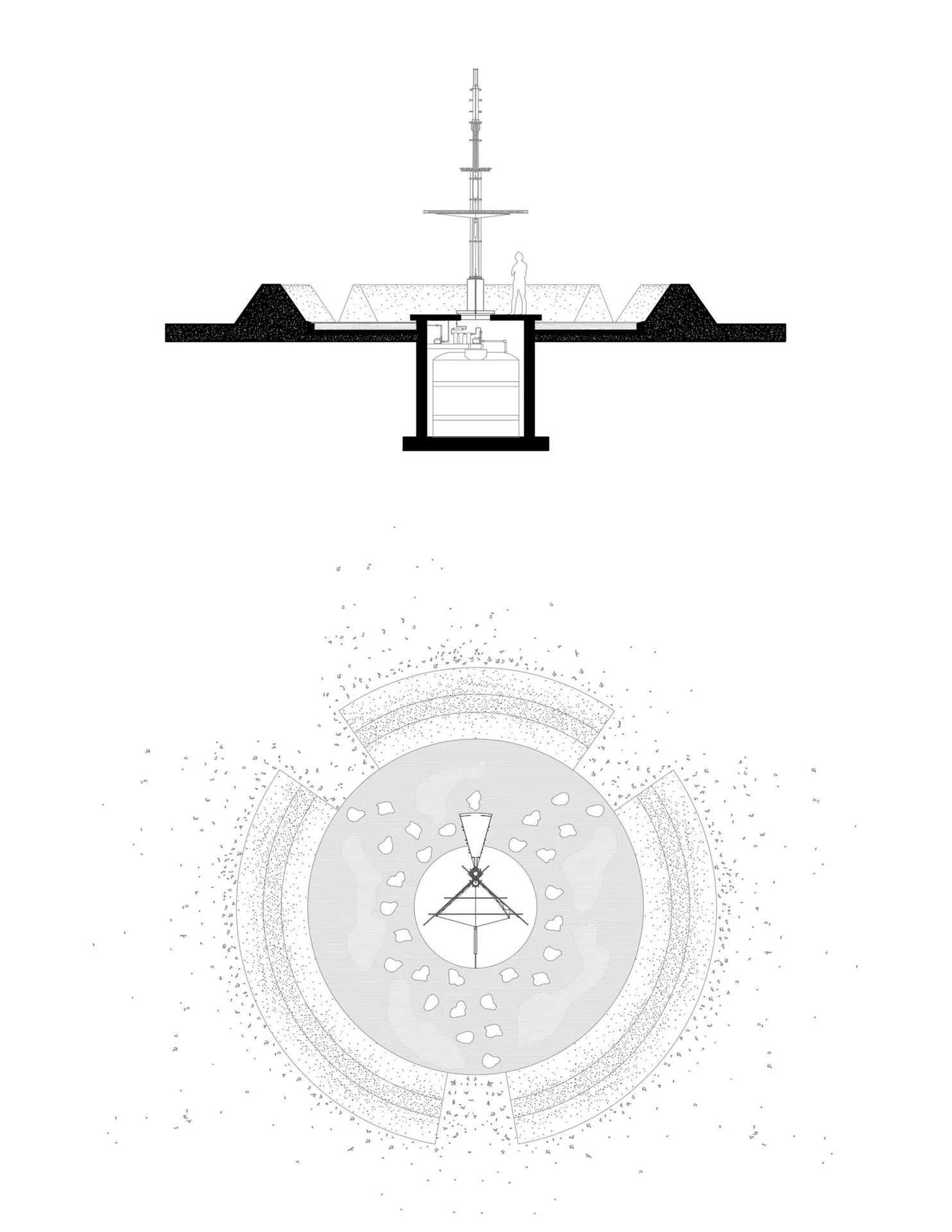
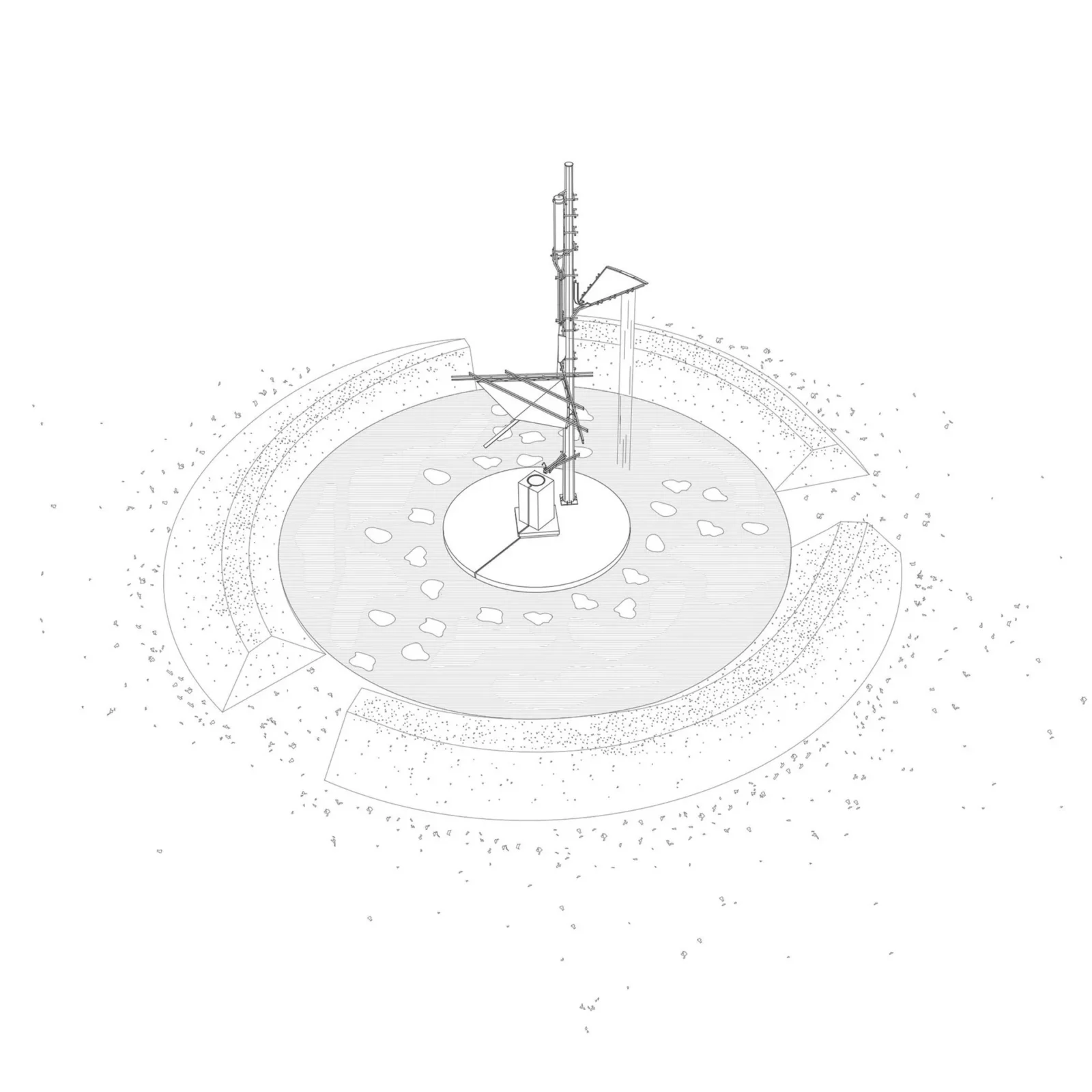
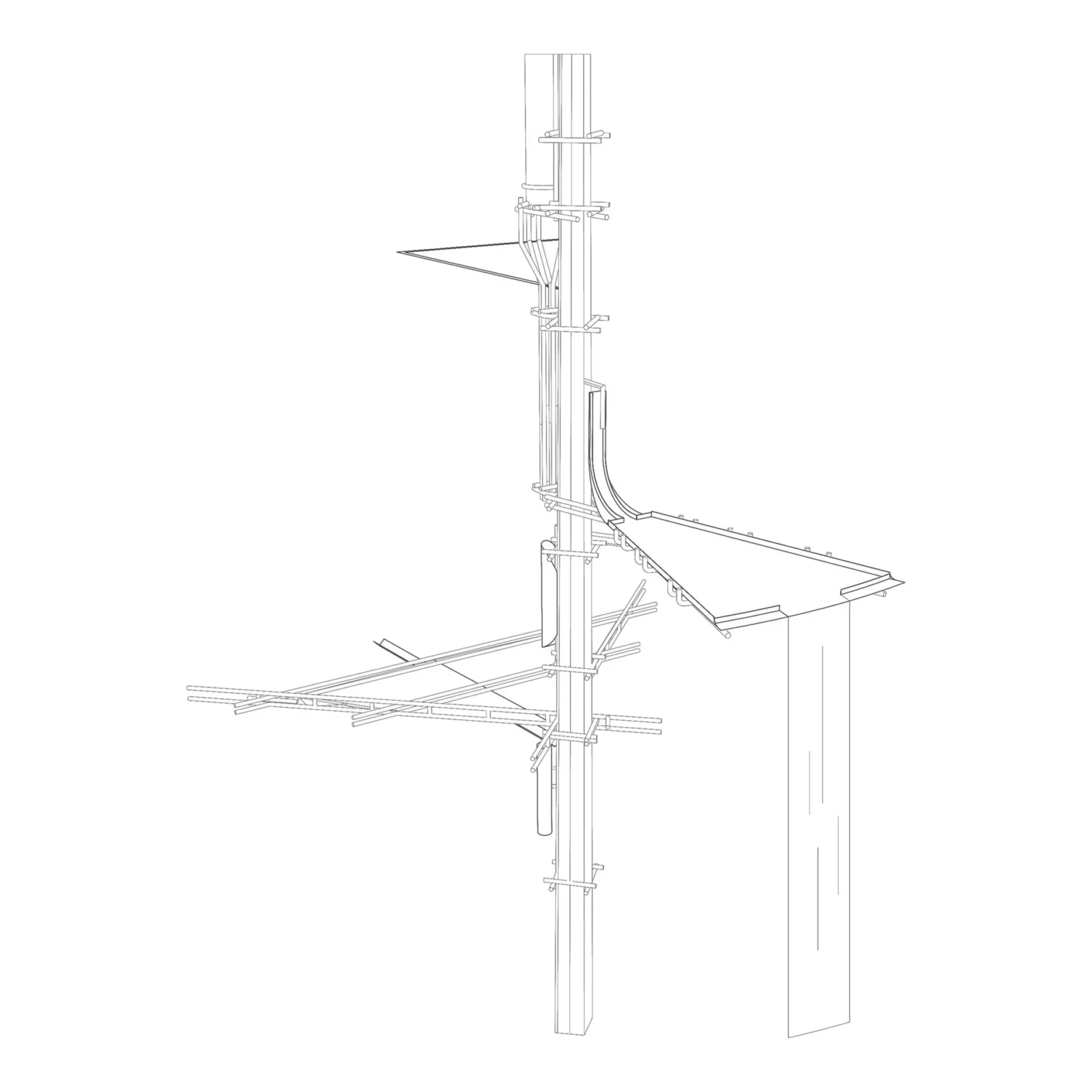
Table of Contents Show
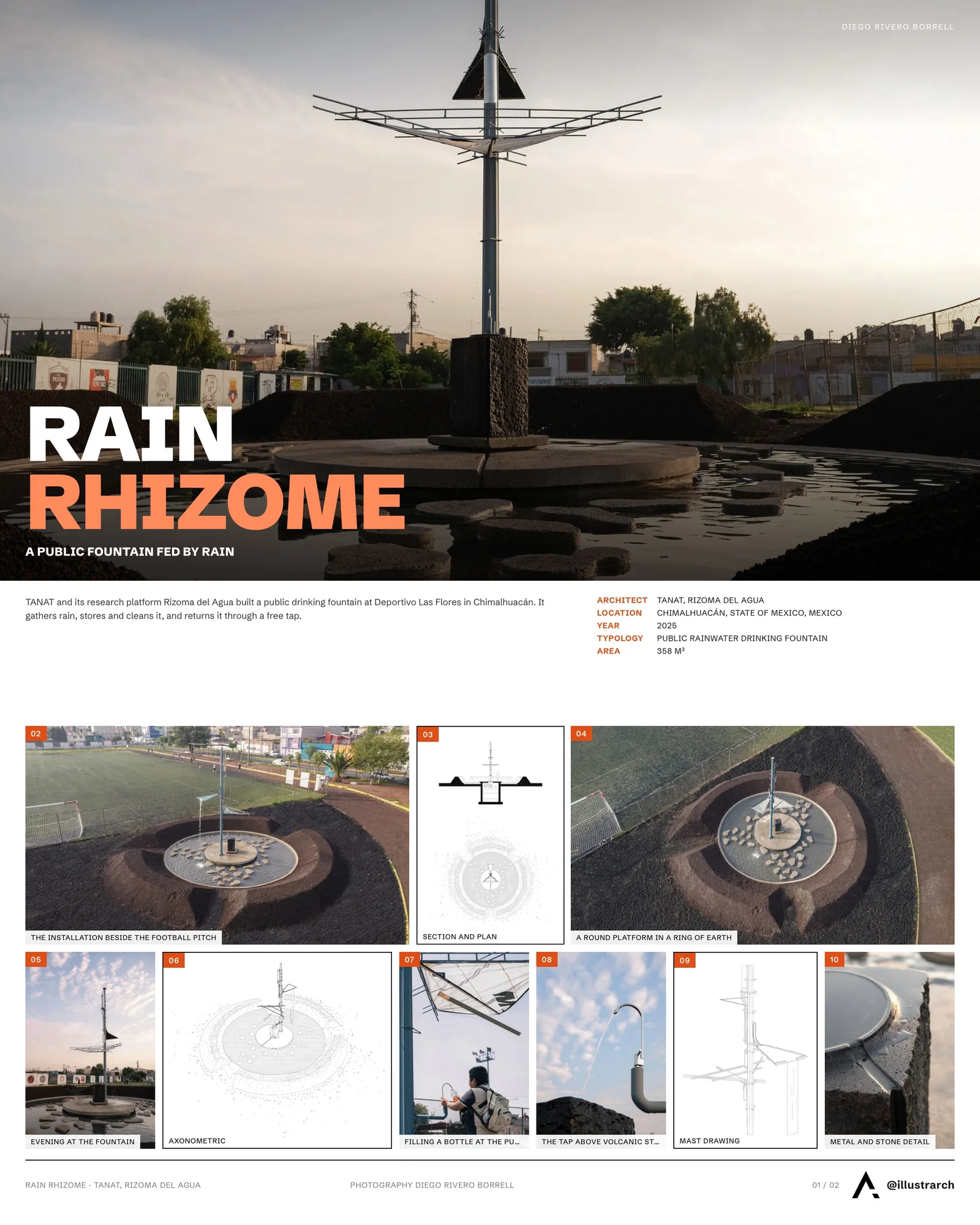
Rain Rhizome is a public drinking fountain fed by rainwater, built by the studio TANAT with its research platform Rizoma del Agua in Chimalhuacán, a municipality on the eastern edge of the Mexican capital’s metropolitan area. It gathers rain, stores it, cleans it and hands it back through a free tap at Deportivo Las Flores, a sports ground run by the local community.
The project starts from an everyday condition in many Mexican cities. Drinking water has not vanished from public life so much as been replaced by a chain of substitutes: tanker trucks, plastic bottles, twenty litre jugs, rooftop tanks, home filters, purification shops and informal deliveries. The architects argue that this shift has pushed responsibility onto households and, very often, onto the people who carry, buy, clean and ration water before anyone can drink it.
A fountain on a football ground
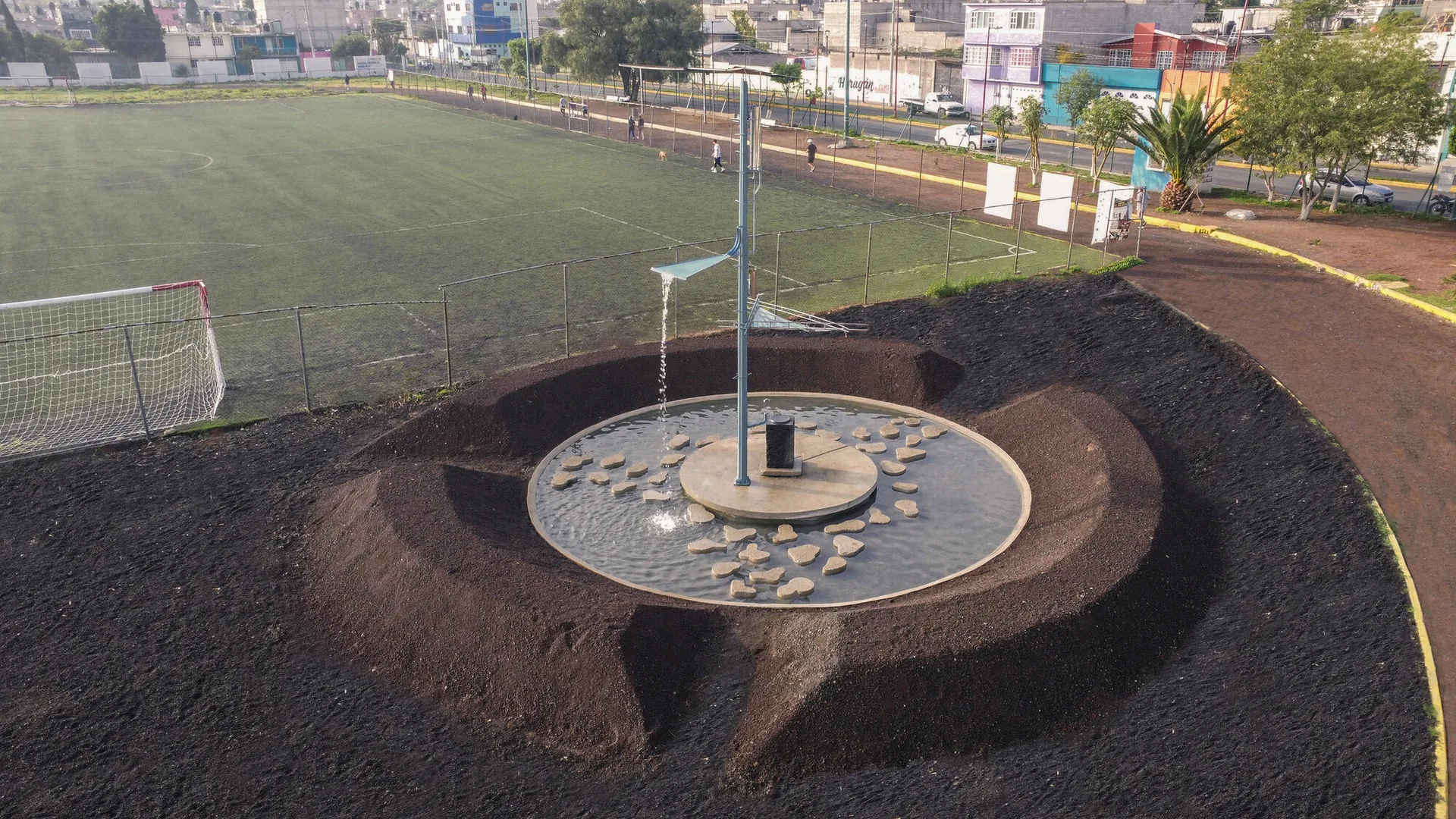
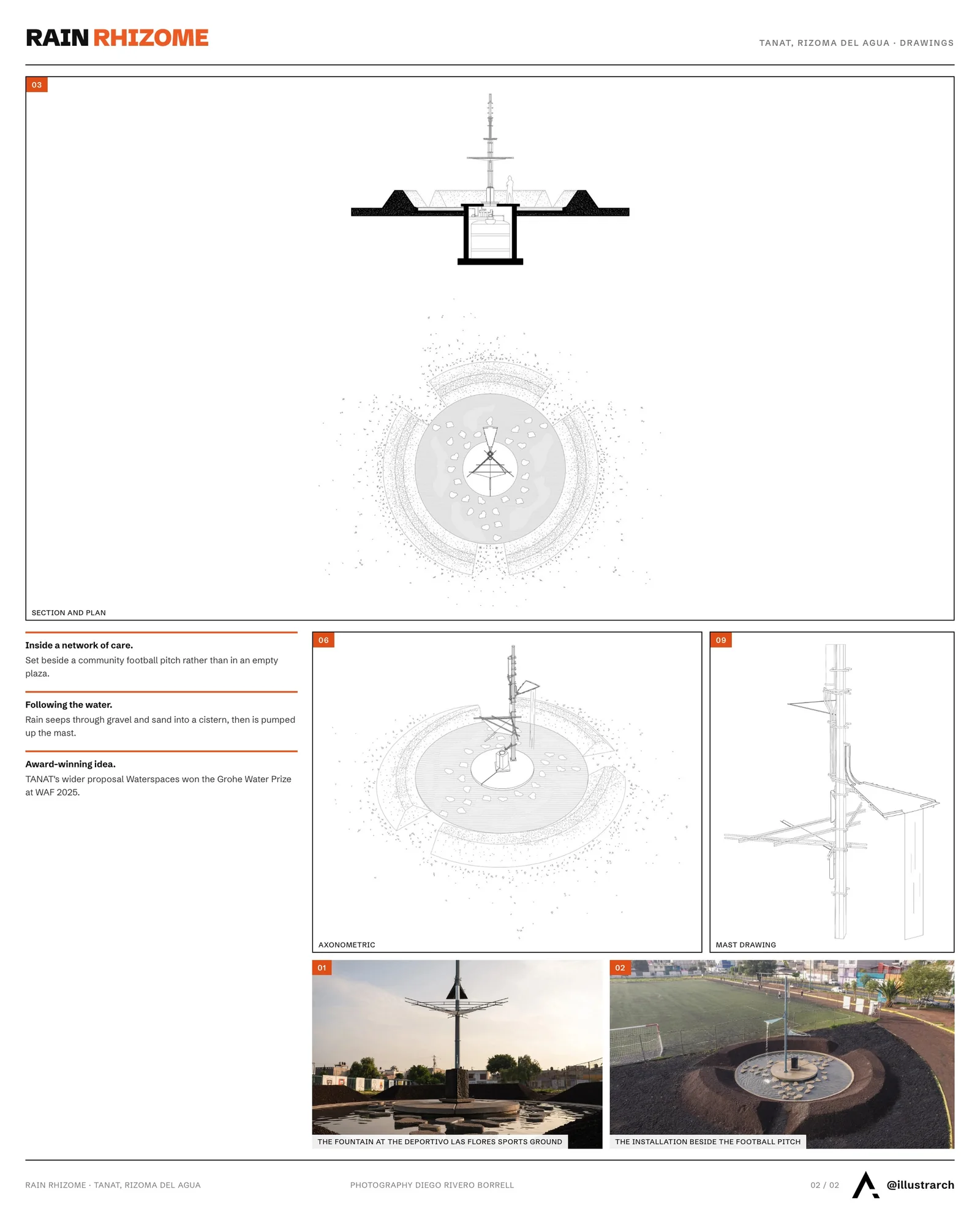
Rather than placing the fountain in an empty plaza, the team set it inside an existing network of care. Deportivo Las Flores already hosts football leagues and depends on neighbours for upkeep and trust, so the new tap becomes part of a place people use every week. In the photographs it stands beside the pitch: a slim blue steel mast rising from a round concrete platform, ringed by a shallow pool with rough stepping stones and a low berm of dark volcanic earth.
The lead architects, Diego Rivero Borrell and Lucía Lozano, worked with David Contreras on design and Sergio López on the technical side, with MEP input from Rotoplas. Construction is credited to Grohe and the Water Prize: TANAT’s wider proposal Waterspaces, a network of small public points that collect, filter and distribute rainwater, won the Grohe Water Prize at the World Architecture Festival in 2025.
Following the water
The project’s main idea is to make an invisible process legible. Rain lands on a surface people can walk on, seeps through layers of gravel and sand, and runs into a cistern below ground. There it is filtered, then pumped back up the mast and released through a public tap. Angled collectors made of fabric and polished metal hang from the mast, and in wet weather water can be seen spilling from them toward the basin.
The architects are careful not to turn scarcity into a pretty image of resilience. The mechanism is shown as it is, a piece of working infrastructure that a passer-by can follow from sky to cup. For readers curious about the technical basics of catching and storing rain, our guide to water systems and rainwater harvesting covers the essentials at domestic scale.
The rhizome as a model
Rizoma del Agua began as TANAT’s response to the water crisis in Mexico. Its name borrows the botanical rhizome, a root system that spreads sideways without a single centre, as a way of thinking about decentralised solutions that adapt to local conditions. The platform works through workshops, publications and prototypes of new kinds of water space.
A small fraction, a larger question
In Chimalhuacán the fountain captures only part of the rain that falls on it. Its value lies less in volume than in what it shows: that drinking water can again be something shared in public space, cared for collectively, rather than a product bought and guarded at home. That idea of streets and squares built around common use echoes the work celebrated in the recent Cities for People exhibition on Jan Gehl.




Yarumos Apartment by Trópico Arquitectura
Trópico Arquitectura reworks a two-level, 115 m2 apartment in Medellín for a...
illustrarch Editoral Team2 Mins read
Atrium Zürich by NOA
NOA reworks the interior of the Atrium villa in Küsnacht near Zurich...
illustrarch Editoral Team3 Mins read
Akina House by Di Frenna Arquitectos
In Comala, Mexico, Di Frenna Arquitectos builds Akina House around a central...
illustrarch Editoral Team2 Mins read
Solid Mist by Synthetic Architecture
Solid Mist by Synthetic Architecture sets glass guest units with soft tsuchikabe...
illustrarch Editoral Team2 Mins read






Leave a comment