

Studio KO Rebuilds Paris’s Bus Palladium Nightclub as a Five Star Hotel
The 1965 Pigalle club is back as a hotel by Studio KO: a new six storey building with cork-walled rooms, a restaurant lined with more than a thousand records and a club deep underground.
 illustrarch Editoral Team8 November 20262 Mins read1
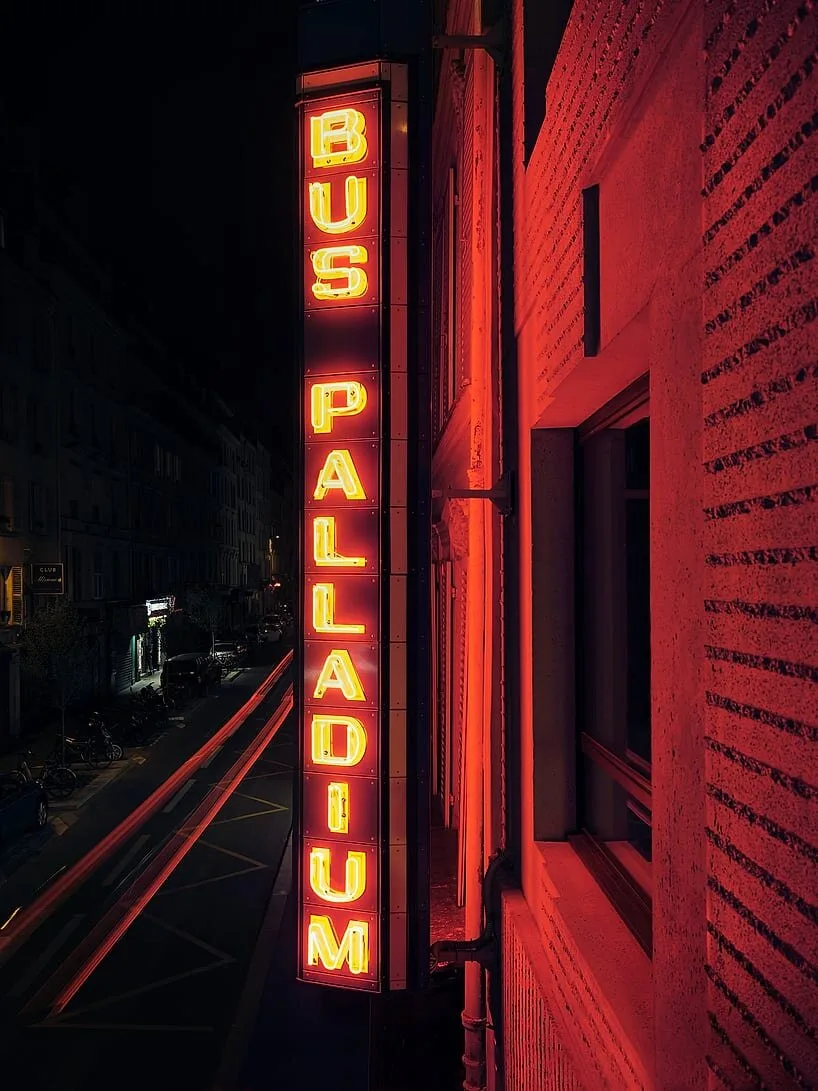
Bus Palladium, the Pigalle nightclub that opened in 1965, has come back as a five star hotel designed by Studio KO, the Paris practice of Karl Fournier and Olivier Marty. The building on rue Pierre Fontaine opened in April 2026 with 35 rooms and suites, plus a restaurant, a bar, a roof terrace and a club beneath the street, and designboom has now published photographs of the finished interiors.
Founded by James Arch, the club put suburban teenagers, beatniks, artists and well-heeled Parisians on the same dance floor. Salvador Dalí turned up soon after the opening, and Serge Gainsbourg, Jane Birkin and Patti Smith became part of its legend. It closed in 2022. Christian Casmèze, who owns the building, and Nicolas Saltiel of the Chapitre Six hotel group then set out to keep sleep, music and nightlife at a single address.
A new building for Bus Palladium
The old structure, a patchwork of brick, stone, concrete and metal, could not carry the added floors and was demolished. Studio KO chose to carry its character forward instead: the rhythm of the entrances returns, and horizontal lines across the new facade recall the former brickwork. The new building rises six storeys, filling what was a low gap in the street, and reaches 14 metres into the ground over four basement levels. Its sandblasted concrete uses aggregates chosen to match the warm tone of Haussmann-era stone.
“Buildings do not have only a structural life: they also contain history and emotion,” Fournier said, explaining why the team let layers of past and present build up instead of replacing one another.
Cork, carpet and mirrors in the rooms
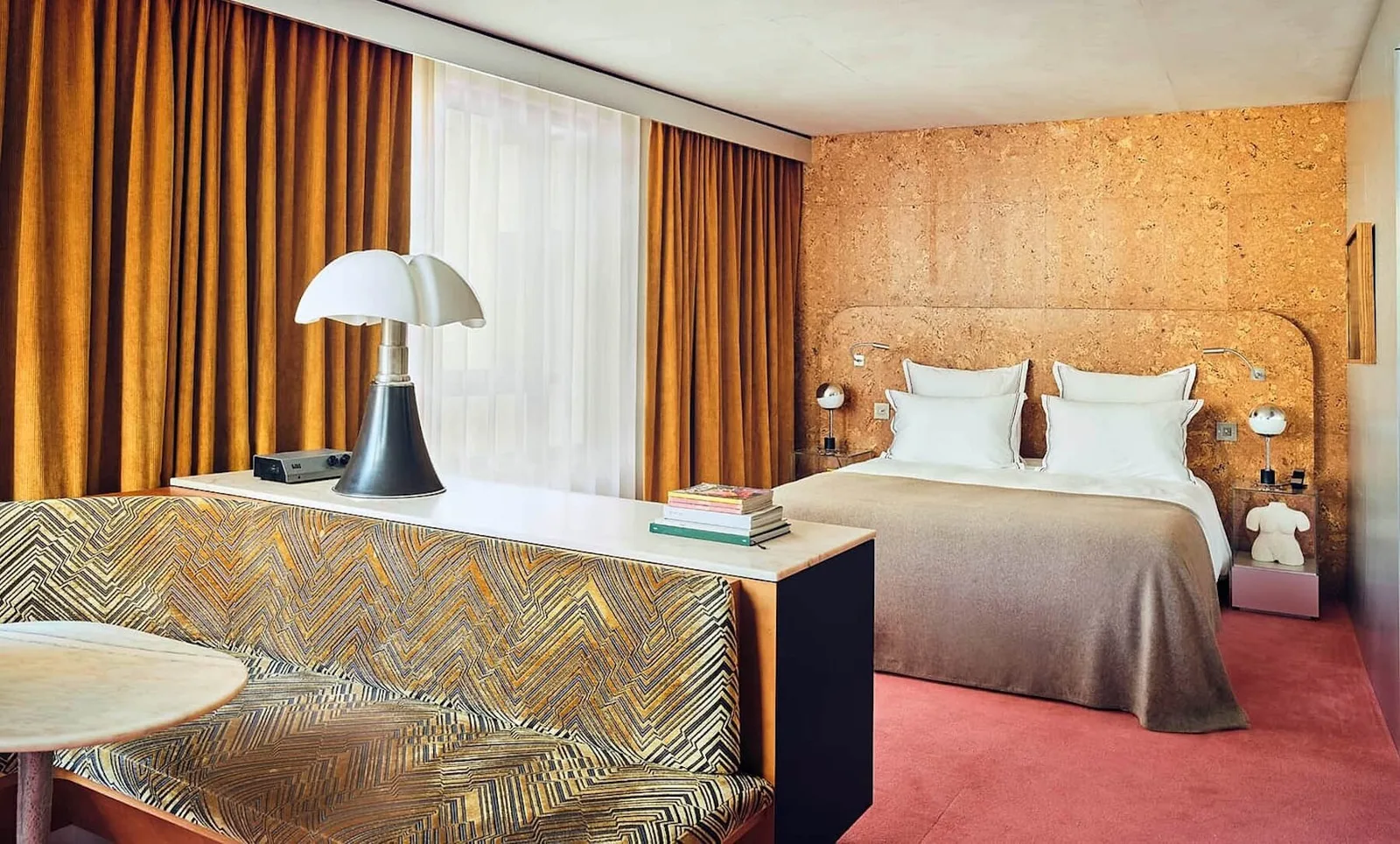
Inside, bare concrete meets thick patterned carpet, reflective surfaces and bold colour that looks back to the 1960s and 1970s. Rooms combine concrete ceilings with cork walls, a nod to Marcel Proust’s cork-lined bedroom, plus powder pink carpet, blue mirrors and corduroy curtains. Bathrooms hide behind translucent voile or inside frosted glass boxes. Light switches look like old amplifiers, door handles take after microphone grilles, and custom wooden speakers play the hotel’s own playlists. The Dalí Suite adds a modular DS-600 sofa by De Sede, a mirrored alcove and a balcony facing the neon sign.
Records at dinner, a club downstairs
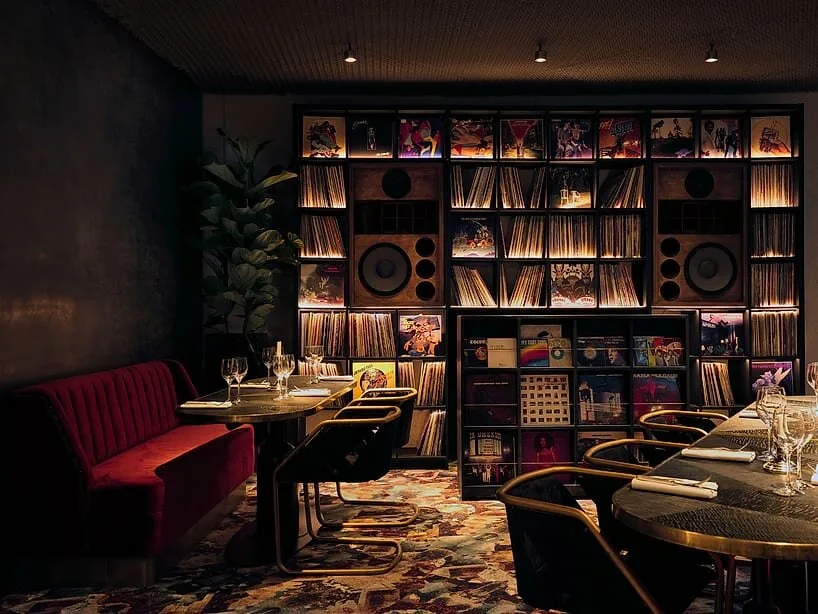
The restaurant is built around a glass box full of plants, ringed by diner-style booths and high and low banquettes. One wall holds more than a thousand records, among them James Arch’s own collection, and a DJ console pulls out of the vinyl bar. Chef Valentin Raffali cooks short seasonal menus from local produce, while artistic director Caroline de Maigret looks after music, scent and staff uniforms.
Downstairs, an underground club with a live stage keeps the address in the city’s nightlife, so guests can check in and go out without leaving the building.


WORKac Hangs a Lecture Hall Inside Cornell’s Restored Sibley Dome
At Cornell, WORKac has restored the 1902 Sibley Dome and suspended a...
illustrarch Editoral Team2 Mins read
Edinburgh Approves Hotel Plan for Basil Spence’s Scottish Widows Headquarters
Seven of the twelve hexagonal modules of the 1970s Scottish Widows offices...
illustrarch Editoral Team1 Mins read
Foster + Partners Completes Agravitas, a 55 Metre Bridge Gallery Above the Bilbao Fine Arts Museum
Agravitas, a 55 metre steel gallery by Foster + Partners and Luis...
illustrarch Editoral Team2 Mins read
National Trust Launches $10M Historic Preservation Defense Fund
National Trust CEO Brent Leggs launched a $10M, three year fund to...
illustrarch Editoral Team2 Mins read



Leave a comment