

Manipal University Team Turns Treated Sewage Into Stronger Biochar Concrete
Manipal University Jaipur researchers find biochar from treated sewage can strengthen concrete, with a 5% cement swap performing best overall.
 illustrarch Editoral Team14 September 20263 Mins read71

Engineers at Manipal University Jaipur have shown that biochar concrete, made with biochar derived from treated human waste, can outperform ordinary concrete after curing, according to a study led by civil engineer Raghuvesh Tiwari that has been accepted for publication in Scientific Reports.
The team sourced faecal sludge from a treatment plant in Warangal, India, dried it, and heated it in a low-oxygen chamber at temperatures between 350 and 450 degrees Celsius. The resulting biochar was ground into a fine powder and used to replace 5, 10 and 15 percent of the cement in standard concrete mixes, which were then tested for compressive strength, flexural strength, water absorption, shrinkage and porosity over 91 days.
What the human waste concrete data actually shows
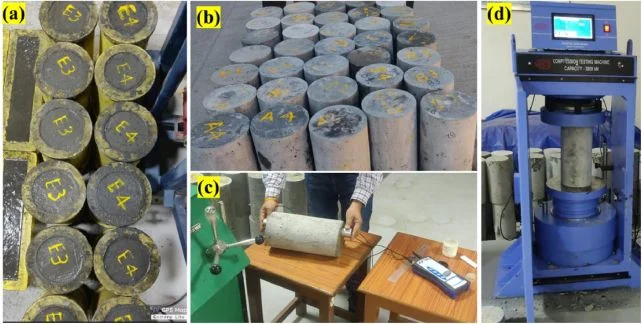
The headline figure circulating widely, a 42 percent gain in strength, refers specifically to flexural strength (the concrete’s resistance to bending and cracking) in the mix where 10 percent of the cement was swapped for biochar, measured after 91 days of curing. That same 10 percent mix also gained 21 percent in compressive strength over the same period.
But the researchers’ own results point to 5 percent, not 10 percent, as the sweet spot. At that lower substitution rate, compressive strength rose by 20 percent and flexural strength by 36 percent after 91 days, while the concrete also absorbed less water, showed lower porosity, and shrank less during drying than the conventional mix. Push the substitution to 15 percent, however, and the advantage reverses: strength still improves with curing time, but the material lags behind both the 5 and 10 percent versions, with more pores, cracks and poorly bonded regions visible under microscope.
Why biochar concrete performs better than the plain mix

Tiwari’s team attributes the effect to several overlapping mechanisms. The biochar is highly porous, so it can soak up water and release it gradually as the concrete cures, keeping moisture available for the chemical reactions that harden cement. It is also rich in silica, which reacts with compounds formed during curing to produce more of the calcium silicates that give concrete its strength, a pozzolanic effect similar to what made ancient Roman concrete durable. Finely ground biochar particles additionally help fill gaps between other ingredients, improving how the mix packs together.
Tiwari described the outcome plainly, saying the biochar substitution “yields significant improvements in concrete properties.” He has also explained the water-retention mechanism directly, noting that “the porous biochar can absorb water and release it slowly as the concrete hardens.”
Sewage, sustainability and where the waste goes
The study’s deeper significance lies less in the material’s novelty than in what it does with an unavoidable waste stream. Sanitation systems generate enormous volumes of sludge that already require treatment and disposal; converting a portion of it into a construction input could give that waste a productive second life while trimming demand for cement, whose production is among the largest industrial sources of carbon dioxide. Sibu Kumar Tripathi framed the appeal this way: “Tomorrow’s buildings could partly be built using what we flush away today.”
The researchers also reported a potential side benefit: concentrations of heavy metals in the concrete samples appeared to fall as biochar content increased, which could limit how much of that material leaches into the environment. But the study did not test how the concrete would hold up under freeze-thaw cycling, salt exposure or extreme heat, and it did not measure whether the process actually reduces net carbon emissions compared with standard cement production.
Before any of this reaches a construction site, the material would need to satisfy building codes and material specifications that govern what can legally go into structural concrete, a process that typically requires years of standardized testing and sign-off from engineering bodies rather than a single laboratory study. For now, the Manipal University Jaipur team says the next step is simply more testing, not construction.



Restorers Uncover 16th-Century Murals Hidden by Nuns in Villa Silvestri Rivaldi
Conservators in Rome are uncovering 16th-century murals hidden for 300 years inside...
illustrarch Editoral Team3 Mins read

A New Book Records the 1970s Interiors of Ebony and Jet’s Chicago Headquarters
820 Ebony/Jet collects Barbara Karant's photographs of the empty Johnson Publishing Company...
illustrarch Editoral Team2 Mins read

A 2,500-Year-Old Solar Observatory in Puebla Is the First Group E Complex Found Outside the Maya Area
Archaeologists working for Mexico's INAH have confirmed that two platforms at Teteles...
illustrarch Editoral Team2 Mins read
India Art, Architecture & Design Biennale 2026: Ministry of Culture Opens Delhi Monuments
Delhi's monuments, including Purana Quila and the Red Fort, will host the...
illustrarch Editoral Team2 Mins read


Leave a comment