

Isamu Noguchi at Lever House Traces Sculptor’s Decades-Long Collaboration with Bunshaft
Lever House's new exhibition pairs Noguchi sculptures with unbuilt garden designs made for Gordon Bunshaft's landmark tower.
 illustrarch Editoral Team5 October 20262 Mins read154

Lever House, the Park Avenue office tower that helped define postwar corporate architecture in New York, has turned its lobby and plazas into a survey of the working relationship between its designer, Gordon Bunshaft, and the sculptor Isamu Noguchi. The show, called Isamu Noguchi at Lever House, opened on September 14, 2026, and is scheduled to stay up through the summer of 2027.
The exhibition was put together by Lever House curator Jacob King alongside two figures from the Noguchi Museum in Long Island City, Queens: head curator Hitomi Iwasaki and director of research Matthew Kirsch. Bunshaft, a partner at Skidmore, Owings, and Merrill, designed Lever House with Natalie de Blois, and the building was finished in 1952. This show marks the documented start of his artistic partnership with Noguchi.
Noguchi Sculptures Placed Throughout Lever House
More than a dozen Noguchi pieces are distributed across the building’s interior and its two outdoor plazas. Sizes vary widely: the small tabletop piece Castle sits inside one of Bunshaft’s original glass display cases, while the vividly red, semi-functional Play Sculpture stands outside the lobby’s revolving door at Park Avenue and 54th Street. A cluster of Akari paper lanterns has also been installed to mark 75 years since Noguchi first introduced the pendant lamp design.
Unbuilt Sculpture Garden Designs Take Center Stage
The most significant material in the show may be the architectural proposals that never got built. A second vitrine holds a scale model for one of two sculpture garden concepts Noguchi drew up for Lever House’s ground floor, envisioning marble plinths, carved figures, reflecting pools and plantings. Nearby, drawings and photographs of an earlier model fill out the picture of how closely the two men worked together. Architectural Record critic D. Joseph Dignan called this material “the real kicker of the exhibition.”
The earlier of the two garden concepts survives only in photographs of its model. It depicts three figures, named Father, Mother, and Child, rising out of a shallow reflecting pool. These forms anticipate The Family, a sculpture Noguchi later made for Bunshaft’s 1957 commission at the Connecticut General Life Insurance headquarters in Bloomfield, Connecticut. That later work went on to break the sculptor’s auction record, selling for $12.28 million in 2023.
The second, more fully developed garden proposal is represented by the largest volume of material in the exhibition, including a scale model and two drawings. It centers on two figures Noguchi called Bird and Song, forms he would return to repeatedly in granite, marble and cast bronze over the following years.
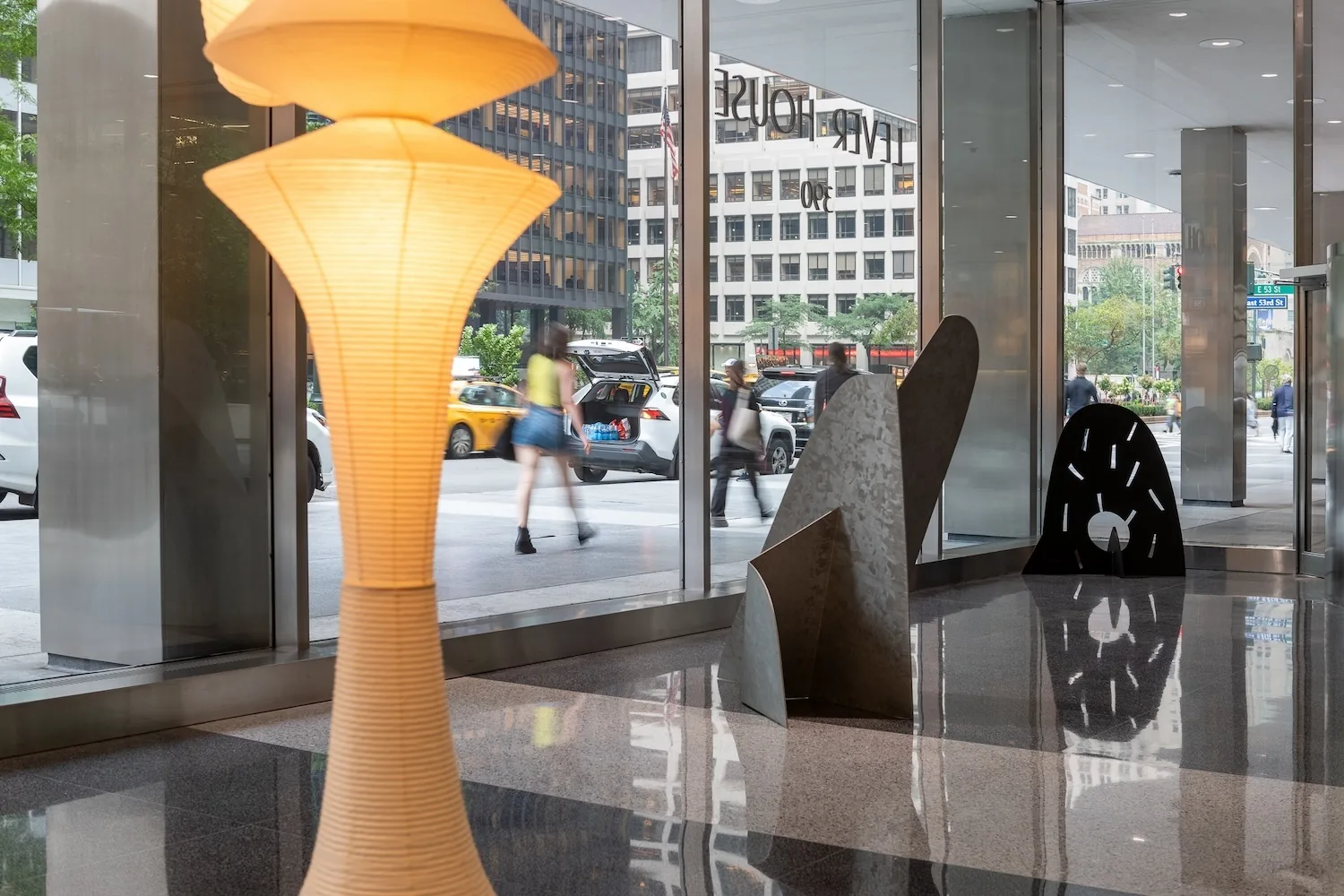
Isamu Noguchi at Lever House: A Dialogue Between Sculpture and Architecture
Dignan argued that the pairing of Noguchi’s curving, organic sculptures with Bunshaft’s severe glass and steel structure reveals something unexpected about the building itself. “The exhibition perfectly highlights the unexpected compatibility between the work of Bunshaft and Noguchi,” he wrote, adding that the sculptures seem to expose a warmth in the architecture that isn’t obvious at first glance. He noted that the works look so at home in the space that a visitor unfamiliar with the building’s history might assume they had been installed when Lever House first opened nearly seventy five years ago.

That sense of fit, according to Dignan, helps explain why Bunshaft kept returning to Noguchi for later commissions throughout both of their careers. Isamu Noguchi at Lever House remains open to visitors through next summer.
Lever House is the other exhibit here, a curtain wall landmark whose afterlife is written by what keeps happening inside it, much as in the cases covered in giving old buildings new life. The partnership on show also sits in the lineage traced in our guide to careers that shaped modern practice.



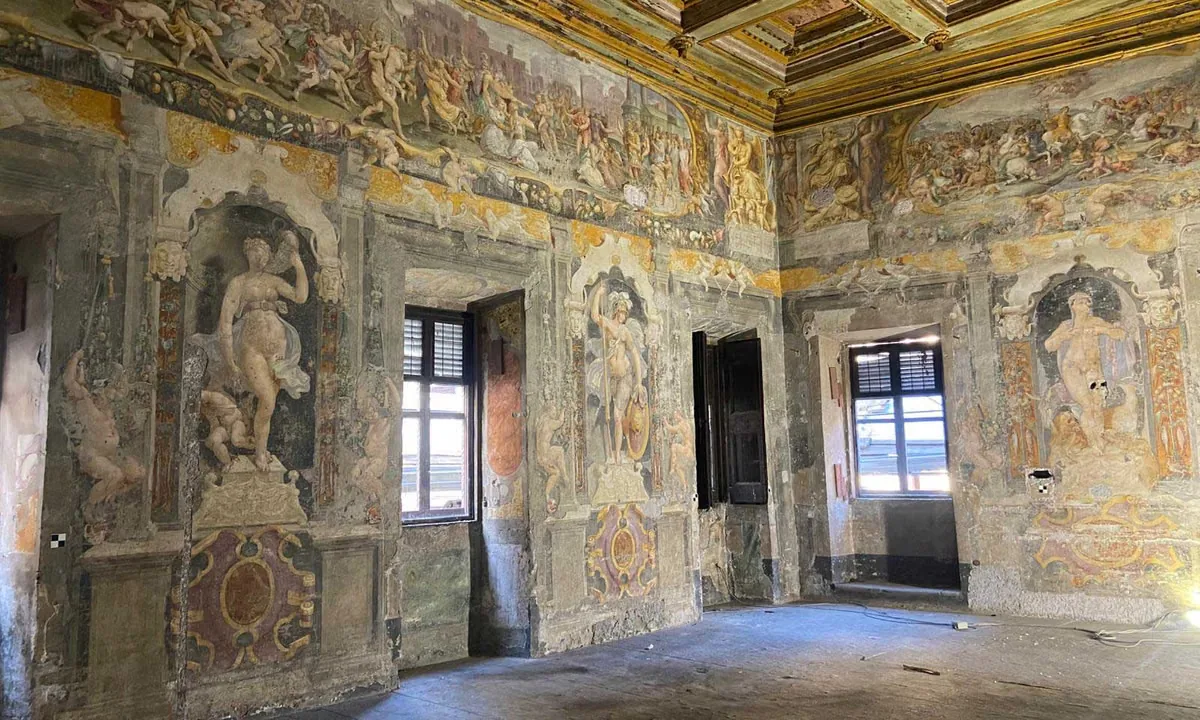
Restorers Uncover 16th-Century Murals Hidden by Nuns in Villa Silvestri Rivaldi
Conservators in Rome are uncovering 16th-century murals hidden for 300 years inside...
illustrarch Editoral Team3 Mins read

A New Book Records the 1970s Interiors of Ebony and Jet’s Chicago Headquarters
820 Ebony/Jet collects Barbara Karant's photographs of the empty Johnson Publishing Company...
illustrarch Editoral Team2 Mins read

A 2,500-Year-Old Solar Observatory in Puebla Is the First Group E Complex Found Outside the Maya Area
Archaeologists working for Mexico's INAH have confirmed that two platforms at Teteles...
illustrarch Editoral Team2 Mins read
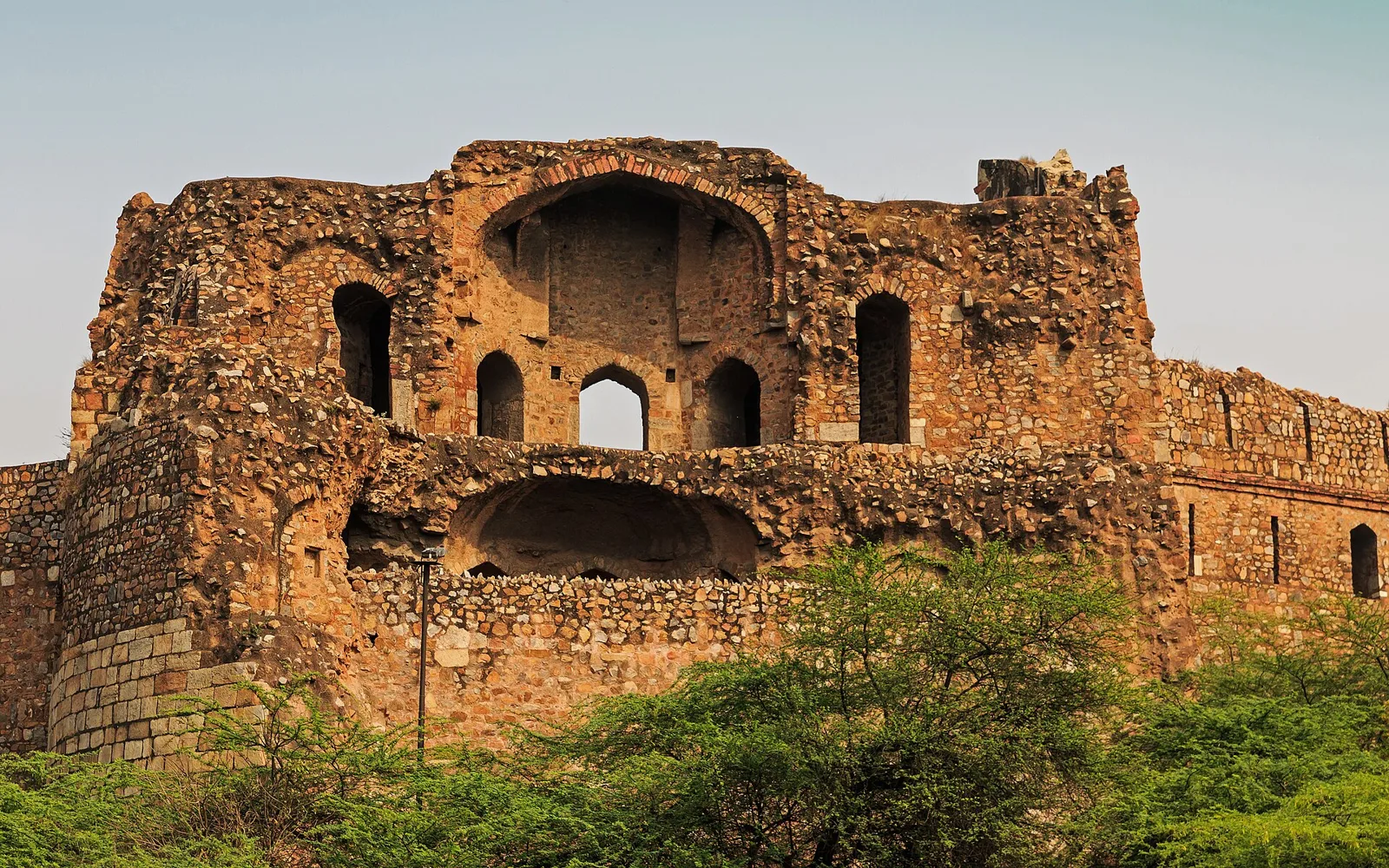
India Art, Architecture & Design Biennale 2026: Ministry of Culture Opens Delhi Monuments
Delhi's monuments, including Purana Quila and the Red Fort, will host the...
illustrarch Editoral Team2 Mins read


Leave a comment