

Top 7 Waterproofing Paints for a Home Upgrade
Struggling with damp walls or peeling paint? This guide compares 7 of the best waterproofing paints for interior and exterior walls, including Drylok, Zinsser, Behr, and Dulux. Covers product types, application steps, and basement-specific recommendations.
 Furkan Sen24 November 202412 Mins read871

Table of Contents Show
Quick answer: The best waterproof paint depends on the surface. For exterior walls, elastomeric and masonry waterproofing paints give the strongest barrier, while for interior walls and bathrooms, acrylic and bitumen based sealers work well. Quality waterproof paint blocks moisture, resists mold, and extends the life of the surface.
Is your home battling damp walls, mold growth, or peeling paint? Whether you are tackling old house upgrades or adding a modern layer of protection to your walls, the best waterproofing paint can be your strongest ally. A quality waterproof paint for walls shields surfaces from moisture, keeps your interiors looking fresh, and extends the life of your living space. These products also come in a variety of finishes to complement nearly any decor style.
This guide covers everything you need to know about waterproofing paint for walls, including why it matters, what types are available, and how to choose and apply them for lasting results.
Why Waterproofing Paint Is Essential for Your Home
Prevent Moisture Damage and Mold Growth
Damp walls are more than an eyesore. Left untreated, moisture can lead to mold, mildew, and even structural damage over time. According to the U.S. Environmental Protection Agency (EPA), mold can begin growing on wet surfaces within 24 to 48 hours. Waterproofing paints create a protective barrier that stops water from penetrating your walls, helping you avoid costly remediation down the line.
Extend the Life of Your Paint Job
Peeling paint can quickly turn into an expensive problem, especially in humid climates. By investing in a high-quality wall waterproofing paint, you reduce maintenance costs and enjoy results that last for years. Many waterproof coatings offer warranties of 10 to 15 years when applied correctly, making them a smart long-term investment for any homeowner.

Enhance Aesthetic Appeal
Functional paint can also be beautiful. Modern waterproof paints come in a range of finishes, from sleek matte to high-gloss, adding both durability and elegance to your walls. You can also Create Your Own Paint by Numbers to enhance the aesthetic appeal of your living space.
Types of Waterproof Paint: What Paint Is Waterproof?
Many homeowners ask, “is there a waterproof paint?” The answer is yes, and there are several types designed for different applications. Understanding the differences helps you pick the right product for your project.
Acrylic Waterproofing Paint
Acrylic waterproof paints are water-based and easy to apply. They work well on both interior and exterior surfaces, adhere to concrete, wood, and metal, and produce low volatile organic compound (VOC) emissions. Their elasticity allows minor expansion and contraction without cracking, which makes them a popular choice as interior waterproof paint for kitchens and bathrooms.
Masonry Waterproofing Paint
Masonry paints are formulated with latex and ceramic compounds designed specifically for concrete, brick, stucco, and cinder block. They penetrate into porous surfaces and create a thick moisture barrier. This category includes many of the most popular basement waterproofers on the market.
Epoxy Waterproofing Paint
Epoxy-based waterproof coatings create an extremely hard, durable surface. They are commonly used on garage floors, pool decks, and industrial surfaces where heavy-duty water resistance is needed. While they offer superior protection, they can be more difficult to apply and tend to yellow when exposed to UV light.
Elastomeric Coatings
Elastomeric paints form a thick, flexible membrane that bridges hairline cracks up to 1 mm. They are especially effective as waterproofing paint for exterior walls, where expansion and contraction from temperature changes can cause conventional paint to fail.
Features to Look for in Waterproofing Paints
When choosing a waterproofing paint, consider these key features:
- Moisture Resistance: Ensures no water seeps through the surface.
- Mold and Mildew Protection: Essential for bathrooms, basements, and kitchens.
- UV Protection: Prevents color fading on exterior walls exposed to sunlight.
- Eco-Friendly Options: Low-VOC formulas are safer for your family and reduce environmental impact.
- Durability: Stands up to wear and tear, especially in high-traffic areas.
- Breathability: Allows trapped moisture vapor to escape, preventing blistering and peeling.
- PSI Rating: Indicates how much hydrostatic water pressure the paint can withstand.
Top 7 Best Waterproofing Paints for a Home Upgrade in 2026
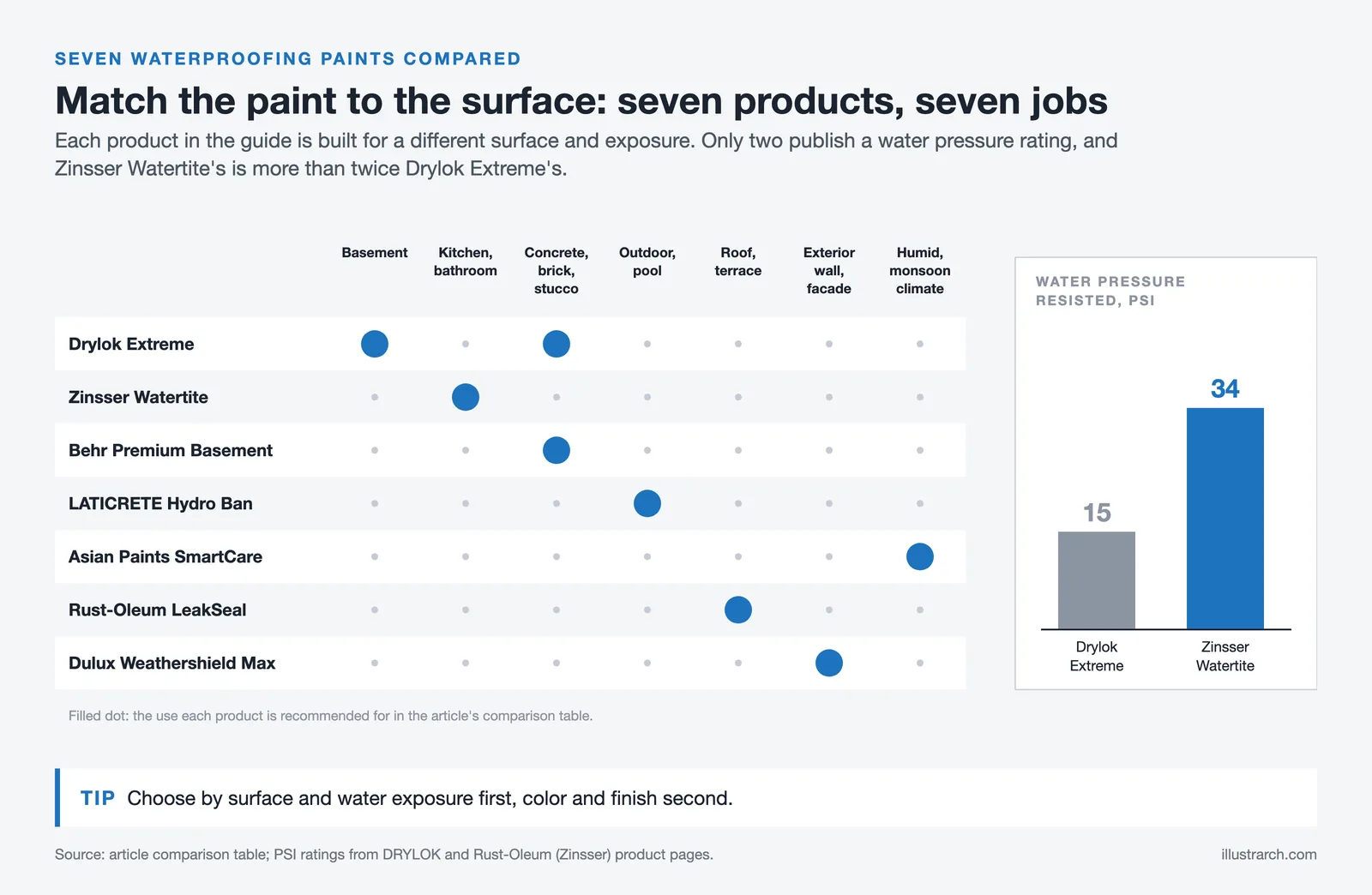
The table below offers a quick comparison of each product’s primary characteristics. Scroll down for detailed reviews of every option.
Quick Comparison Table
| Product | Best For | Finish | Key Strength |
|---|---|---|---|
| Drylok Extreme | Basements, masonry | Flat | 15 PSI resistance, 15-year warranty |
| Zinsser Watertite | Kitchens, bathrooms | Smooth matte | Mold-proof, stain-blocking |
| Behr Premium Basement | Concrete, brick, stucco | Semi-gloss | Alkali-resistant adhesion |
| LATICRETE Hydro Ban | Outdoors, pool areas | Sleek, durable | Flexible, crack-resistant |
| Asian Paints SmartCare | Tropical/monsoon regions | Matte | 100% water resistance |
| Rust-Oleum LeakSeal | Roofs, terraces, leaks | Clear or colored | Quick-dry rubberized seal |
| Dulux Weathershield Max | Exterior walls, facades | Glossy | UV-blocking, fade-resistant |
1. Drylok Extreme Masonry Waterproofer
- Best For: Interior and exterior masonry surfaces like basements.
- Key Features: It offers 15 psi of water pressure resistance and includes a mold inhibitor. Coverage runs approximately 75 to 100 sq ft per gallon.
- Finish: Flat, suited to basement and masonry walls.
- Why Choose It? Its formula penetrates deep into masonry pores, providing a long-lasting waterproof seal backed by a 15-year manufacturer warranty.
2. Zinsser Watertite Mold and Mildew-Proof Waterproofing Paint
- Best For: Kitchens and bathrooms.
- Key Features: A mold-resistant, stain-blocking formula that can withstand up to 34 psi of water pressure according to manufacturer specifications.
- Finish: Smooth matte, ideal for clean, contemporary spaces.
- Why Choose It? This product blocks existing stains while preventing new water damage, keeping walls fresh and spotless. It can also be applied to slightly damp surfaces, which is uncommon among competitors.
Pair it with moisture-absorbing decor like bamboo planters for a functional and stylish space. For more ideas on combining function with aesthetics, check out our guide on essential building materials for home renovations.
3. Behr Premium Basement & Masonry Waterproofing Paint
- Best For: Concrete, brick, and stucco walls.
- Key Features: Its alkali-resistant coating prevents paint from breaking down in damp conditions.
- Finish: Semi-gloss for a polished look.
- Why Choose It? It is specifically designed for tough-to-paint surfaces and delivers exceptional adhesion, making it a reliable water proof paint for wall surfaces that other brands struggle to coat evenly.
Ensure proper surface preparation for maximum durability. Remove efflorescence (white salt deposits) with a wire brush or muriatic acid solution before applying the first coat.
4. LATICRETE Hydro Ban Waterproofing Membrane
- Best For: Outdoor applications and swimming pool areas.
- Key Features: A flexible, crack-resistant formula that withstands temperature changes.
- Finish: Sleek and durable.
- Why Choose It? Its versatile application makes it ideal for areas with constant water exposure, such as patios and balconies. It performs as both an outdoor water resistant paint and a waterproofing membrane.
Use it as a base layer before applying decorative finishes for extra durability. If you are planning outdoor renovations, our article on sustainable home renovation tips covers eco-friendly approaches that pair well with exterior waterproofing.
5. Asian Paints SmartCare Damp Proof
- Best For: Homes in tropical or monsoon-prone regions.
- Key Features: Advanced technology ensures 100% water resistance while preventing efflorescence.
- Finish: Matte, offering a luxurious, smooth texture.
- Why Choose It? Asian Paints combines affordability with high-end performance, making it a favorite among homeowners looking for dependable waterproofing paint for walls in high-humidity climates.
Pair this paint with textured wall art for an elevated decor upgrade.
6. Rust-Oleum LeakSeal
- Best For: Roofs, terraces, and emergency leak fixes.
- Key Features: Rubberized coating that seals cracks and stops leaks instantly.
- Finish: Available in clear or colored options.
- Why Choose It? Its quick-drying formula makes it ideal for on-the-go repairs. The aerosol version reaches tight spots that brushes and rollers cannot.
Apply it during dry weather for the best results. For roofing-related projects, see our complete guide to architectural roofing systems.
7. Dulux Weathershield Max
- Best For: Exterior walls and facades.
- Key Features: UV-blocking technology that resists fading and protects against harsh weather conditions.
- Finish: Glossy, adding a modern and elegant look.
- Why Choose It? Dulux Weathershield is synonymous with durability and vibrant color retention. As a water proof exterior paint, it excels in climates with heavy rain and intense sun exposure alike.
Choose lighter shades to reflect heat and keep your home cooler in the summer.
Interior Waterproof Paint vs. Exterior Waterproof Paint: Key Differences
Picking the right product depends on where you plan to use it. Interior and exterior waterproofing paints are formulated differently, and using the wrong type can lead to poor performance or even paint failure.
Interior Waterproof Paint
Interior waterproof paint is designed for rooms with high humidity and condensation, such as bathrooms, kitchens, laundry rooms, and basements. These products tend to prioritize low odor, low VOC content, and mold resistance. They typically come in matte or eggshell finishes that suit living spaces. Acrylic and masonry formulas dominate this category.
Water Resistant Paint for Exterior Walls
Exterior waterproof paints must withstand rain, UV radiation, wind, and temperature swings. Silicone-based masonry paints and elastomeric coatings are excellent choices for outside use because they repel water while allowing walls to breathe. Breathability is critical for exterior applications because trapped moisture inside a wall can cause blistering, spalling, and structural decay. When selecting a water resistant paint for exterior walls, look for products labeled as “breathable” or “microporous.”
Best Waterproofing Paint for Basement Walls
Basements present unique waterproofing challenges because they sit below grade, meaning the surrounding soil constantly pushes moisture against foundation walls. The best waterproofing paint for basement applications needs to handle hydrostatic pressure while resisting mold growth in low-ventilation environments.
For basement use, masonry-specific waterproofers like Drylok Extreme and Zinsser Watertite are the strongest performers. Both products are designed to be applied directly to bare concrete or cinder block. Keep these points in mind:
- Always address the source of water intrusion before painting. Ensure gutters, downspouts, and exterior grading direct water away from your foundation.
- Remove all existing paint, efflorescence, and loose material before application. Waterproof coatings need to bond directly with the masonry substrate to be effective.
- Apply at least two full coats, working the first coat into all pores and pinholes with a brush.
- Maintain a room temperature of at least 10°C (50°F) during application and drying.
If your basement requires a broader renovation approach, waterproofing the walls is often the first step before finishing the space.
How to Choose the Right Waterproofing Paint for Your Home
1. Assess Your Needs
Think about which areas need protection: kitchen walls, bathrooms, basements, or exterior surfaces. Each area may require a different type of paint. A bathroom with steam and condensation needs interior waterproof paint with mold resistance, while an exposed garden wall calls for a breathable exterior-grade product.

2. Match It With Your Decor
Choose finishes and colors that blend seamlessly with your home’s overall aesthetic. Matte finishes suit bedrooms and living areas, while semi-gloss and gloss finishes work well in kitchens, bathrooms, and hallways where walls need frequent cleaning.
3. Budget Wisely
While some paints may seem expensive upfront, their longevity often makes them more cost-effective than frequent repainting. Waterproof paint typically costs between $1 and $8 per square foot (according to pricing data from Angi), but the long-term savings on maintenance and repairs more than justify the investment.
4. Test Before Committing
Always test a small patch to see how the paint adheres and how it looks when dry. This step is especially important on older masonry surfaces, where hidden contaminants or previous coatings can affect adhesion.
Step-by-Step Guide to Applying Waterproofing Paint
Achieving professional results is all about proper preparation and technique. Follow these steps for a durable, long-lasting finish.

1. Surface Preparation
- Clean the Surface: Remove dirt, grease, and old peeling paint using a wire brush, scraper, or pressure washer.
- Repair Damage: Fill cracks and holes using a quality wall filler or hydraulic cement. Allow repairs to cure fully before proceeding.
- Remove Efflorescence: If you see white, powdery deposits on masonry, scrub them away before painting. These mineral salts prevent proper paint adhesion.
2. Priming the Walls
Priming ensures the waterproofing paint adheres well and provides even coverage. On bare masonry, some waterproof paints (like Drylok and Zinsser) serve as both primer and finish coat. For previously painted surfaces, use a compatible masonry primer first.
3. Applying the Paint
- Use a roller for large areas and a brush for edges, corners, and porous spots.
- Work the first coat into the surface thoroughly. Do not thin the paint unless the manufacturer specifically allows it.
- Apply two coats for maximum effectiveness, allowing full drying time between coats (typically 4 to 24 hours depending on the product).
4. Sealing the Paint
For areas prone to heavy moisture, consider adding a clear sealant for added durability. This extra layer is particularly useful on exterior walls and below-grade surfaces where water exposure is constant. For renovation planning tips, our guide on house renovation considerations can help you coordinate waterproofing with other project phases.
Creative Ideas for Combining Waterproofing with Decor
Why stop at functionality when you can enhance your home’s personality?
- Accent Walls: Use bold waterproof paints to create focal points in bathrooms or kitchens.
- Outdoor Murals: Add character to your garden or patio with weather-resistant paints.
- Vibrant Colors: Experiment with shades that match your furniture or curtains for a cohesive look.
- Textured Finishes: Pair an elastomeric waterproof base coat with a textured roller technique to create depth and visual interest on feature walls.
Common Mistakes to Avoid When Using Waterproofing Paint
- Skipping Surface Preparation: Poor prep leads to uneven finishes and reduced durability. Paint that cannot bond with the substrate will peel within months.
- Applying Paint on Damp Surfaces: Ensure walls are completely dry before starting, unless the specific product is rated for damp application.
- Using the Wrong Paint: Choose paint specifically designed for the area you are working on. Indoor and outdoor formulations have different chemical compositions for good reason.
- Ignoring Structural Issues: Waterproof paint addresses surface moisture, not foundation cracks or plumbing leaks. Fix the root cause before applying any coating.
- Applying Over Old Paint: Many masonry waterproofers, including Drylok, are designed for bare surfaces only. Applying them over existing coatings reduces their ability to penetrate and bond with the substrate.
Waterproof Paint Maintenance Tips
Even the best waterproof paint needs periodic attention to maintain peak performance. Here are some practical maintenance guidelines:

- Inspect painted surfaces twice a year, ideally in spring and fall, looking for signs of peeling, blistering, or discoloration.
- Clean waterproofed walls with mild soap and water. Avoid abrasive cleaners that could damage the protective film.
- Touch up small areas of damage promptly. Letting moisture access exposed masonry can undermine the surrounding coating.
- Reapply exterior waterproof paint every 5 to 10 years, depending on climate exposure and the specific product used.
- Keep gutters and downspouts clear so that rainwater is directed away from your walls, reducing the load on your waterproof coating.
Product specifications and pricing mentioned in this article are approximate and may vary by region, retailer, and application conditions. Always refer to manufacturer guidelines for your specific project requirements.
Frequently Asked Questions About Waterproofing Paint
What paint is waterproof for interior walls?
Acrylic and masonry-based paints are the most common waterproof options for interior walls. Products like Zinsser Watertite and Drylok are formulated to resist moisture, block stains, and prevent mold growth in high-humidity rooms such as bathrooms, kitchens, and basements.
Can you apply waterproof paint over existing paint?
It depends on the product. Some waterproof paints, including most masonry waterproofers, require application on bare surfaces for proper adhesion and penetration. Others, like certain acrylic waterproof formulas, can go over previously painted walls if the existing coating is in good condition and properly cleaned.
How long does waterproofing paint last?
Durability varies by product and application. Drylok Extreme carries a 15-year warranty, while many other masonry waterproofers last 7 to 10 years. Exterior coatings typically need reapplication sooner than interior ones due to UV exposure and weather.
Is waterproof paint enough to fix a wet basement?
Waterproof paint is effective for minor surface moisture and condensation, but it cannot solve serious water intrusion caused by foundation cracks, poor drainage, or high water tables. Address structural and drainage issues first, then use waterproof paint as an additional protective layer.
What is the best waterproofing paint for exterior walls?
Silicone-based masonry paints and elastomeric coatings offer the strongest protection for exterior walls. They repel rain while remaining breathable, which prevents trapped moisture from damaging the wall structure. Dulux Weathershield Max and similar products are popular choices in this category.
Conclusion
Investing in the best waterproofing paint for your home is a decision that pays off in protected walls, lower maintenance costs, and improved indoor air quality. Whether you need an interior waterproof paint for a humid bathroom or a water proof exterior paint for rain-exposed facades, the products and techniques covered in this guide give you a solid foundation for success.
Pick the right product for each surface, prepare your walls thoroughly, and apply at least two coats for maximum protection. Your walls will thank you with years of durability and fresh, clean appearance. For more home improvement insights, explore our guide to home renovation costs and expert architectural tips for renovation.



1 Comment


Types of Roofs: The Complete Guide to Shapes, Styles and Materials
An overview of the most common roof shapes (gable, hip, flat, mansard,...
 illustrarch Editoral Team12 Mins read
Anatomy of a Wet-Climate Roof: The Engineering Behind High-Performance Roofing
How high-performance roofing protects homes in wet climates: multi-layer systems, flashing, ventilation...
 Bahattin Duran3 Mins read
Benefits of Green Roofing vs Solar Roof: Which Performs Better in Urban Buildings?
Green roof or solar roof? In dense city buildings, the two systems...
Furkan Sen8 Mins read
How to Select the Most Reliable Shelter Installation Team
Selecting a reliable shelter installation team involves defining project specifications, vetting credentials,...
Bahattin Duran3 Mins read


I love how you mentioned the importance of moisture resistance! I had no idea that damp walls could lead to such big problems like mold and structural damage. I’m definitely going to invest in waterproofing paint for my basement now. Thanks for the tips on choosing the right paint; I’ll make sure to test a patch first!