

10 Budget Friendly Container Home Building Tips for Affordable Living
Discover budget-friendly tips for building container homes, focusing on cost reduction, sustainable practices, and efficient design. Learn how to set realistic budgets, select sites, source affordable materials, and utilize DIY projects for both interior and exterior enhancements. Unlock the secrets to creating durable, stylish, and eco-friendly container homes without breaking the bank.
 Muhammad Abdullatef - Tifa Studio30 October 202512 Mins read1.2k
Table of Contents Show
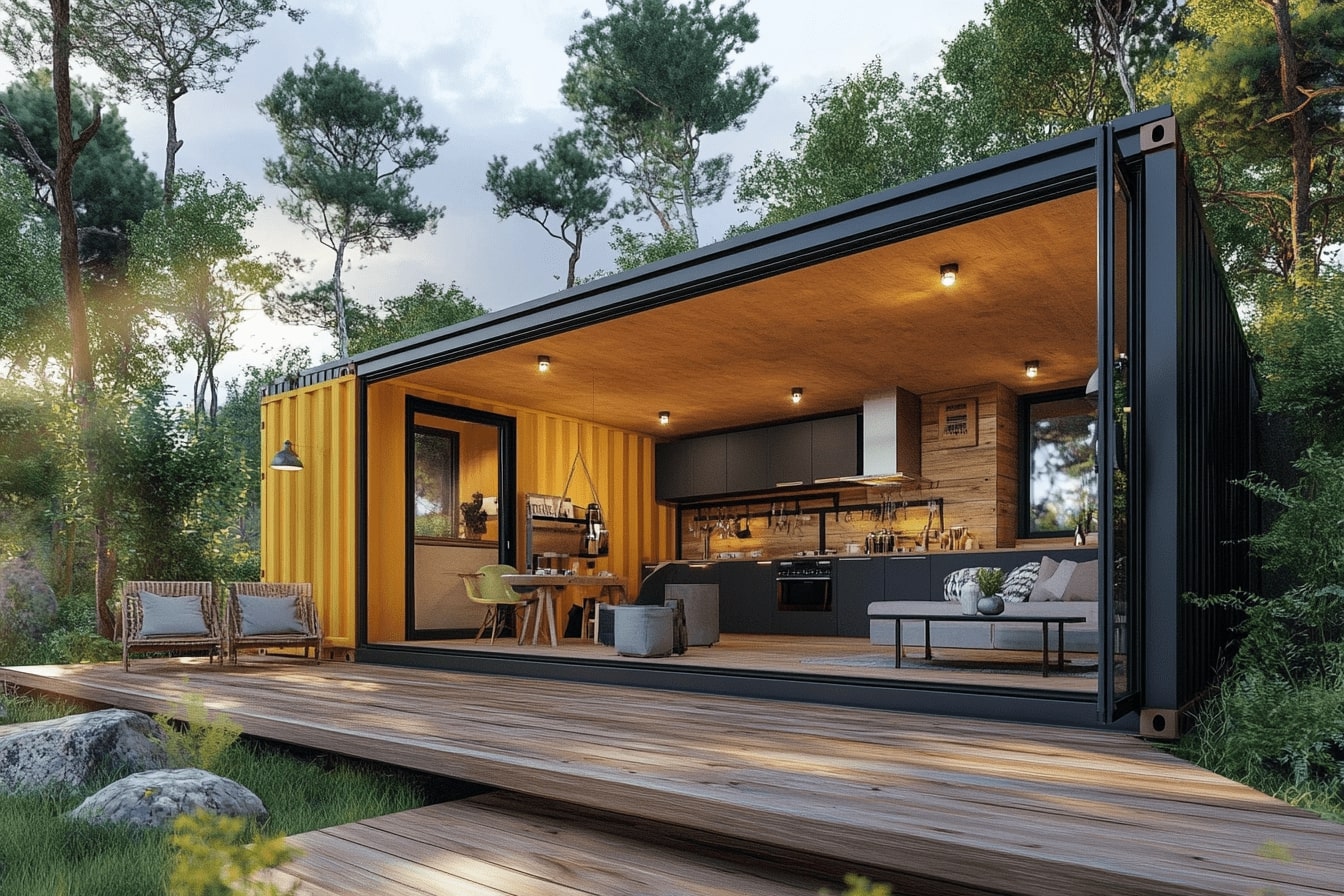
Building a budget container home doesn’t have to break the bank. With some smart planning and a few insider tips, we can create a stylish, functional living space without draining our savings. Container homes offer a unique blend of modern design and sustainability, making them an appealing choice for budget-conscious builders. Whether you want to know how to build a container home cheap or simply reduce your container home construction costs, these strategies will help.
In this article, we’ll explore practical, cost-effective strategies to help us build our dream affordable container home. From sourcing inexpensive shipping containers to maximizing space efficiency, these tips will ensure we get the most bang for our buck while still achieving a high-quality finish. Let’s dive in and discover how we can turn shipping containers into cozy, budget-friendly havens.
Understanding Budget Container Homes
Container homes leverage used shipping containers as primary building materials. This practice repurposes metal containers designed to withstand harsh weather and heavy loads, making them durable. These homes have gained popularity due to their cost-effectiveness, sustainability, and modern design appeal. In 2026, building a home using shipping containers remains one of the most accessible paths to homeownership, with total project costs ranging from about $15,000 for a basic DIY container home to over $250,000 for multi-container luxury builds.

Benefits of Affordable Container Homes
- Cost-Effective Construction: Using containers reduces the need for traditional building materials, cutting costs significantly. A used container can cost between $1,200 and $5,000, depending on size and condition, while the average build cost ranges from $150 to $350 per square foot, often significantly less than traditional stick-built construction.
- Sustainability: Repurposing containers reduces waste and the demand for new materials, aligning with eco-friendly building practices.
- Durability: Shipping containers are constructed from Corten steel, which resists extreme weather conditions and corrosion, offering a long-lasting structure that can endure 25 years or more with proper maintenance.
- Quick Build Time: Turning containers into homes takes less time compared to conventional construction, often completed in three to eight months. Prefabricated container homes can be ready in as little as two to four months.
Types of Container Homes
- Single-Unit Homes: Created from one container, these compact homes are ideal for individuals or couples. They often include essential spaces like a living area, kitchen, bathroom, and sleeping quarters. A single 20-foot container home typically costs between $15,000 and $35,000, making it a top choice for those seeking simple cheap shipping container homes.
- Multi-Unit Homes: Built by combining multiple containers, providing larger living spaces suitable for families. These designs can include multiple bedrooms, larger living areas, and additional amenities. A multi-container build home from container approach generally costs $80,000 to $250,000 or more.
Design Flexibility
Container homes offer significant flexibility in design. Customizable layouts allow stacking containers, cutting out walls, creating large open spaces, or adding extensions. Architects and designers can incorporate modern aesthetics and innovative solutions to maximize space and functionality. For design inspiration, explore these unique container home designs that showcase the creative potential of building with containers.
Understanding container homes helps in planning the project effectively and ensures we make informed decisions throughout the building process.
How Much Does It Cost to Build a Container Home?
Understanding container home construction costs upfront is essential for realistic budgeting. The build container home cost varies widely depending on size, complexity, location, and finish level. Here is a general breakdown for 2026:
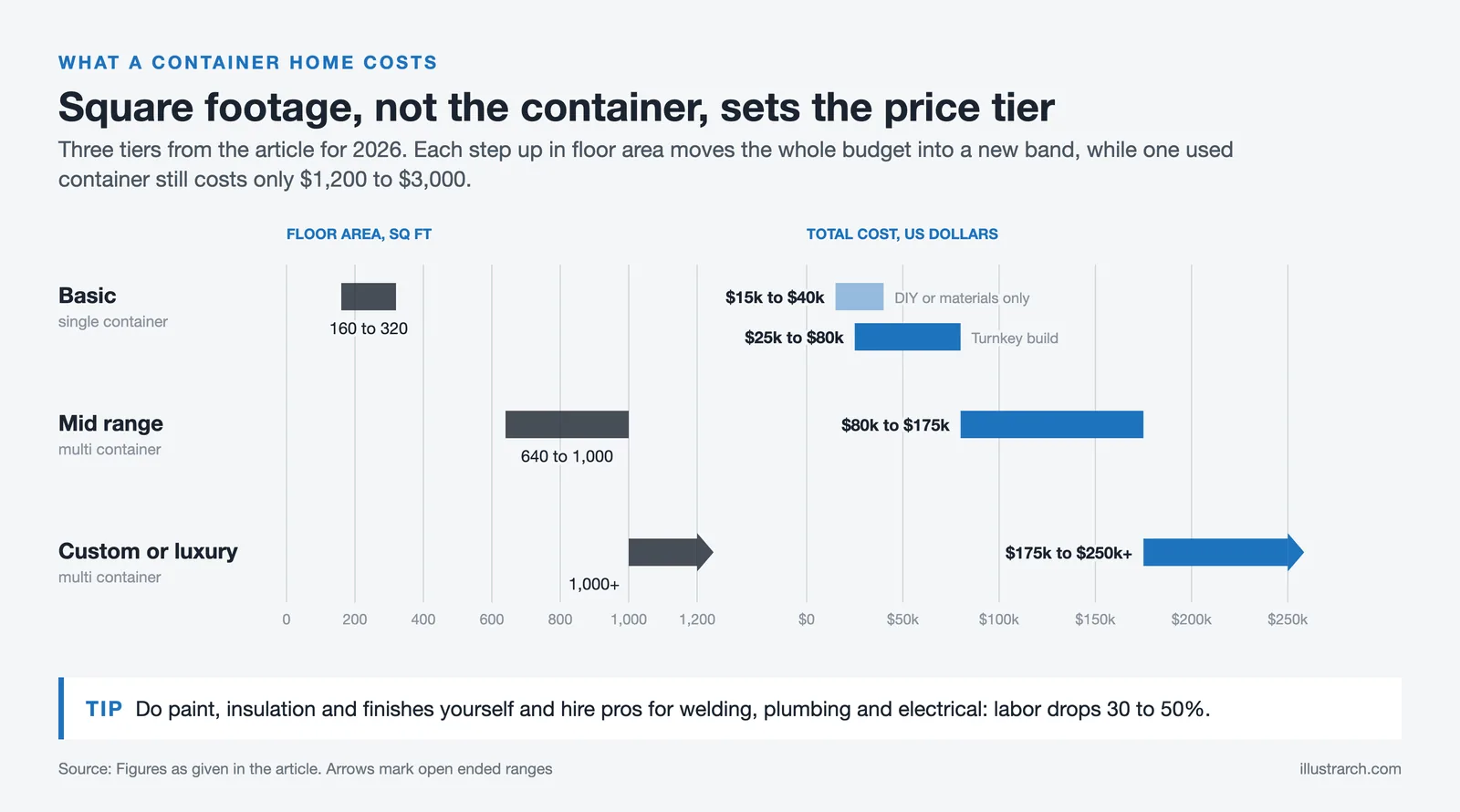
- Basic single-container home (160-320 sq ft): $15,000-$40,000 for a DIY or materials-only approach; $25,000-$80,000 for a turnkey build.
- Mid-range multi-container home (640-1,000 sq ft): $80,000-$175,000 depending on finishes and location.
- Custom or luxury container home (1,000+ sq ft): $175,000-$250,000+.
Keep in mind that the container purchase is actually the smallest part of your total budget. Site preparation, foundation, insulation, plumbing, electrical, and finishes make up the bulk of container home construction costs. A pier foundation costs $3,000 to $8,000, while a concrete slab can range from $5,000 to $15,000. Permits typically run $500-$2,000 depending on your municipality. Understanding the full cost picture is key to knowing how to build a container house without financial surprises.
Planning and Designing on a Budget
Efficient planning and intelligent design are essential when building a container home on a budget. By focusing on key areas, we can create functional and appealing living spaces.
Setting a Realistic Budget
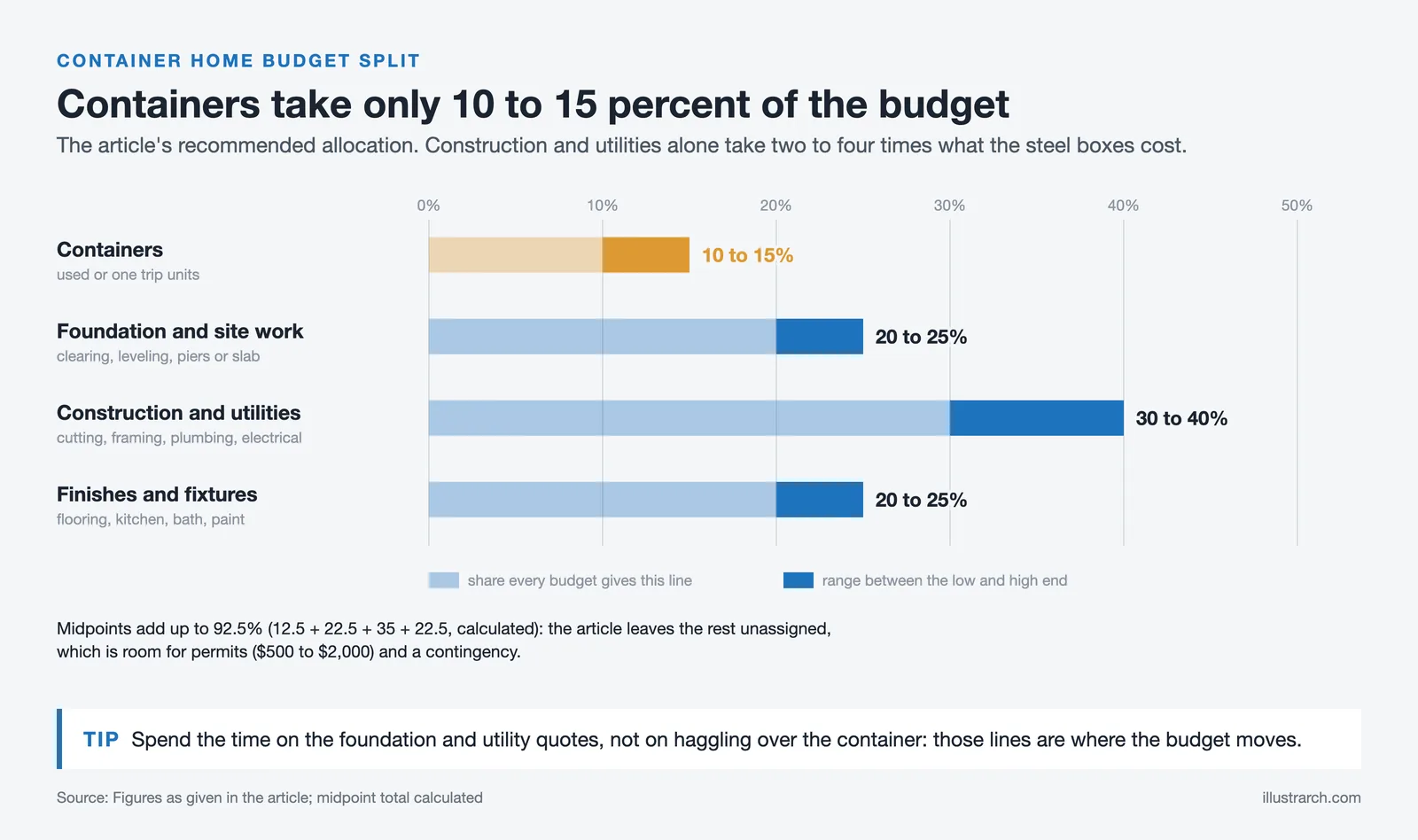
Establishing a clear budget is vital to managing costs. Consider the cost of containers, site preparation, permits, and utilities. Assign funds to each component while avoiding overspending in any single area. For instance, second-hand containers may reduce initial costs, allowing us to allocate more towards interior design. A recommended budget breakdown allocates roughly 10-15% to the containers, 20-25% to the foundation and site work, 30-40% to construction and utilities, and 20-25% to finishes and fixtures.
Site Selection and Preparation
Choosing an appropriate site impacts the project’s budget. Opt for accessible locations to minimize transportation costs. Evaluate the land’s topography and soil conditions to avoid costly groundwork. A geotechnical report costs $200-$1,200 but can prevent thousands in unexpected foundation expenses. Preparing the site involves clearing, leveling, and ensuring proper drainage, key factors in staying within budget constraints. Before selecting a site, review our guide to legal requirements for container homes in the USA to ensure zoning compliance.
Sourcing Affordable Containers
Affordable, high-quality containers serve as the foundation for budget container homes. By strategically sourcing these containers, we can significantly reduce costs. For example, if you’re in Texas, checking out a shipping container for sale Houston specifically could save you both time and delivery costs, as many local suppliers offer competitive prices and on-site inspections.

New vs. Used Containers
Choosing between new and used containers impacts both cost and condition. New containers offer pristine conditions free from damage or rust, which reduces future maintenance costs. However, they come at a higher price, typically ranging from $3,000 to $5,000 per unit.
Used containers cost less, generally between $1,200 and $3,000, depending on their grade and condition. They often come with minor cosmetic issues, but with careful selection, structurally sound units can be found. “One-trip” containers, used only once for cargo transport, strike an ideal balance between cost and condition, making them a popular choice for cheap house container projects. Opting for used containers can save 20-40% on structural costs alone.
Where to Buy Containers Cheaply
Purchasing shipping container home cheap options from reputable sources ensures quality and affordability.
- Local Suppliers: Many local businesses sell used shipping containers. Visiting these suppliers allows for physical inspections, ensuring the quality matches the price.
- Online Marketplaces: Platforms like eBay, Craigslist, and specialized websites like ContainerAuction.com often feature containers at competitive prices. Comparison and reviews can help find the best deals.
- Direct from Ports: Ports often have surplus containers available for sale. Though logistics may complicate purchasing directly from ports, considerable savings can be achieved.
- Shipping Companies: Reputable shipping companies occasionally sell off older containers for less. Contacting these companies directly can unearth cost-effective options.
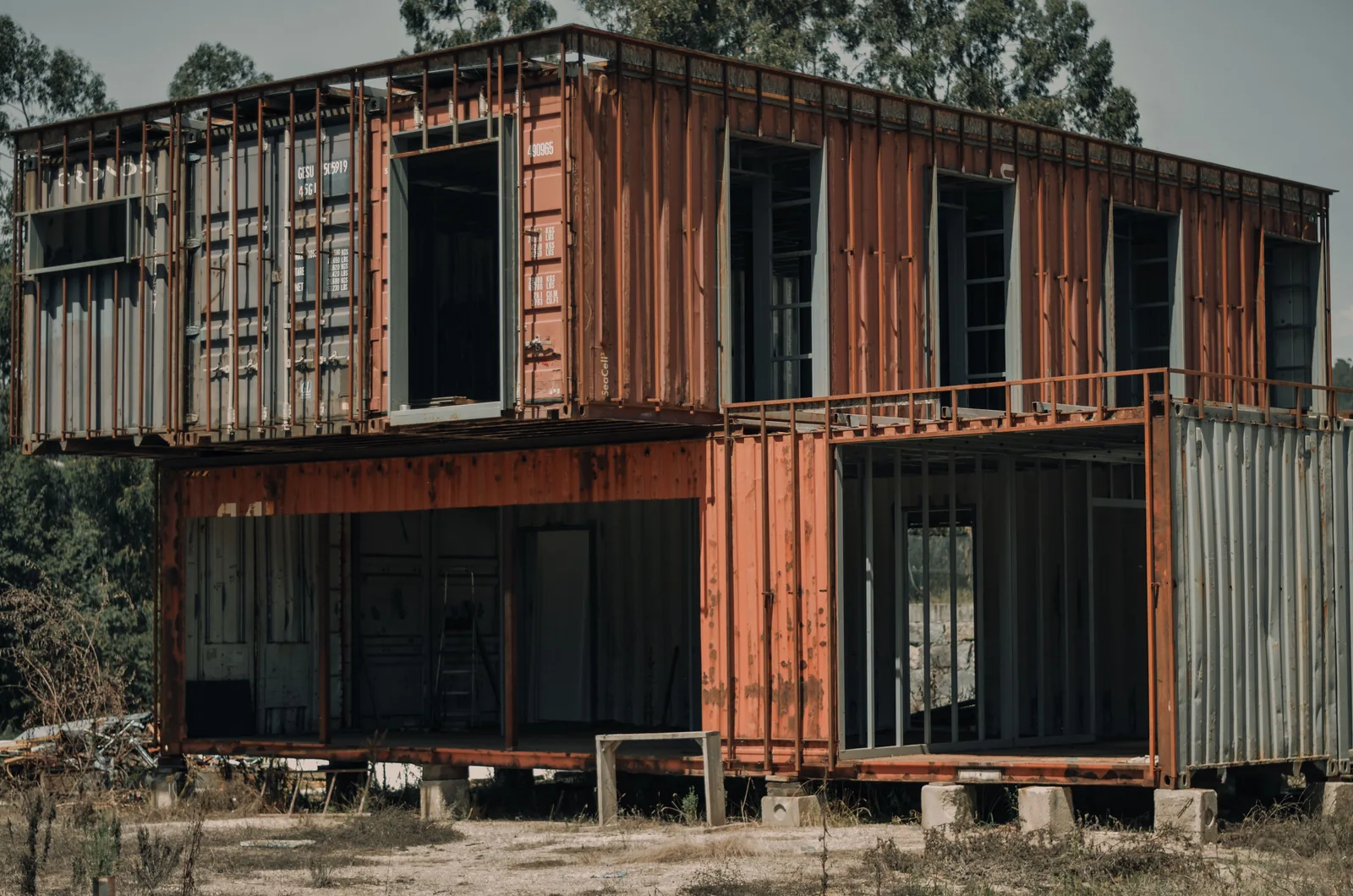
Optimizing the sources and conditions of the containers helps us maintain the affordability of our container homes cheap project. Always inspect containers in person or request detailed photos before purchasing, look for rust, dents, floor condition, and door seal integrity.
Cost-Effective Construction Tips
Let’s explore some practical and budget-friendly strategies to build container homes efficiently.
DIY vs. Hiring Professionals
Choosing between DIY and hiring professionals impacts both budget and timeline. DIY projects can save money on labor costs if we have construction skills and tools. For example, installing insulation and basic electrical wiring ourselves reduces expenses significantly. On the other hand, professionals might ensure higher quality in complex tasks like plumbing or structural modifications, avoiding costly mistakes down the line. Evaluating our capabilities vs. project demands helps in making the right choice.
A smart hybrid approach works well for low cost container homes: handle painting, insulation, interior finishing, and landscaping yourself while hiring licensed professionals for welding, structural modifications, plumbing, and final electrical connections. This strategy can reduce total labor costs by 30-50% while ensuring code compliance on critical systems. For a complete walkthrough of the building process, see our step-by-step guide to building your own container home.
Efficient Use of Space
Maximizing space in container homes is vital for cost-effective designs. Incorporating multi-functional furniture like fold-out beds and tables increases utility without adding bulk. Using vertical storage solutions and built-in cabinetry optimizes room usage efficiently. Properly insulating walls minimizes heat loss, ensuring energy efficiency, while strategically placed windows maximize natural light, reducing electricity costs. These thoughtful design choices contribute to a spacious and functional living environment within a compact footprint. For more ideas, check out these container home interior design tips.
Choosing the Right Foundation on a Budget
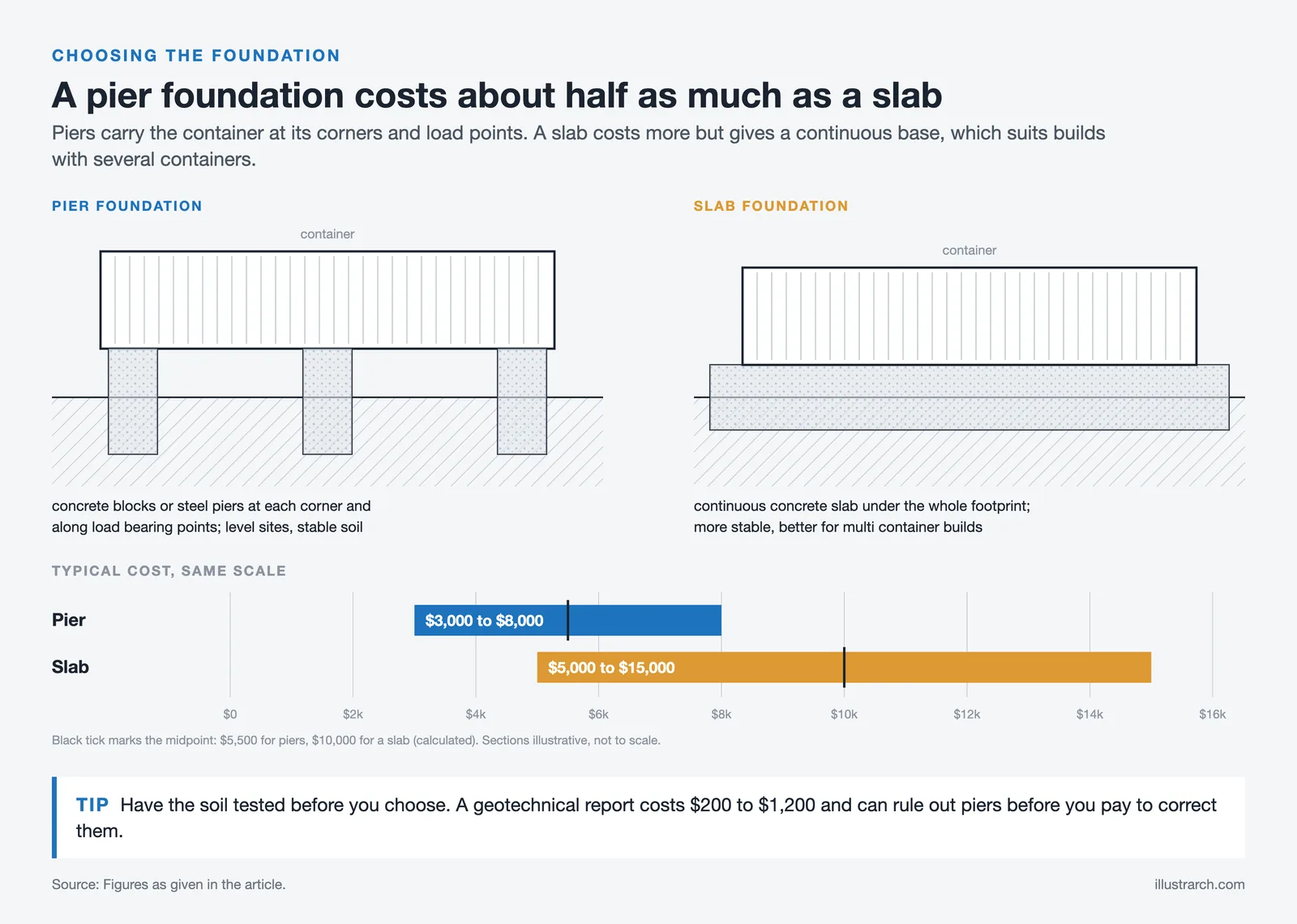
The foundation is a critical part of building a house using shipping containers, and it significantly affects cost. Pier foundations are the most budget-friendly option, using concrete blocks or steel piers placed at each corner and along load-bearing points. They typically cost $3,000-$8,000 and work well for level sites with stable soil. Slab foundations cost more ($5,000-$15,000) but provide greater stability and are better suited for multi-container builds. Always have your site soil tested before choosing a foundation type to avoid costly corrections later.
Energy-Efficient and Sustainable Practices
Energy efficiency and sustainability are crucial in building budget-friendly container homes. By incorporating smart design choices, we can significantly reduce energy consumption and environmental impact. Are shipping container homes cost effective in the long run? Absolutely, especially when we invest in proper insulation and renewable energy systems that pay for themselves over time.

Insulation and Ventilation Tips
Proper insulation minimizes heat loss and gain inside container homes. We recommend using spray foam, fiberglass, or rigid foam panel insulation to ensure better temperature control. Spray foam works well because it fills gaps and provides a moisture barrier, adding durability to the structure. Insulation costs typically range from $0.80 to $4.50 per square foot, with spray foam at the higher end but offering the best long-term performance.
Ventilation maintains indoor air quality and prevents moisture buildup. Installing energy-efficient windows and vents allows airflow while minimizing heat exchange. We advise placing windows strategically to facilitate cross-ventilation. Using roof vents and solar-powered exhaust fans also helps in circulating air efficiently. Steel containers are particularly prone to condensation, so addressing moisture management early prevents rust and mold issues.
Solar Panels and Alternative Energy Solutions
Solar panels offer a sustainable energy source for container homes. By harnessing solar energy, we can drastically reduce electricity bills. Installing photovoltaic panels on roofs is cost-effective in the long run. It’s essential to assess the home’s energy needs to determine the number and type of panels required. For a deeper look at solar-powered living, read our guide on off-grid living with solar energy.
Alternative energy solutions like wind turbines or solar water heaters can complement solar panels. These systems enhance energy self-sufficiency and reduce reliance on traditional energy sources. Opting for LED lighting and energy-efficient appliances furthers energy conservation efforts in inexpensive container homes.
Interior and Exterior Finishing on a Budget
Maximizing aesthetics without overspending is achievable with strategic choices. Using cost-effective materials and enhancements can make a significant difference in your affordable container home project.
Affordable Interior Materials
Opting for budget-friendly materials can keep costs down while achieving a stylish interior. Consider these options:
- Paint: Using paint transforms spaces inexpensively. Neutral colors work well for versatility. Low-VOC paints are recommended for healthier indoor air quality.
- Laminate Flooring: Affordable and durable, laminate mimics the look of hardwood without the price tag.
- Recycled Materials: Reclaimed wood and repurposed items add character and are eco-friendly.
- Prefabricated Fixtures: Prefab kitchen and bathroom fixtures manage costs while offering modern designs.
- DIY Finishes: Implementing DIY projects for furniture and decor reduces expenditure significantly. Learn more about transforming interiors in our container home interior transformation guide.

Low-Cost Exterior Enhancements
Enhancing the exterior without breaking the bank improves both aesthetics and functionality. Focus on these budget-friendly enhancements:
- Paint or Vinyl Wrap: Adding a fresh coat of paint or a vinyl wrap elevates the exterior’s appeal cheaply.
- Corten Steel Panels: Weather-resistant and cost-effective, these panels offer a unique industrial look.
- Landscaping: Use native plants and DIY landscaping to create an attractive outdoor space affordably.
- Insulated Panels: Improve both insulation and exterior appearance using cost-effective insulated panels.
- Solar Lighting: Installing low-cost solar lights enhances the exterior while saving on energy costs.
Keeping these strategies in mind will help complete the container home project on a budget without compromising quality or appeal.
Frequently Asked Questions About Budget Container Homes
How to build a container home cheap?
To build a container home cheap, start by sourcing used or one-trip containers instead of new ones, which can save 20-40% on structural costs. Take a hybrid DIY approach, handle simple tasks like painting, insulation installation, and landscaping yourself, while hiring licensed pros for welding, plumbing, and electrical work. Choose a pier foundation over a concrete slab to save on groundwork costs. Use affordable finishing materials such as laminate flooring, prefabricated fixtures, and reclaimed wood. Plan your layout to minimize container modifications, since every cut and reinforcement adds to the budget.
Are shipping container homes cost effective?
Yes, shipping container homes are generally cost effective compared to traditional construction. The average cost to build a container home ranges from $150 to $350 per square foot, while traditional homes typically cost $200 to $400+ per square foot. The structural shell is already built into the container, saving both materials and labor time. Container homes also benefit from faster construction timelines (3-8 months vs. 6-12 months for traditional builds), which reduces overall labor expenses. However, costs can add up quickly with extensive modifications, high-end finishes, and complex plumbing or electrical systems.
How long do container homes last?
With proper maintenance, a container home can last 25 years or more. Shipping containers are made from Corten steel, which is inherently resistant to harsh weather and corrosion. The key to longevity is preventing rust through regular exterior painting, prompt treatment of any rust spots, proper insulation to prevent internal condensation, and good drainage around the foundation. Many budget container builders apply marine-grade rust inhibitors during construction for added protection.
What permits do I need to build a container home?
Permit requirements vary by location, but most areas require a building permit, which typically costs $500-$2,000 for new construction. You’ll also need to comply with local zoning laws and building codes. Some municipalities require a geotechnical report, impact fees, and inspections at various stages of construction. It’s crucial to check with your local building department before starting your building house from containers project, as some areas have specific restrictions on container homes.
Can I use a shipping container as a small restaurant or commercial space?
Absolutely. A low budget small container restaurant design has become increasingly popular for food service, retail pop-ups, and office spaces. Containers provide a ready-made structure that can be converted into a commercial space at a fraction of the cost of traditional construction. You’ll need to meet additional health department and commercial building codes, but the core conversion process is similar to residential builds. Many entrepreneurs start with a single 20- or 40-foot container for their first commercial venture.
Conclusion
Effective planning and design can significantly reduce container home construction costs, making it essential for us to focus on setting realistic budgets and selecting appropriate sites. Efficient site preparation helps manage expenses and create practical living spaces. Sourcing affordable containers involves comparing new and used options, considering local suppliers, online marketplaces, ports, and shipping companies to secure the best deals.
Construction can be economical if we choose DIY projects or hire professionals for specific tasks. Multi-functional furniture and smart design choices aid in space optimization and energy efficiency. For interior finishing, affordable materials like paint, laminate flooring, recycled materials, prefabricated fixtures, and DIY finishes enhance cost-effectiveness and aesthetics. Exterior improvements such as paint or vinyl wrap, Corten steel panels, landscaping, insulated panels, and solar lighting improve the functionality and appearance while keeping costs low. With these budget container homes strategies, building an affordable container home is entirely achievable.



8 Comments





Container Home in the USA: Legal Requirements & Build Guide
From modern container houses to expandable and collapsible models, building a container...
Muhammad Abdullatef - Tifa Studio17 Mins read

Innovative and Stylish Creative Container Home Interior Design Ideas
Explore innovative container home interior designs that blend sustainability with modern style....
Muhammad Abdullatef - Tifa Studio8 Mins read

Building a House with Shipping Containers: Affordable, Sustainable, and Stylish Living Solutions
Discover the trend of building homes with shipping containers, affordable, eco-friendly, and...
 Sinan Ozen5 Mins read
The Cost-Saving Benefits of Using Storage Containers in Construction
Using repurposed shipping containers in construction provides significant cost savings through lower...
Sinan Ozen2 Mins read


Do they do those tiny houses in PA
This article talks about building container homes. It seems like a good way to save money. I like that they mention using used containers.
I found the tips on planning a budget for container homes interesting. It looks like you can make nice homes without spending too much.
I think container homes could be interesting. The article has some helpful tips for saving money.
This post gives a good overview of building with containers. It seems like a reasonable way to build a home.
This article has some interesting points about container homes.
I find the idea of using shipping containers for homes quite unique.
Building a container home sounds like a budget-friendly option.