

City Planning & Urban Theory
City planning and urban theory explain why cities work the way they do. This category examines planning policy, city identity, density debates, and public space through essays and case studies. Read illustrarch to understand the ideas and decisions behind streets, districts, and skylines, and how they shape daily urban life.

How China’s Urban Voids Are Transforming City Life
China’s urban voids are reshaping city life, see how under-bridge belts, night markets, and tactical design turn gaps into culture and climate resilience.
 Sinan Ozen4 Mins read

Architectural and Urban Design: How Architects Shape Cities
Architects play a crucial role in shaping cities through architectural and urban design. From designing buildings and public spaces to collaborating with urban...
 Elif Ayse Sen6 Mins read
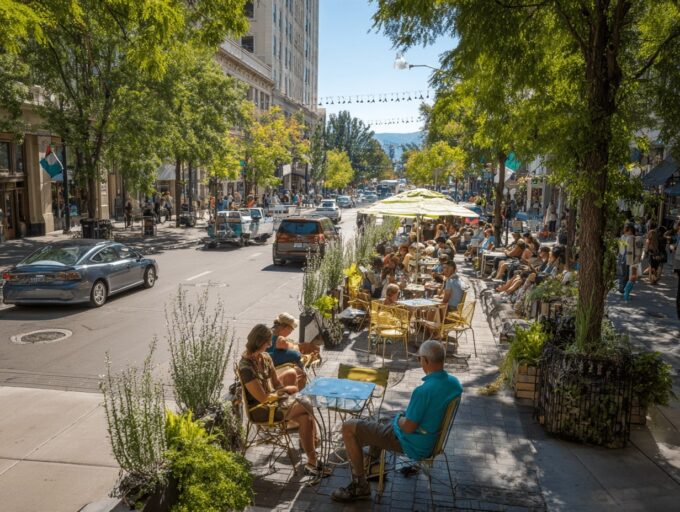
Architecture as Infrastructure: Designing Beyond Buildings
Architecture as infrastructure reframes cities as systems, flows, lifecycles, and value. Explore resilient design for streets, energy, transit, and governance.
Sinan Ozen4 Mins read

Designing for Emotional Urbanism: How We Shape Cities People Actually Feel Good In
Emotional Urbanism: a practical guide to design that reduces stress, boosts dwell and trust, methods, metrics, and pilots-to-policy steps for equity.
Sinan Ozen4 Mins read

Smart Sidewalks: Integrating Sensors, Lighting, and Connectivity Into Walkways
Smart sidewalks integrate advanced technology such as sensors and adaptive lighting to enhance pedestrian safety, improve accessibility, and facilitate urban planning.
 Muhammad Abdullatef - Tifa Studio4 Mins read

What Really Keeps a City Alive? The Energy Behind Urban Motion
Cities thrive on a complex interplay of energy systems, transportation networks, and human connections that collectively define their vitality and resilience.
 Bahattin Duran4 Mins read

How Urban Design Evolves Like Nature
How urban design evolves like nature: a practical guide to adaptive cities ecology-inspired patterns, fast feedback, resilient streets, and measurable equity.
Sinan Ozen4 Mins read

Why Walkable Cities Make Us Happier: Science, Design, and Daily Joy
Walkable cities make us happier: less stress, built-in exercise, stronger community. Explore research, examples, and steps to make your neighborhood walkable.
Sinan Ozen4 Mins read


