

Product Recall Prevention: How Manufacturers Spot Failure Patterns Before They Escalate
Recall risk falls when manufacturers spot failure patterns while they are still small. Combining complaints, warranty claims and field data, reviewing them weekly and designing for traceability keeps early signals from being missed.
 illustrarch Editorial Team23 November 20264 Mins read1

Table of Contents Show
Manufacturers reduce recall risk by spotting failure patterns while they are still small: a handful of similar complaints, an unfamiliar fault code appearing across several units, or a cluster of warranty claims tied to one production lot. Catching those signals early depends on three habits: collecting field data in a consistent structure, connecting it to production and supplier records, and reviewing emerging clusters on a fixed cadence. Together they give engineers time to make a containment decision before more units reach customers.



How Often Recalls Happen
Recalls are routine in regulated product categories. NHTSA’s 2025 annual safety recalls report lists 997 vehicle, equipment, tire, and child seat recalls in 2025, affecting 31,268,058 units, including 891 vehicle recalls affecting 29,262,623 vehicles. Across 2021 to 2025, nearly 80% of vehicle recalls had a final remedy available within 60 days, according to the same report.
Medical devices show a similar picture. A Government Accountability Office review of medical device recalls found that FDA oversaw the recall of 3,934 medical devices from fiscal years 2020 to 2024. Manufacturers identified the problem in 96% of those recalls, and class II recalls, which carry moderate risk, accounted for 88%. FDA officials told GAO that one reason recall timelines vary is that identifying and addressing the root cause sometimes takes a long time.
Manufacturers find most problems themselves
In GAO’s analysis of FDA data for fiscal years 2020 to 2024, manufacturers identified the issue in 96% of medical device recalls, which places early detection on their own quality data.
Where Early Failure Signals Appear
- Customer complaints and product reviews describing a new symptom.
- Warranty claims and service records showing a rising rate for one component.
- Telematics and fault codes from connected equipment.
- Returned-part teardown and failure analysis reports.
- Supplier change notices and incoming inspection results.
- In-plant data such as end-of-line test failures and nonconformance reports.
Each signal is weak on its own. A pattern becomes visible when signals are viewed together and grouped by component, supplier, production lot, plant, and region.
Turning Scattered Signals into Patterns
Pattern detection depends on recognizing that different records describe the same problem. A homeowner writes that a unit is “leaking onto the floor,” a technician records a “failed seal,” and a teardown report notes “seal compression set.” Unless those records are linked to the same part and failure mode, they count as three unrelated events.
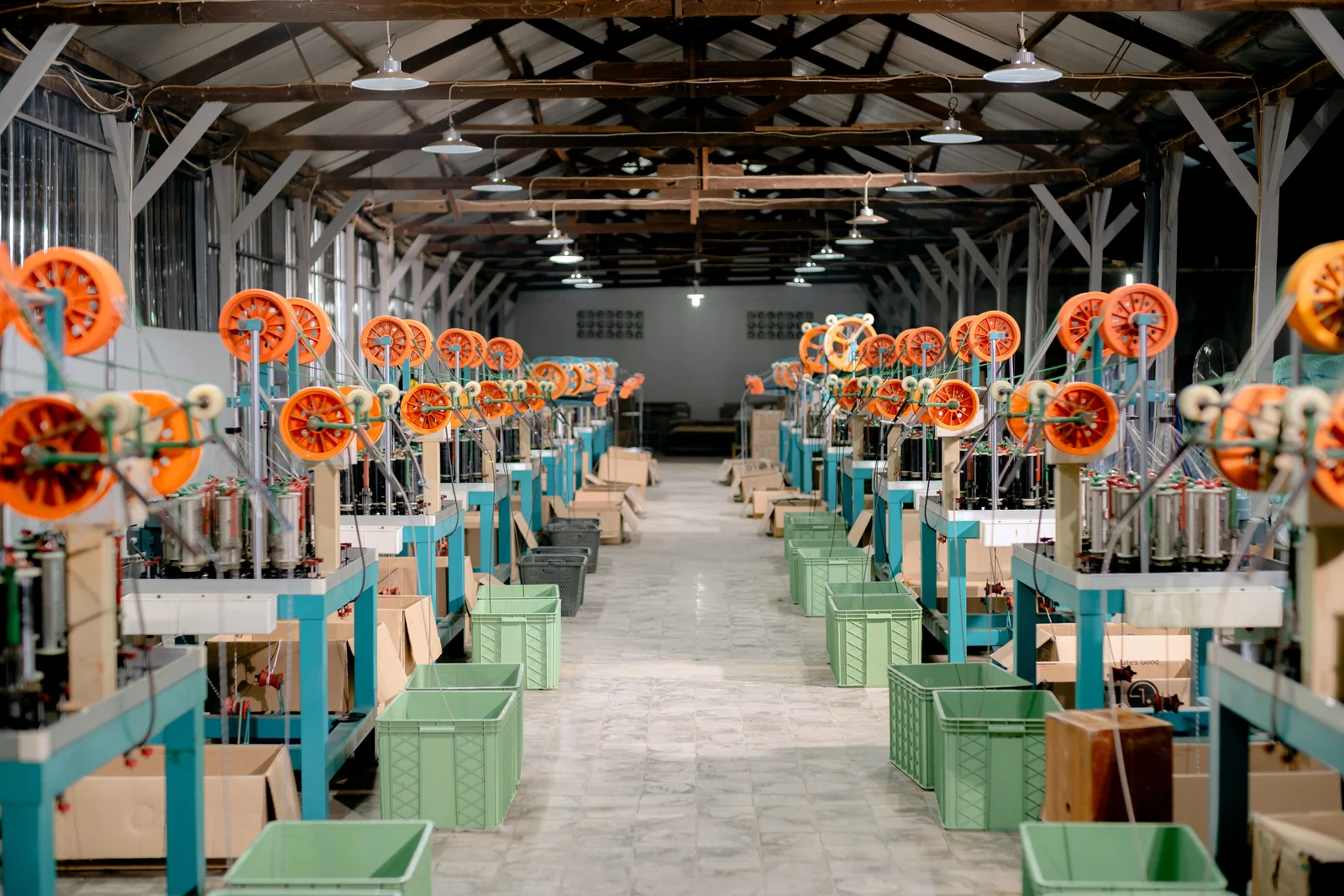
Manufacturers handle this work with a mix of statistical monitoring, text classification, and engineering review. Agentic AI platforms built for quality teams, such as Axion, connect complaints, service records, warranty claims, plant data, and supplier information, then look for what related cases have in common, such as a factory, a supplier batch, or a component. Quality engineers review the clusters, approve investigations, and decide on containment.
Identifiers make this possible. GAO’s report on FDA’s active postmarket surveillance system defines active surveillance as the ongoing review of evidence from sources such as electronic health records and billing claims to detect device safety issues that may otherwise go unreported. FDA officials told GAO that limited use of unique device identifiers in those records makes it harder to identify which devices patients used. The same principle applies to any manufacturer: if field records do not carry a serial, lot, or model identifier, a pattern cannot be traced back to production.
A Practical Recall Prevention Routine
- Define signals and thresholds for each product family, such as a complaint rate per thousand units or a weekly count of new fault codes.
- Review emerging clusters weekly with quality, engineering, service, and supply chain in the same meeting.
- Assign an owner and a containment decision deadline to every confirmed cluster.
- Size the affected population using build and shipment records.
- Document each decision, including cases where the evidence did not justify field action, so the reasoning is available later.
- Feed findings back into design and process FMEAs.
What Design Teams Can Do Earlier
Recall prevention starts before production. Design decisions determine how easily failures can be traced and corrected once products are in use:
- Design for traceability. Mark serial or lot identifiers on critical components as well as on the finished product.
- Plan for diagnosability. Clear fault codes and accessible test points shorten field diagnosis and improve the quality of service records.
- Design for serviceability. Components that can be replaced on site reduce the cost of any field action.
- Bring field data into design reviews. Review failure data from the current product when designing the next generation.
- Plan for field updates. Products with software or firmware can sometimes be corrected remotely, which lowers the cost of a field action.
Deciding When a Signal Needs Escalation
Not every cluster justifies field action. Teams typically weigh four factors when deciding how quickly to escalate:
- Severity: whether the failure mode could cause injury, property damage, or loss of a critical function.
- Rate and trend: whether the failure rate is rising with time in service or with production volume.
- Population: how many units from the affected lots are already installed or in distribution.
- Detectability: whether users or technicians can recognize the problem before it causes harm.
Writing these criteria down before a crisis keeps escalation decisions consistent and defensible, and it helps regulators and customers understand why a particular action was chosen.
Common Reasons Early Signals Are Missed
- Complaint data and warranty data reviewed in separate meetings by separate teams.
- Field records that lack serial or lot numbers.
- Failure categories so broad, such as “other” or “electrical,” that new issues stay hidden inside them.
- Reviews scheduled monthly or quarterly, which lets a cluster grow between meetings.
- Supplier change notices that never reach the engineers who review field data.
- Distributors and installers left out of the reporting loop, even though they often see installation-related failures first.
Measuring Recall Readiness
A few measures show whether the routine is working: time from the first related signal to a containment decision, the share of field records that carry a valid serial or lot number, the number of open clusters without an owner, and the time needed to produce a list of affected units for a given lot. Tracking them every quarter shows whether the organization is getting faster at the decisions that matter most when a real problem appears.

A mock recall once a year tests the whole chain. Pick a production lot and time how long it takes to identify every affected unit, locate its owner or installer, and stage replacement parts. Naming the legal, regulatory, and customer service contacts for each product line in advance also avoids delays once the engineering evidence is ready.
Conclusion
Recall prevention is a data discipline as much as an engineering one. The early signals of a field problem are spread across complaints, warranty claims, service notes, and plant records. Manufacturers that connect those records, carry identifiers through to the field, and review emerging clusters on a fixed cadence give their engineers time to contain problems while the affected population is still small, which reduces both recall risk and the cost of any field action that is needed.







Foster + Partners to Test Robot Swarms Building Timber from the Top Down
Foster + Partners wins €4m EU grant to build robot and drone...
illustrarch Editorial Team2 Mins read

PLNAR Review: Does AR Measurement Hold Up on a Real Site Visit?
PLNAR began as a consumer AR tape measure and now runs as...
 Sinan Ozen5 Mins read
ArchiSnapper Review: Is This Field Report App Worth It for Architects?
A hands-on look at Deltek ArchiSnapper, the mobile app built for field...
Sinan Ozen5 Mins read

Gross Internal Area and Net Internal Area: What’s the Difference?
The difference between Gross Internal Area and Net Internal Area shapes how...
Sinan Ozen5 Mins read






Leave a comment