

The Great Wall of China: History, Architecture, and Enduring Legacy
A detailed architectural exploration of the Great Wall of China covering its 21,196-kilometer span, dynasty-by-dynasty construction history from the Warring States period to the Ming era, building materials including rammed earth, kiln-fired bricks, and sticky rice mortar, watchtower design systems, and ongoing preservation challenges across 15 Chinese provinces.
 Furkan Sen5 September 20267 Mins read78
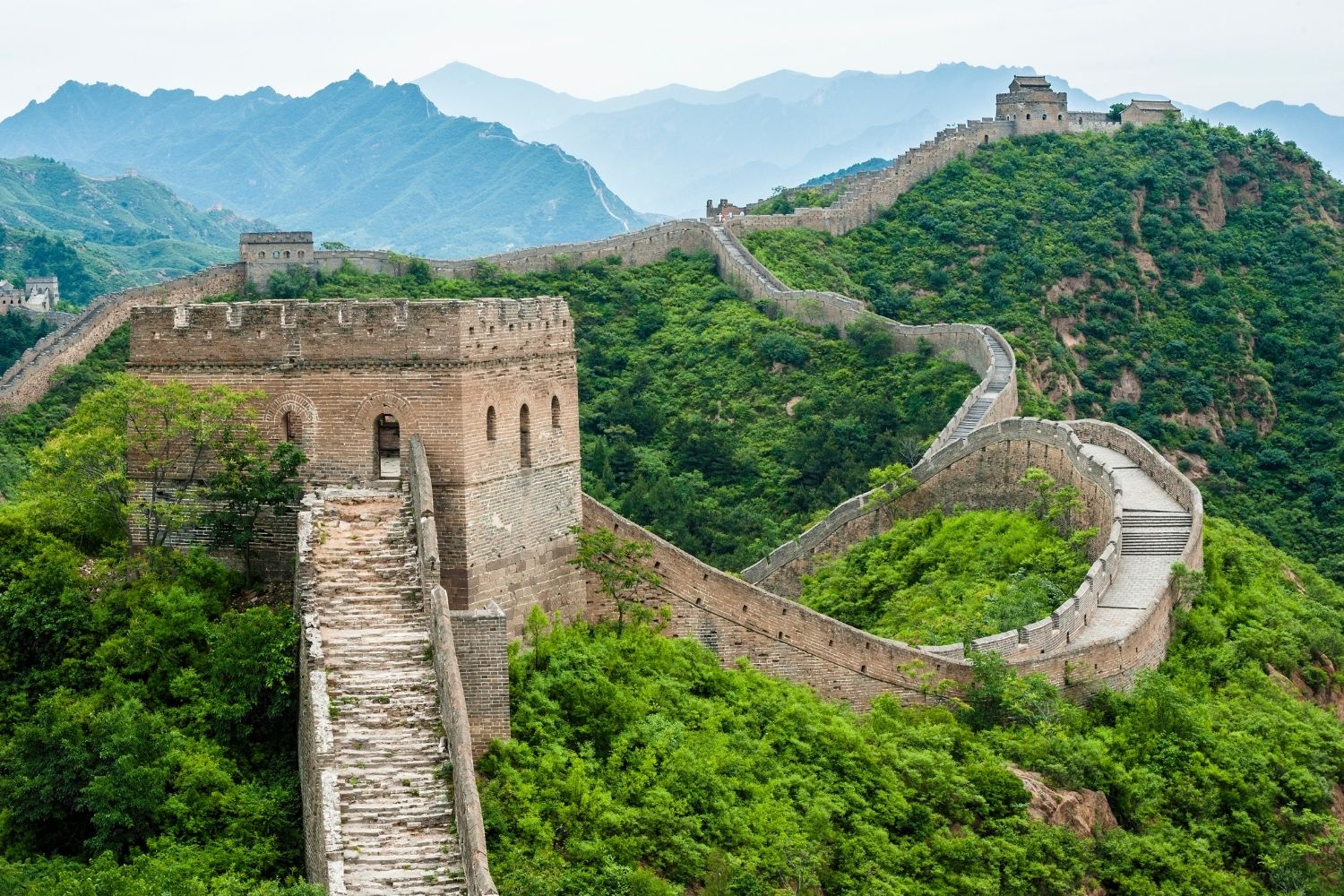
Table of Contents Show
The Great Wall of China is a series of fortifications stretching 21,196 kilometers (13,170 miles) across northern China, built over two millennia by successive dynasties. As one of the largest construction projects in human history and a UNESCO World Heritage Site, the wall represents an unparalleled achievement in military architecture, landscape engineering, and cultural identity.
Where Is the Great Wall of China?

The Great Wall of China spans 15 provinces and regions across northern China. Its collective fortifications stretch from Liaodong in the east near the coast of the Bohai Gulf to Lop Lake in the west, tracing an arc along the edge of the Mongolian steppe. The most recognized sections sit within a few hours of Beijing, where the Ming dynasty (1368 to 1644) concentrated its most ambitious construction efforts.
Shanhai Pass, near the Bohai Gulf in Hebei province, marks the traditional eastern terminus and is known as the “First Pass Under Heaven.” The western end reaches Jiayu Pass in Gansu province, a fortress positioned at the gateway to the Gobi Desert. Between these two points, the wall crosses mountain ridges, river valleys, grasslands, and arid deserts. About one-fourth of the Ming wall’s total length consists of natural barriers such as rivers and mountain ridges, while roughly 70 percent is actual constructed wall, according to Encyclopaedia Britannica.
Popular visitor sections near Beijing include Badaling, Mutianyu, Jinshanling, and Simatai. Each offers a different experience. Badaling is the most restored and accessible, while Jinshanling and Simatai retain a wilder, less-polished character that reveals the wall’s raw architectural power.
When Was the Great Wall of China Built?
The Great Wall of China was not built in a single campaign. Its construction history spans roughly 2,300 years, beginning in the Spring and Autumn Period (770 to 476 BCE) when individual Chinese states erected border walls for territorial defense. The most significant early unification came under Emperor Qin Shi Huang around 221 BCE, who ordered existing northern walls connected into a continuous defensive line against nomadic Xiongnu invasions.
After the Qin dynasty, successive rulers expanded and rebuilt the fortifications. The Han dynasty (202 BCE to 220 CE) extended the wall westward into the Gobi Desert to protect Silk Road trade routes. The Northern Wei, Northern Qi, Sui, Liao, Jin, and Western Xia dynasties all added their own sections over the following centuries. According to the historical records compiled by China’s National Cultural Heritage Administration, the Jin dynasty border fortifications alone measured 4,010 kilometers in length.
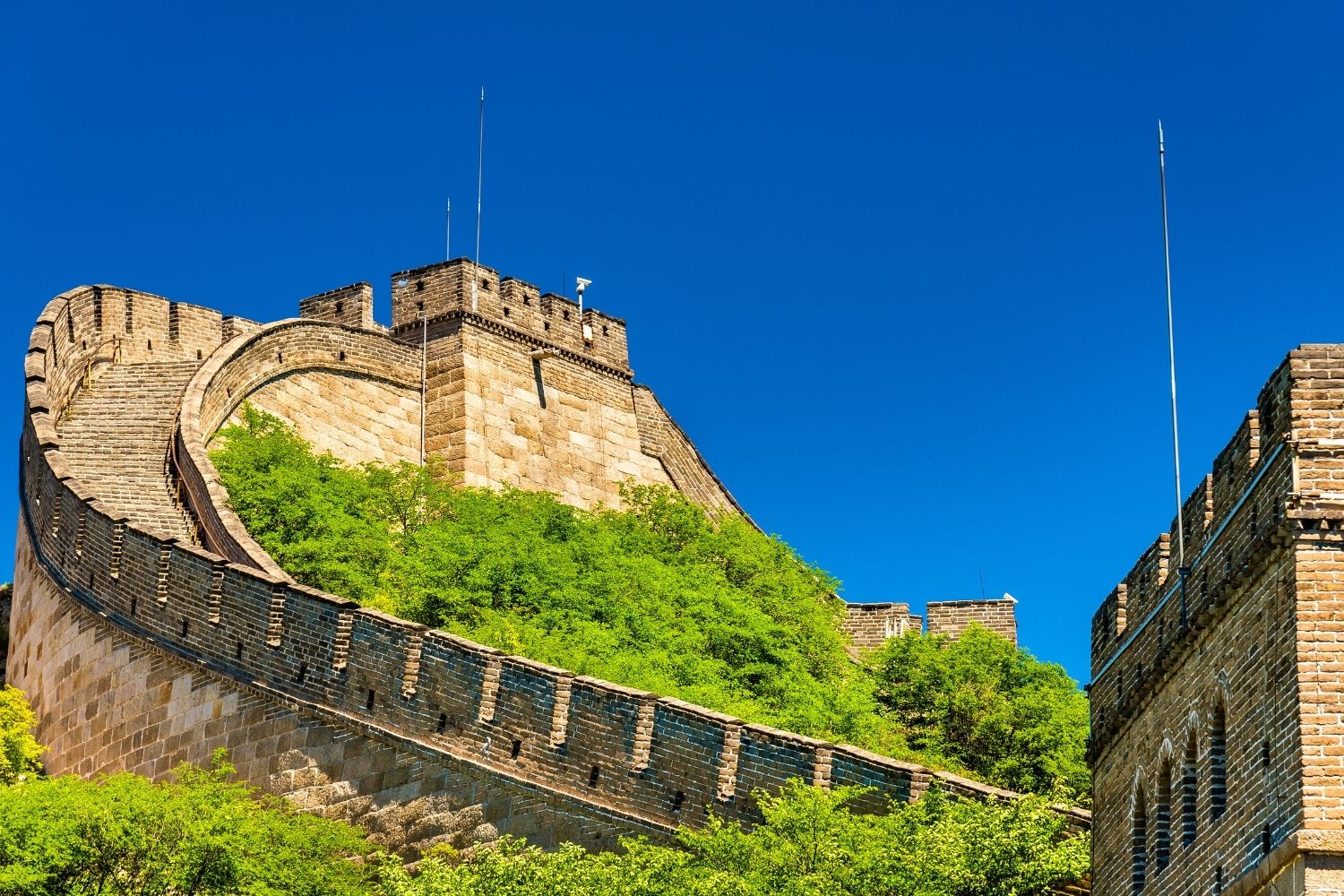
The wall that most visitors recognize today dates from the Ming dynasty (1368 to 1644), the final major building period. Ming emperors invested heavily in upgrading the structure with kiln-fired bricks, granite blocks, watchtowers, and beacon platforms. This era produced the iconic stone-and-brick fortifications that wind along steep mountain ridges north of Beijing.
Key Construction Periods at a Glance
The following table summarizes the major dynasties that contributed to the wall’s development and their primary construction characteristics:
| Dynasty / Period | Approximate Dates | Primary Materials | Key Contribution |
|---|---|---|---|
| Warring States | 475 to 221 BCE | Rammed earth, wood | Earliest border walls between rival states |
| Qin | 221 to 206 BCE | Rammed earth, stone | First unified wall connecting northern sections |
| Han | 202 BCE to 220 CE | Rammed earth, reeds, sand | Westward expansion to protect Silk Road |
| Northern Qi / Sui | 550 to 618 CE | Rammed earth, early brick | Repairs and extensions of northern defenses |
| Ming | 1368 to 1644 CE | Kiln-fired brick, granite, lime mortar | Most preserved sections; watchtowers, beacon system |
How Long Is the Great Wall of China?
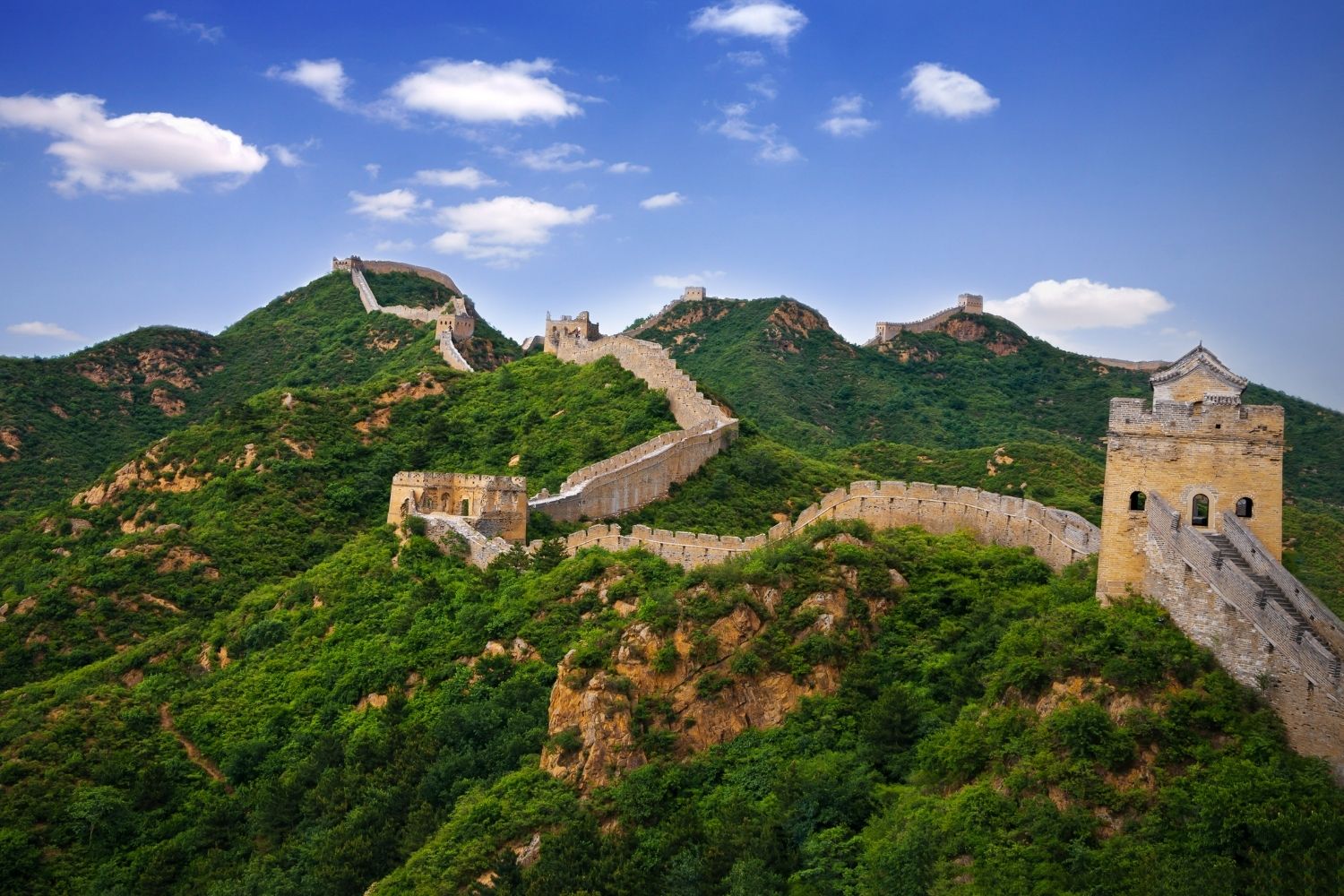
The total length of the Great Wall of China is 21,196.18 kilometers (13,170.70 miles), according to the comprehensive mapping survey published by China’s National Cultural Heritage Administration in 2012. This figure includes all wall sections, trenches, and fortifications built across multiple dynasties and distributed across 15 provinces and autonomous regions. The measurement was the result of a six-year archaeological survey that employed GPS positioning and on-site mapping of critical coordinates.
To put this distance in perspective, 21,196 kilometers is roughly half the circumference of the Earth’s equator. Walking the entire distance at 10 kilometers per day would take approximately 5.8 years, though this remains impossible in practice because roughly 30 percent of the wall has disappeared due to natural erosion and human activity.
The Ming dynasty section alone measures 8,851.8 kilometers (5,500.3 miles), consisting of 6,259 kilometers of constructed wall, 359 kilometers of trenches, and 2,232 kilometers of natural defensive barriers. This is the portion most travelers visit, and it remains the best-preserved segment of the entire network.
How Tall and How Big Is the Great Wall of China?
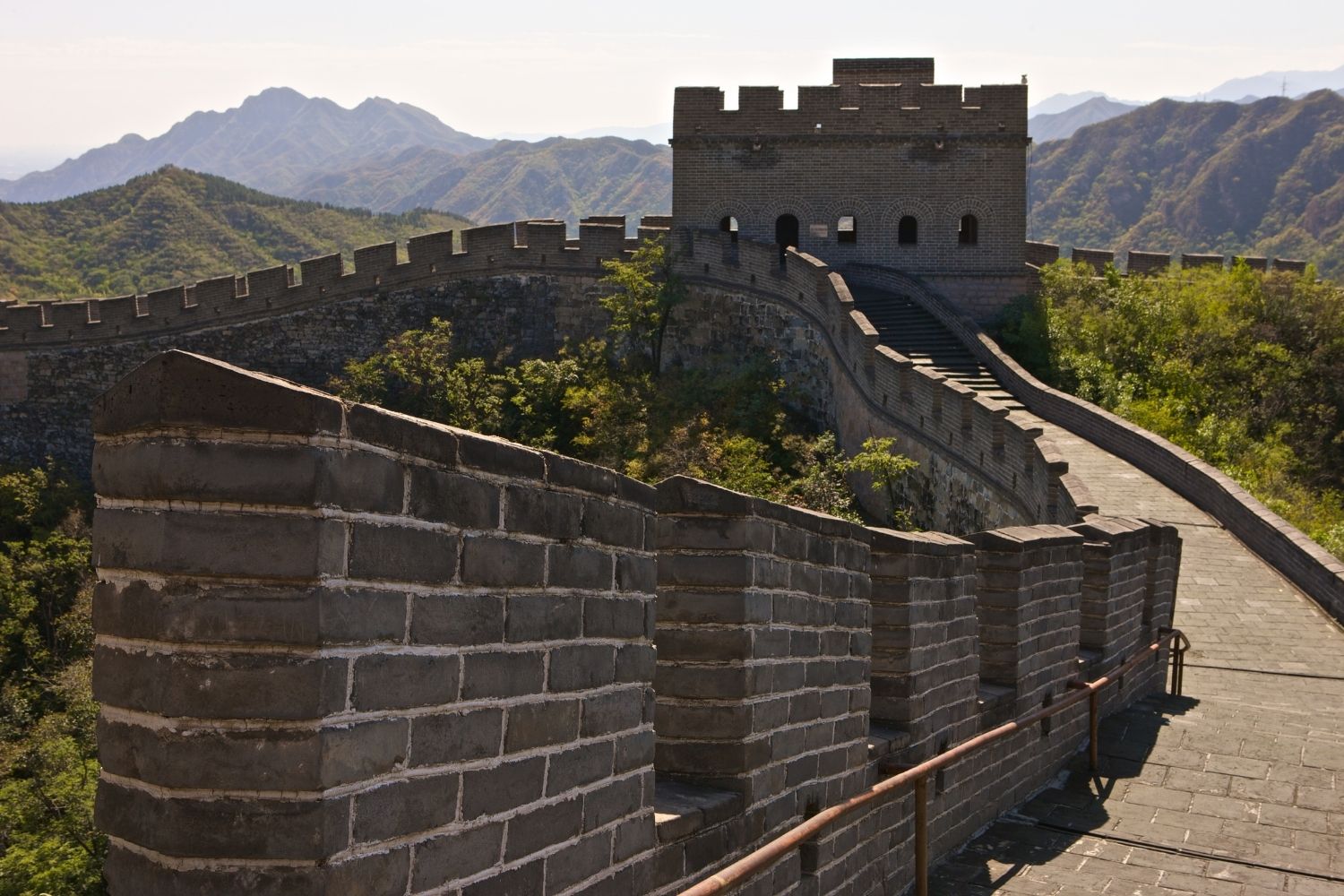
The physical dimensions of the Great Wall vary significantly by section and era. According to architectural surveys, the average height of the wall is 7.8 meters (25.6 feet), though certain sections reach as high as 14 meters (46 feet). The base averages 6.5 meters (21 feet) wide, while the top narrows to 4 to 5 meters (13 to 16 feet), wide enough for soldiers to march five abreast or for horse-drawn supply carts to travel along the wall’s surface.
The wider base serves structural purposes beyond simple load-bearing. It provides stability against seismic forces and weather erosion while supporting the weight of the crenellated parapets, watchtowers, and garrison structures built along the wall’s upper sections. The parapets feature defensive gaps of approximately 30 centimeters tall and 23 centimeters wide, sized for archer positions.
In total, an estimated 100 million tonnes of brick, stone, and soil were used across the wall’s construction history. The 2012 survey documented 43,721 Great Wall heritage sites, including 10,051 wall sections, 29,510 individual towers and buildings, 2,211 fortifications or passes, and 1,764 sections of moat or trench.
Architectural Design and Construction Techniques
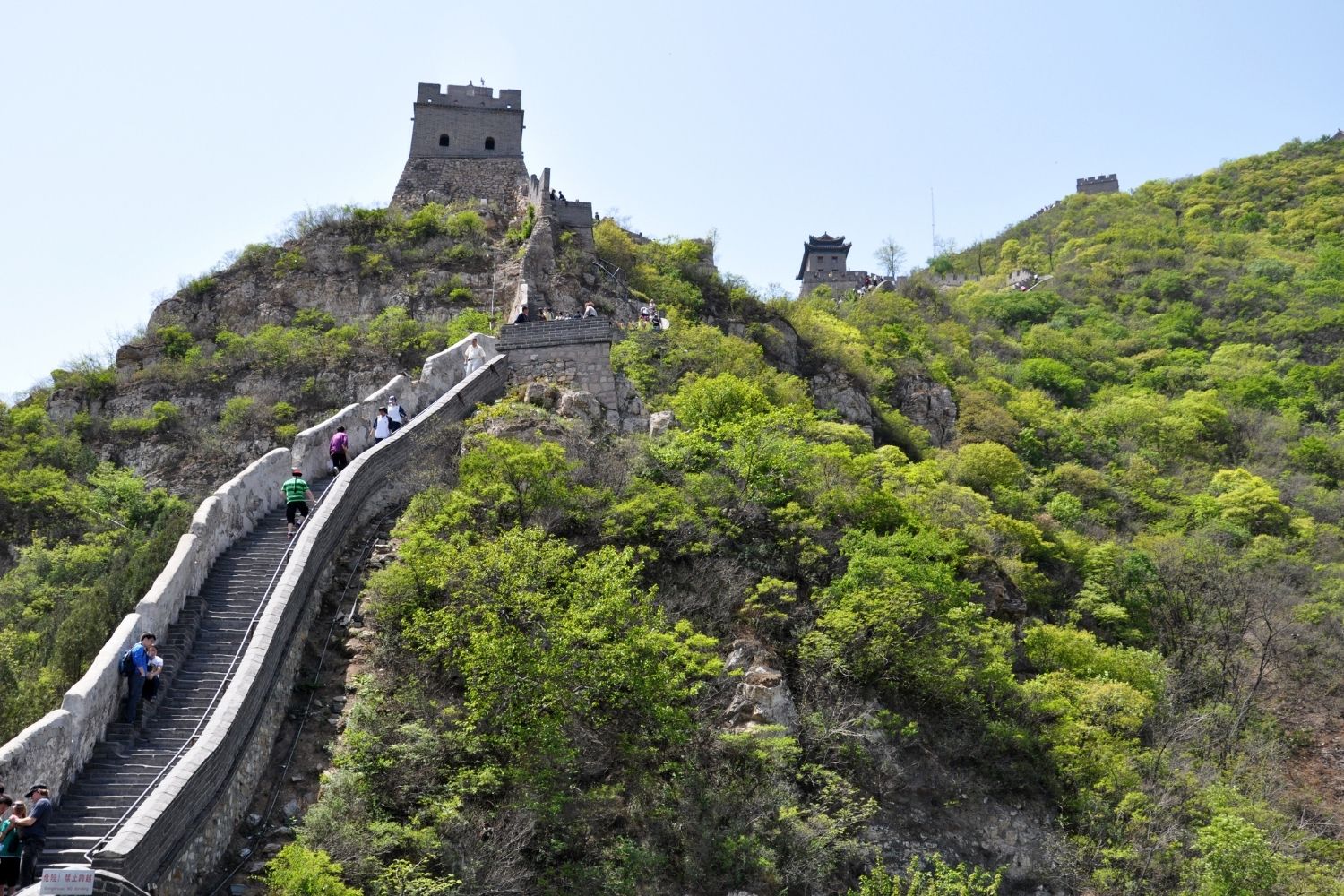
The architectural genius of the Great Wall lies not in a single design blueprint but in its adaptive response to terrain, climate, and available materials. Builders followed a core principle recorded in Sima Qian’s Records of the Grand Historian: “utilize the natural mountain barriers to establish the border defenses, scooping out the valleys and constructing ramparts at other points where they are needed.” This philosophy of adapting construction to the landscape produced a wall system that is simultaneously a military structure, an engineering project, and a work of landscape architecture.
Building Materials Across Dynasties
Early walls, particularly those from the Warring States, Qin, and Han periods, relied primarily on rammed earth (hangtu). This technique involved compacting layers of soil, clay, sand, and gravel within wooden frames. Each layer started at roughly 18 centimeters before being tamped down to about 13 centimeters. Though it sounds simple, rammed earth structures from over 2,000 years ago still stand in parts of western China, a testament to the technique’s durability in arid climates.
In desert regions around Dunhuang, where stone and earth were scarce, builders improvised with layers of red willow branches, tamarisk reeds, and sand. These composite walls at Yumen Pass (Jade Gate Pass) reached heights of 9 meters, and fragments of this layered construction remain visible today. In mountain areas, workers quarried local stone and used it for the outer facing, filling the interior with loose rock and compacted earth.
The Ming dynasty transformed wall construction through mass-produced kiln-fired bricks. About four times larger than modern bricks, these were fired at approximately 1,150 degrees Celsius for seven days to ensure maximum strength. Many Ming bricks bear inscriptions identifying the production date, manufacturer, and supervising official, an early form of quality control. Lime mortar held the bricks together, and research has confirmed that the most critical sections used sticky rice mortar, a composite of sticky rice soup mixed with slaked lime, which produced bonds significantly stronger than standard lime mortar alone.
“The Great Wall reflects collision and exchanges between agricultural civilizations and nomadic civilizations in ancient China. It provides significant physical evidence of the far-sighted political strategic thinking and mighty military and national defence forces of central empires in ancient China.”
UNESCO World Heritage Committee, Official Evaluation of the Great Wal
Defensive Architecture: Watchtowers, Passes, and Signal Systems
The Great Wall was far more than a simple barrier. It functioned as an integrated defense network with three primary components: walls, passes, and signal towers.
Passes (guan) were major strongholds positioned at intersections with trade routes and mountain gaps. Their ramparts rose approximately 10 meters high and measured 4 to 5 meters wide at the top. Each pass included access ramps for horses, ladders for soldiers, and often a moat dug from earth excavated during construction. Jiayu Pass in Gansu and Shanhai Pass in Hebei remain the best-preserved examples of these fortified gateways.
Watchtowers were placed every 200 to 300 meters along the wall and served multiple functions: observation posts, firing platforms, storage facilities, and temporary barracks. The lower levels contained rooms for soldiers, stables, and supply areas. Signal towers, built on hilltops for maximum visibility, transmitted military communications through a system of beacon fires at night and smoke signals during the day. During the Ming period, the number of smoke columns indicated the size of an approaching enemy force, enabling coordinated defensive responses across vast distances.
How Many Miles Is the Great Wall of China Compared to Other Structures?
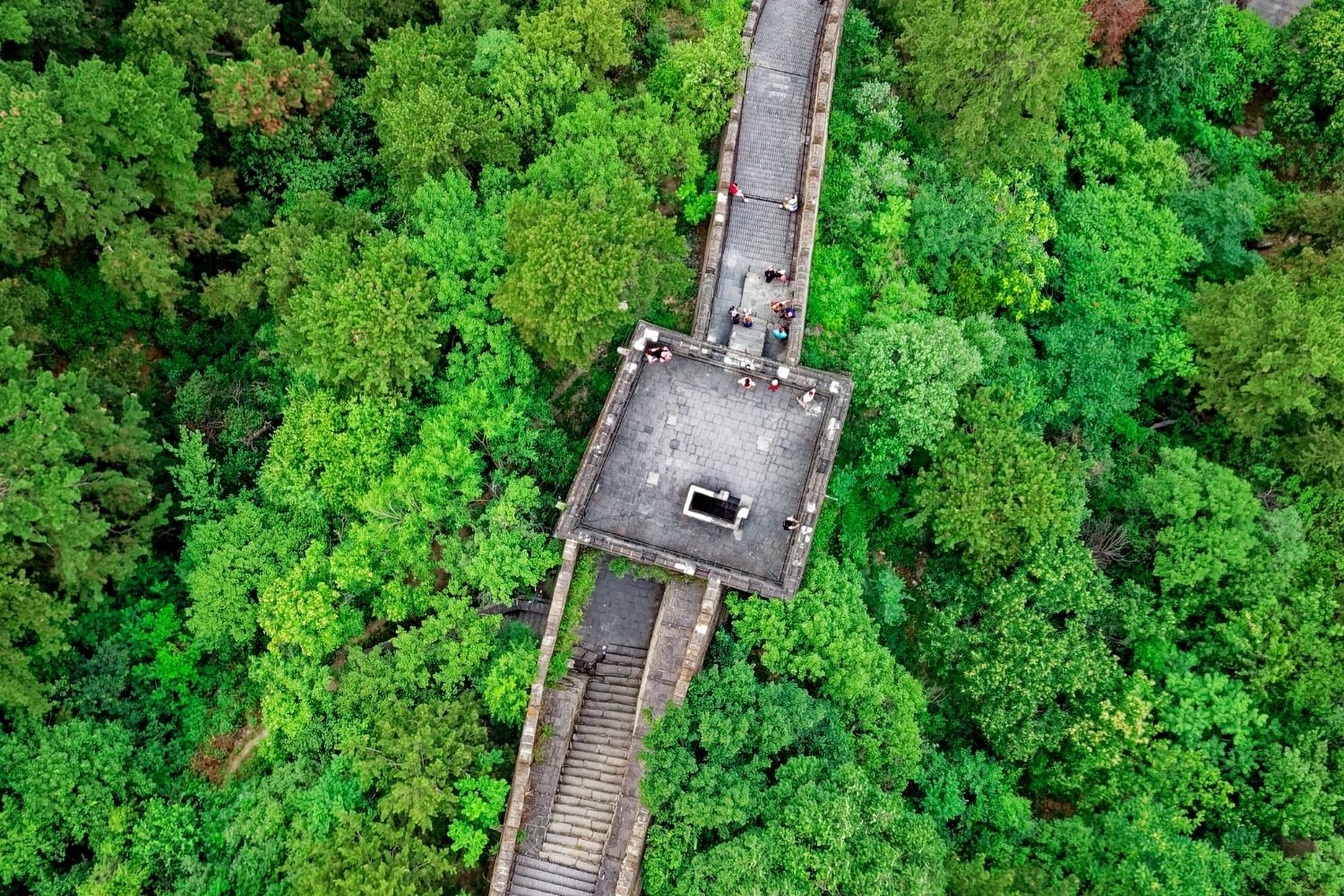
At 13,170 miles, the Great Wall of China dwarfs every other construction project in human history. The distance is equivalent to crossing the United States from New York to San Francisco nearly five times. It exceeds the total length of every Roman road ever built in Britain. The Ming section alone, at 5,500 miles, could stretch across the entire United States-Mexico border and the southern Canadian land border combined.
For comparison, Hadrian’s Wall in England, often referenced alongside the Great Wall, stretches only 73 miles (117 kilometers). The Berlin Wall measured 155 kilometers. Even modern infrastructure projects rarely approach the Great Wall’s scale. The Trans-Siberian Railway, at approximately 9,289 kilometers, covers less than half the Great Wall’s total length.
These comparisons underscore why architectural historians consistently rank the Great Wall among the most significant building achievements in human civilization. It was recognized as one of the New Seven Wonders of the World in 2007, alongside the Colosseum, Petra, and Machu Picchu.
Cultural Legacy and Preservation Challenges
The Great Wall occupies a unique position in global architectural heritage. Beyond its physical structure, it carries profound cultural significance. In Chinese, the wall is called Changcheng (Long Wall) or Wan-Li Changcheng (Ten-Thousand-Li Long Wall), reflecting its legendary scale. The wall appears throughout Chinese literature, from the poetry of Tu Fu in the 8th century to popular Ming dynasty novels, and the legend of Meng Jiangnü, whose grief for her husband who perished during construction is said to have caused a section to collapse, remains one of China’s most enduring folk stories.
Preservation, however, remains a serious concern. Approximately one-third of the Ming dynasty wall has already vanished due to natural erosion, agricultural encroachment, and human damage. Only about 10 percent of the wall has been restored and opened to visitors. The Chinese government has implemented protective legislation, but the wall’s sheer length across 15 provinces makes enforcement difficult. UNESCO has noted that tourism infrastructure, including cable cars and visitor facilities at popular sections like Badaling, has negatively impacted the wall’s visual integrity.
Current conservation efforts balance accessibility with authenticity. Sections like Mutianyu have been carefully restored while maintaining historical construction methods. Other segments, particularly in remote areas of Inner Mongolia and Gansu, remain unrestored, gradually returning to the landscape from which they were built.
Historical measurements and construction details referenced in this article are based on the 2012 survey by China’s National Cultural Heritage Administration. Due to ongoing deterioration and new archaeological discoveries, precise figures may be subject to revision.
- ancient chinese architecture
- how big is the great wall of china
- how long is the great wall of china
- how long is the the great wall of china
- how many miles is the great wall of china
- how tall is the great wall of china
- the great wall of china
- when was the great wall of china built
- where is the great wall of china







A Record El Niño Threatens More Than 10,000 Adobe Heritage Sites on Peru’s Coast
With a possibly record-breaking El Niño under way, Peru's coastal adobe heritage...
 illustrarch Editoral Team2 Mins read
Aspendos Excavation Uncovers 6,000-Year-Old Settlement Traces Near Antalya
Digs beneath Aspendos shop floors turned up Chalcolithic pottery and tools, pushing...
illustrarch Editoral Team2 Mins read
Relocated Maya Structures at Mexico’s Balam Tun Memory Park Face Legal Challenge
INAH archaeologists have filed a complaint against 26 officials over Balam Tun...
illustrarch Editoral Team2 Mins read
Allies and Morrison Win Approval to Restore Barbican Sculpture Court
City of London Corporation approves Allies and Morrison's plan to restore the...
illustrarch Editoral Team2 Mins read


Leave a comment