

Standby or Portable Generator? A Practical Framework Based on Loads, Outages, and Logistics
Choosing between a standby and a portable generator gets easier once you size real loads, look honestly at your outages and plan fuel, connection, placement and upkeep.
 illustrarch Editoral Team9 October 20265 Mins read2
Table of Contents Show
Storms, grid strain, and routine utility work have made backup power a planning item rather than a luxury. The question isn’t whether the power will go out, but how you want to ride through it. Choosing between a permanently installed standby generator and a portable unit becomes clearer when you evaluate three concrete factors: the loads you must support, the kind of outages you experience, and what you can realistically manage for fuel, placement, and upkeep. Use the framework below to decide which path fits your home or small business before you shop specific models or schedule any installation.
Calculate Real Loads: Starting watts, 240-volt circuits, and sensitive electronics
Start with what you need powered, circuit by circuit. Motors on well pumps, sump pumps, and refrigerator compressors draw a short surge that can be two to three times higher than their running wattage. Converting nameplate amperage to watts is straightforward: multiply volts by amps to get watts. A 240-volt, 10-amp well pump runs at about 2,400 watts, but its starting surge may briefly demand far more. Layer in 120 volt essentials like a furnace blower, modem and router, lighting, and a microwave. Add buffer for surges and avoid running everything at once unless your backup source can handle the combined load.
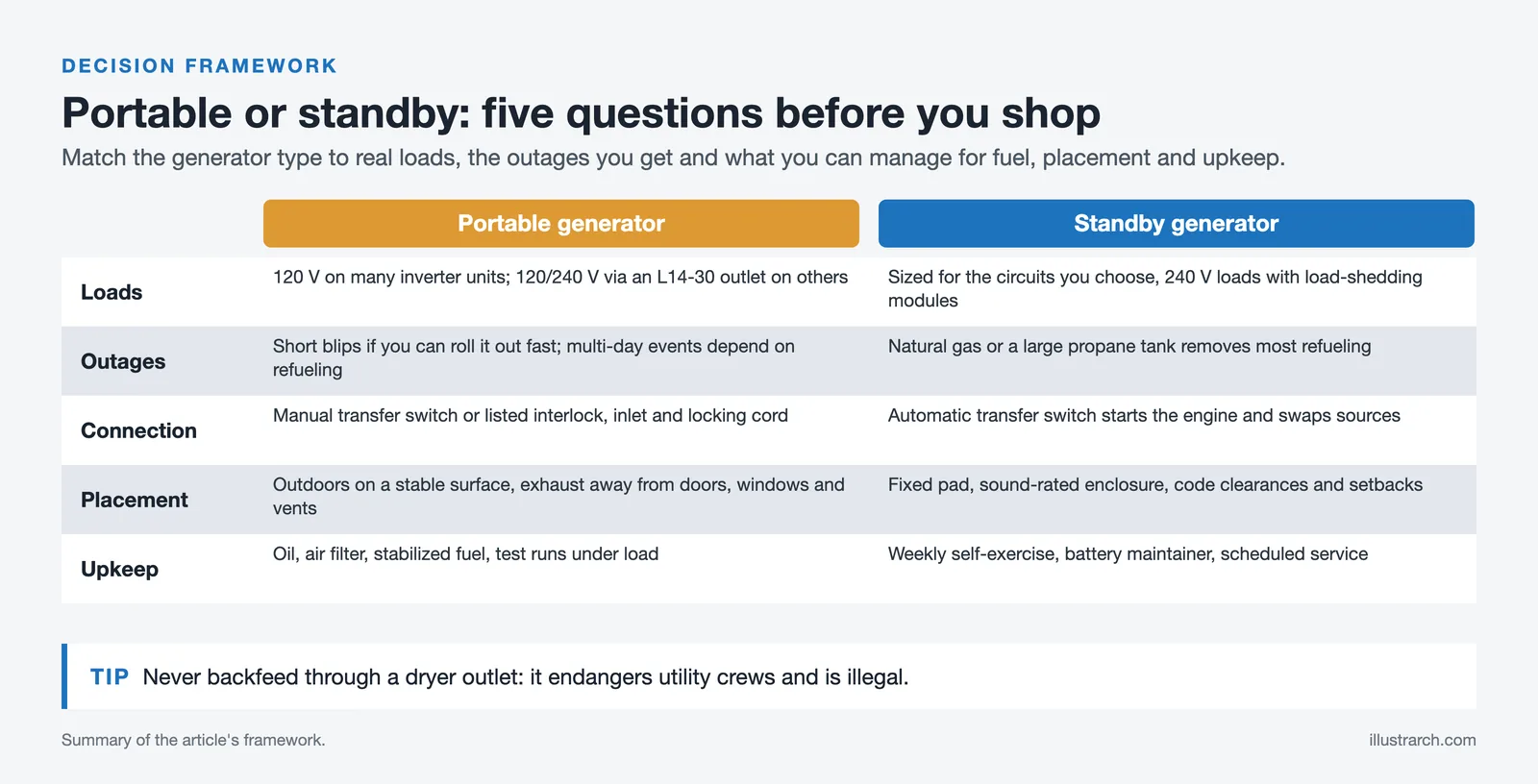
List which loads require 240 volts and which are 120 volts, because not all portable generators provide a 120/240 split-phase output. Many do via an L14-30 receptacle, while some inverter models are 120 volt only. Sensitive electronics prefer clean power, often described by low total harmonic distortion and steady voltage regulation. Inverter generators excel here, and many standby units include automatic voltage regulation at the service-entrance level. For a clear contrast between the two categories, read Standby Generators vs. Portable Generators | Destination, then return to this checklist to match features to your real loads.
Align with your outage pattern and refueling reality
Outage duration and frequency steer the choice as much as wattage does. If your utility blips for minutes at a time, a portable can work if you can roll it out quickly, connect it to a manual transfer switch, and accept a brief dark interval. For multi-day storm events, the bottleneck becomes fuel. Gasoline goes stale without stabilizer and is hazardous to store in quantity. Propane stores indefinitely in certified cylinders or a whole property tank, but you must plan for deliveries or keep enough bottles on hand. Natural gas, where available, feeds a standby generator continuously, removing refueling from the equation.
Consider how weather and access affect refueling. Iced roads and downed trees can make gasoline runs impractical. A standby generator on natural gas or a larger propane tank often outlasts those constraints, though any utility line can be interrupted for safety after earthquakes or during repairs. With portable units, plan fuel-storage routines, rotate stock, and learn cold-start procedures. Also weigh runtime windows. Many portables run for hours per tank at partial load, but you will still need to check oil and refuel, which is more demanding overnight or in high winds and rain.
Connect safely: Transfer switches, interlocks, and inlet hardware
How you connect the generator to your electrical system is a safety and code issue, not a convenience feature. A properly installed manual transfer switch or a listed interlock kit paired with a generator inlet and a 30 amp or 50 amp locking cord isolates your home from the grid and selects which branch circuits receive power. Backfeeding through a dryer outlet is dangerous and illegal, creating shock hazards for utility crews and risking fire. Standby systems use an automatic transfer switch that senses loss of utility power, starts the engine, and swaps sources without manual steps. If your loads include larger 240-volt appliances, discuss load-shedding modules that temporarily pause noncritical circuits so the system does not overload. Use heavy-gauge cords sized for the amperage, and verify neutral-bonding requirements so GFCI devices work as intended.

Where it sits matters: Placement, noise, and ventilation
Exhaust and sound shape day-to-day use. A portable generator must run outdoors on a stable surface with the exhaust pointed away from structures and openings. Never use it in a garage, basement, or under an open carport; carbon monoxide moves silently and can enter through doors, cracks, and vents. Follow the manufacturer’s distance guidelines from windows, doors, and soffit vents and consider wind direction. Standby generators occupy a fixed pad and have enclosure sound ratings. Local codes and manufacturers dictate clearances from walls and combustible materials, as well as setbacks from property lines. Quieter inverter portables help in dense neighborhoods, while sound-attenuated standby enclosures and strategic placement reduce disturbance during automatic runs.
Reliability over time: Maintenance, testing, and parts
Backup power that fails during an outage is just a heavy lawn ornament. Portables need routine oil changes, a clean air filter, an occasional spark plug replacement, and a test run under load to keep carburetors from gumming. Use fresh fuel with stabilizer and drain or run dry before long storage. Standby units automate much of this: many exercise weekly and keep their starting batteries on a maintainer, but they still require scheduled service, fresh filters, and periodic inspection of the transfer switch. Keep snow and debris clear of louvers and intake screens. For critical sites or heavy motor loads, periodic professional load-bank testing can confirm the engine and alternator deliver rated output without overheating.
Two real-world scenarios to test the decision
Suburban home with a sump pump, gas furnace, refrigerator, and home office: The must-run list includes a 240-volt pump with a high starting surge, a furnace blower, lights, and networking gear. A midsize portable with 120/240 output, connected to a six- to ten-circuit manual transfer switch, can cover these if you avoid starting multiple motors at once and accept manual refueling. If frequent overnight outages or vacations make manual starts impractical, a natural gas standby with an automatic transfer switch can power the same circuits without you being home. It can add central air later with load-shedding modules.
Corner market with reach-in coolers and a point-of-sale system: Even a 10-minute delay risks warm compressors and product loss. Staff may not be able to wheel out a portable safely during storms while serving customers. A standby generator prewired through an automatic transfer switch keeps compressors and registers running with no manual steps and logs run hours for maintenance. If outages are rare and inventory risk is low, the owner could stage a large portable with a locking inlet and transfer switch, but they must train staff on startup, keep fresh fuel on site, and test monthly.
When you match generator type to real loads, outage behavior, safe connection hardware, and the maintenance you will actually do, the answer becomes simpler. A portable unit offers flexibility and a lower upfront cost if you can manage cords, fuel, and manual steps. A standby unit delivers automatic operation and longer runtime, but at the cost of installation and service. Confirm local codes, plan your transfer equipment, and list the circuits that truly matter. With a clear load sheet and a realistic look at logistics, either path can keep your home or business running when the neighborhood goes dark.






Top Questions to Ask an Electrician in Fort Mill Before Starting a Project
The right questions to ask an electrician in Fort Mill before a...
illustrarch Editoral Team2 Mins read
How to Keep Your Home Cool During Indiana Summers
Practical steps for homeowners to keep their homes cool during Indiana summers...
 Begum Gumusel2 Mins read
How to Keep Your Arnold Home Cool During an Extreme Heat Wave
Practical, proactive ways homeowners in Arnold, MD can keep their home cool...
 Furkan Sen6 Mins read

Warning Signs Your Furnace Needs Professional Repair
Warning signs that indicate a furnace needs professional repair include unusual noises,...
illustrarch Editoral Team2 Mins read


Leave a comment