

What is Augmented Reality in Architecture?
Augmented reality is a live direct or indirect view of a physical, real-world environment whose elements are augmented by computer-generated sensory input such as sound, video, graphics or GPS data. It is not only used in the field of architecture but also in various other occupations like medicine and military training. It can be used to examine existing buildings and structures as well as to create structures that do not yet exist in real life.
 Elif Ayse Sen4 January 20235 Mins read557
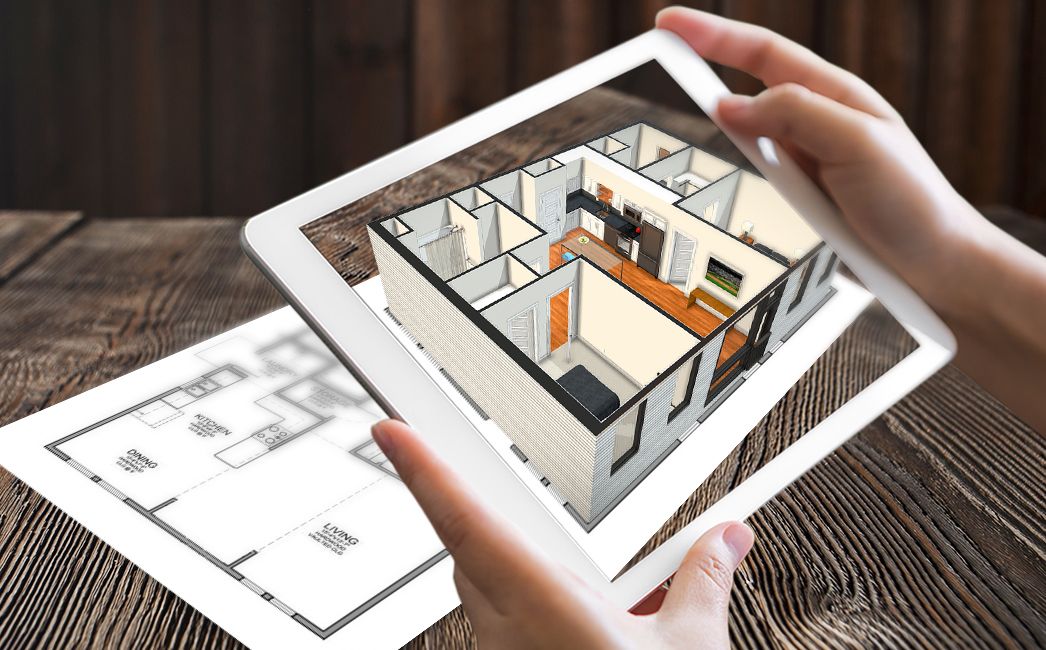
Table of Contents Show
Augmented reality in architecture is the use of computer-generated 3D models, data, and visuals overlaid onto a real-world view through a phone, tablet, or headset. It lets architects and clients see a building on its actual site before construction begins, turning flat drawings into interactive, full-scale experiences.
For decades architects relied on physical models and 2D plans to communicate intent. Those tools still matter, but they ask the viewer to imagine the finished result. Augmented reality removes that guesswork. Point a device at an empty lot and a proposed structure appears in place, scaled correctly and anchored to the ground. The technology has moved out of research labs and into everyday practice, and it is changing how design decisions get made and approved.

How Does Augmented Reality Work in Architecture?
Augmented reality places digital content into your live surroundings and keeps it locked to physical space as you move. A camera reads the environment, software maps surfaces and distances, and the 3D model stays positioned correctly whether you walk around it or crouch to inspect a detail. This is different from virtual architecture, where the viewer is fully immersed in a simulated world with no view of the real one.
Most architectural AR pipelines start with a model built in a tool many firms already run, then export it to a viewer app. Marker-based systems trigger the model from a printed image or QR code on a drawing. Markerless systems use the device sensors to anchor content directly to the floor or terrain. Developer frameworks such as Apple’s ARKit handle the tracking math, so design teams can focus on the model rather than the underlying computer vision.
🎓 Expert Insight
“Clients stop asking what a space will feel like once they can stand inside it at full scale. AR shortens the gap between a drawing and a decision, and that gap is where most project delays used to live.”
Licensed architect with 15+ years in practice
This reflects a common shift in firms that have adopted AR review sessions: approvals come faster because stakeholders understand scale and proportion without translating a plan in their heads.
What Are the Main Uses of AR in Architectural Practice?
Architects apply augmented reality across the full project timeline, not just at the presentation stage. The same model can serve concept design, client sign-off, coordination, and the build itself.
Client Presentations and Design Review
This is where AR earns its keep first. Instead of explaining a concept, a designer hands the client a tablet and lets them walk the space. People grasp ceiling heights, window placement, and sightlines immediately. Material choices, finishes, and lighting can be swapped in real time, so a single meeting can cover several options that would otherwise need separate renderings.
On-Site Visualization and Construction
On the job site, AR overlays the design model onto the actual structure as it goes up. Contractors check whether ductwork, framing, and openings match the plan before anything is sealed. Catching a clash on screen costs minutes; catching it after the drywall is hung costs days. Headsets like Microsoft HoloLens let crews keep their hands free while holographic guides sit over the real work.

Coordination With BIM and 3D Models
Augmented reality is most useful when it reads from a live source of truth. Linked to a BIM model, an AR view shows not just geometry but the data behind it, such as material specs and component schedules. Firms already comparing tools like Lumion, Enscape, and Twinmotion for rendering often feed those same assets into AR, so visualization and coordination share one workflow.
📌 Did You Know?
The roots of augmented reality reach back to 1968, when Ivan Sutherland built the first head-mounted display, nicknamed the Sword of Damocles. The term “augmented reality” itself was coined by Boeing researcher Tom Caudell in 1990, decades before phones made it practical for architecture.
What Are the Benefits of Augmented Reality for Architects?
The value of AR shows up in communication, cost, and speed. Each benefit ties back to one idea: seeing a design in context beats imagining it.
- Faster approvals. Clients who can stand inside a space decide quicker and ask for fewer revisions.
- Fewer costly errors, since clashes and scale problems surface before they reach the site.
- Stronger marketing, because real estate teams can sell units that exist only as models.
- Better collaboration across architects, engineers, and contractors working from the same anchored model.
- Lower reliance on physical mockups, which saves both time and material.
AR also supports education. Students can place full-scale studio projects on a campus lawn and study how proportion and architectural technology behave at real dimensions, something a desktop screen cannot teach as directly.
💡 Pro Tip
Before an AR client meeting, optimize your model by reducing polygon count and baking textures. Heavy files stutter on tablets and break the sense of presence. A clean, lightweight model tracking smoothly at full scale persuades far more than a detailed one that lags.
What Tools and Devices Power Architectural AR?
The hardware ranges from the phone in your pocket to dedicated headsets. Phones and tablets remain the most common entry point because every client already owns one and the experience needs only an app. Headsets add hands-free, immersive review for site work and detailed coordination.
On the software side, models usually originate in standard architecture and modeling tools, then move into AR viewers built on frameworks like ARKit or Microsoft’s mixed reality platform. Even phone-based measuring apps such as Magicplan show how far mobile AR has come, capturing room dimensions that once needed a tape measure and a steady hand.

A Real Project That Shows the Point
🏗 Real-World Example
Mortenson and the U.S. Bank Stadium (Minneapolis, 2016): The construction firm used Microsoft HoloLens to overlay BIM models onto the building during construction, letting teams verify mechanical and structural elements in place. The approach supported tighter coordination and became an early proof that AR belongs on the job site, not just in the showroom.
What Are the Limits of AR in Architecture?
Augmented reality is powerful, but it is not automatic. Tracking can drift on featureless surfaces or in bright outdoor light. High-detail models demand processing power that mobile devices do not always have, which forces a trade between fidelity and smoothness. Headsets remain expensive enough that many firms reserve them for larger projects. And AR depends on good source models; a sloppy BIM file produces a sloppy AR experience. None of these are dealbreakers, but they explain why AR supplements traditional documentation rather than replacing it.
For a broader view of how the technology is being applied across the profession, the ArchDaily augmented reality archive tracks built and experimental projects, while the technical background of AR covers the tracking and display systems behind it.
Looking Ahead
Augmented reality in architecture has shifted from a novelty into a working tool that earns its place in client meetings, coordination, and construction. The firms getting the most from it treat AR as one connected step in a model-driven process rather than a flashy add-on at the end. As headsets get lighter and BIM links get tighter, the line between drawing a building and standing inside it will keep getting thinner, and the architects who learn that fluency now will set the pace for everyone else.





Seedance 3.0 for Home and Garden Concepts: Making a Renovation Story Easier to Discuss
Seedance 3.0 can turn a renovation idea into a short concept video....
 illustrarch Editoral Team5 Mins read
Best AI Interview Assistant for Architects: 9 Tools Compared
We compare nine AI interview assistants for architects on speed, drawing awareness,...
illustrarch Editoral Team12 Mins read
Foster + Partners to Test Robot Swarms Building Timber from the Top Down
Foster + Partners wins €4m EU grant to build robot and drone...
illustrarch Editoral Team2 Mins read
PLNAR Review: Does AR Measurement Hold Up on a Real Site Visit?
PLNAR began as a consumer AR tape measure and now runs as...
 Sinan Ozen5 Mins read


Leave a comment