


Welcome back to our journey through the pages of architectural history in the series, “Stories Behind Famous Landmarks”. We have traveled from the winding expanse of the Great Wall of China to the towering heights of the Eiffel Tower. Today, we bring you two distinct yet universally recognized symbols of love and liberty – The Taj Mahal in Agra, India, and the Statue of Liberty in New York, USA.
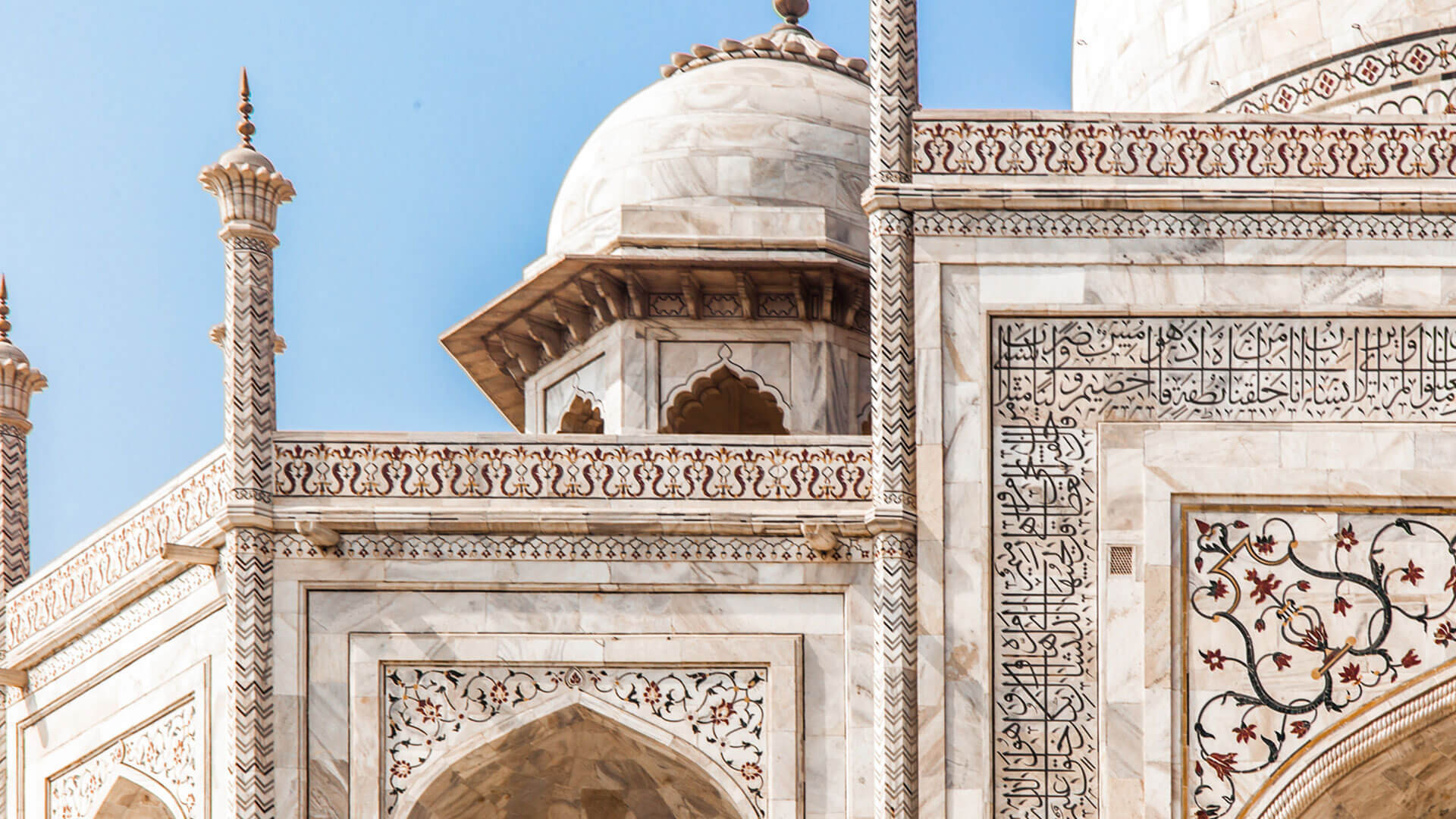
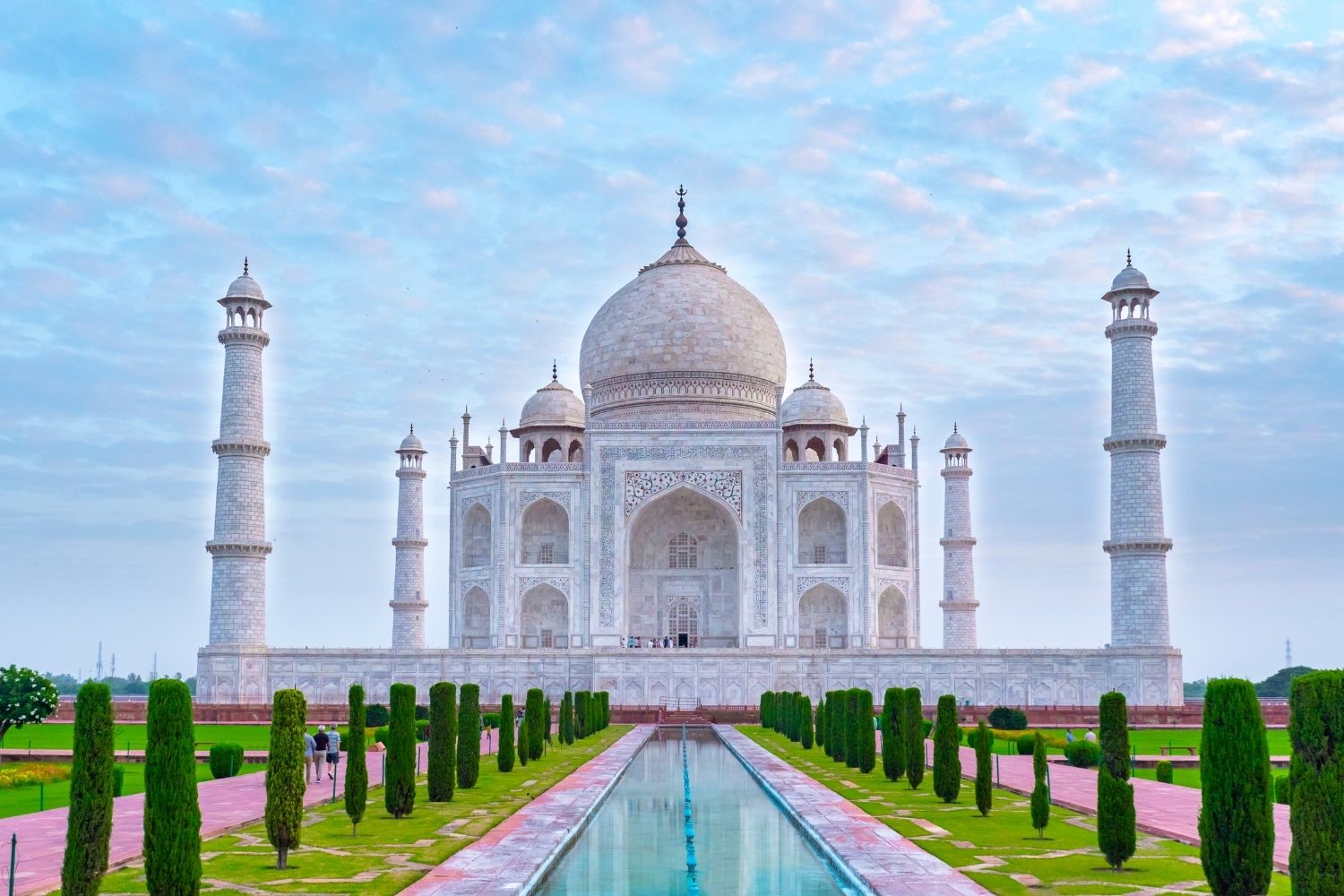
Our first destination is the city of Agra, home to the magnificent Taj Mahal. Regarded as one of the most beautiful buildings in the world, the Taj Mahal was commissioned by the Mughal Emperor Shah Jahan in 1632 as a tomb for his beloved wife, Mumtaz Mahal. A blend of Persian, Islamic, and Indian architectural styles, this ivory-white marble mausoleum stands as an eternal symbol of love.
The Taj Mahal’s architectural grandeur lies not just in its stunning dome and minarets, but also in its intricate carvings, semi-precious stone inlays, and meticulously planned symmetry. From its lush gardens that symbolize paradise to the reflective pool that mirrors the structure’s image, every aspect of the Taj Mahal is steeped in symbolism and precision. Its construction, involving about 20,000 artisans, was a monumental feat that took approximately 20 years to complete.

As a UNESCO World Heritage Site, the Taj Mahal is an enduring testament to the rich architectural history of India and an iconic symbol of Mughal architecture’s aesthetic charm. This timeless monument to love continues to captivate millions of visitors with its extraordinary beauty and the poignant love story that it embodies.
Halfway across the globe, standing tall on Liberty Island in New York Harbor, the Statue of Liberty is another universally recognizable landmark with a compelling history. Unveiled in 1886, the statue was a gift from the people of France to the United States as a symbol of friendship and a celebration of the ideals of freedom, democracy, and enlightenment.

Designed by French sculptor Frédéric Auguste Bartholdi and built with the help of Gustave Eiffel, the Statue of Liberty, officially known as “Liberty Enlightening the World”, depicts the Roman goddess Libertas holding a torch and a tabula ansata, which is a tablet evoking the law and inscribed with the date of American independence.
Standing over 305 feet tall from the base to the tip of the torch, this colossal copper statue underwent an impressive feat of engineering. Its skeletal structure was constructed from iron pylon and steel, while the exterior is composed of a thin layer of copper, creating its characteristic green patina.
As a UNESCO World Heritage Site, the Taj Mahal is an enduring testament to the rich architectural history of India and an iconic symbol of Mughal architecture’s aesthetic charm. This timeless monument to love continues to captivate millions of visitors with its extraordinary beauty and the poignant love story that it embodies.

Halfway across the globe, standing tall on Liberty Island in New York Harbor, the Statue of Liberty is another universally recognizable landmark with a compelling history. Unveiled in 1886, the statue was a gift from the people of France to the United States as a symbol of friendship and a celebration of the ideals of freedom, democracy, and enlightenment.
Designed by French sculptor Frédéric Auguste Bartholdi and built with the help of Gustave Eiffel, the Statue of Liberty, officially known as “Liberty Enlightening the World”, depicts the Roman goddess Libertas holding a torch and a tabula ansata, which is a tablet evoking the law and inscribed with the date of American independence.
Standing over 305 feet tall from the base to the tip of the torch, this colossal copper statue underwent an impressive feat of engineering. Its skeletal structure was constructed from iron pylon and steel, while the exterior is composed of a thin layer of copper, creating its characteristic green patina.





Sydney’s Buildings Are Ageing Faster Than Most Owners Realise
There is a wave of building deterioration moving through Sydney's property stock...
 illustrarch Editoral Team10 Mins read
Famous Buildings in Asia: 6 Imperial Palaces That Shaped a Continent
A focused look at six iconic buildings in Asia, each an imperial...
 Furkan Sen6 Mins read

10 Signs It’s Time to Upgrade Your Property Fence
Table of Contents Show Repairs Keep Piling UpPosts Are LeaningBoards Are Cracked...
illustrarch Editoral Team3 Mins read
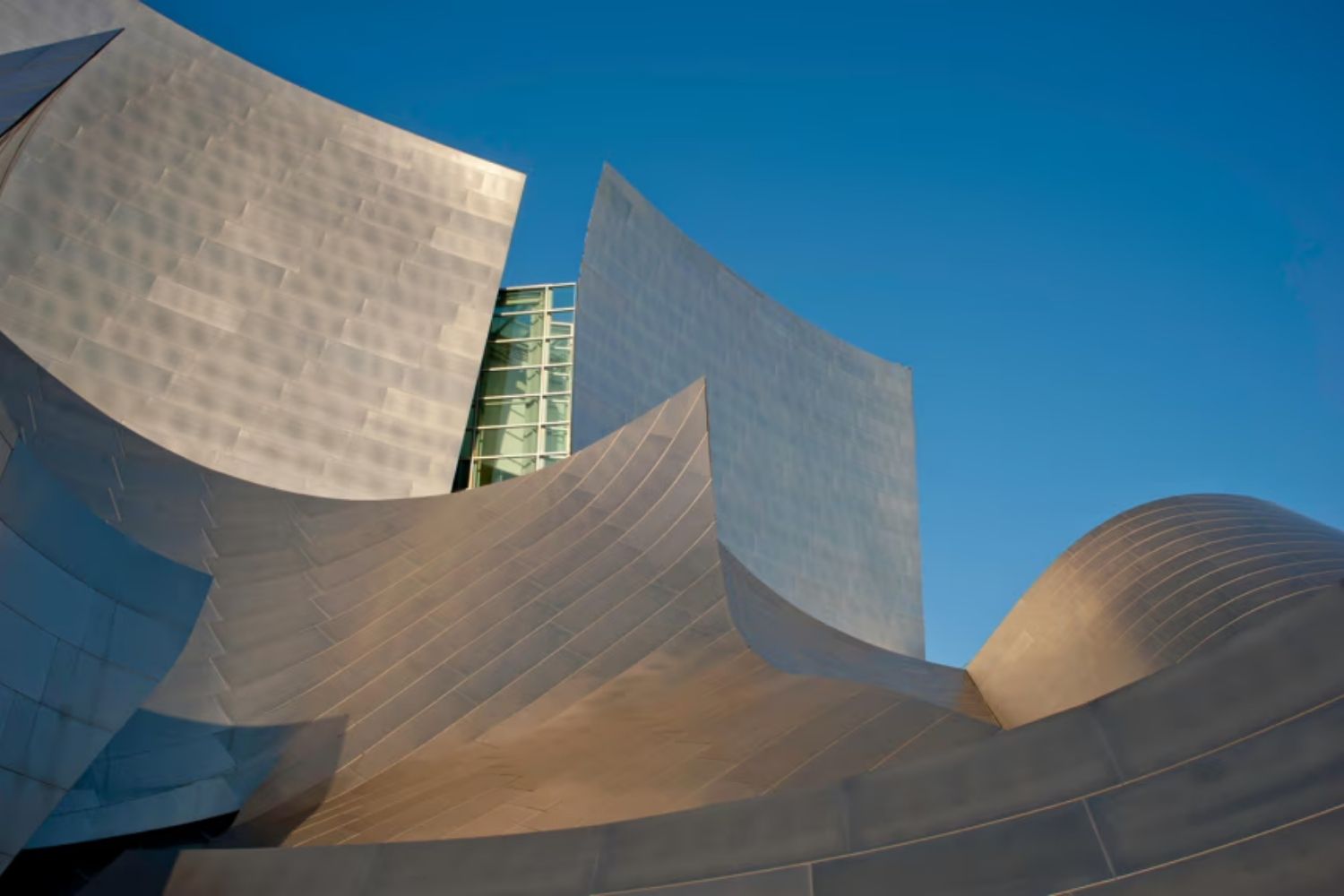
Walt Disney Concert Hall: Frank Gehry’s Stainless Steel Symphony in Los Angeles
Frank Gehry's Walt Disney Concert Hall took 16 years from initial design...
Furkan Sen6 Mins read


Leave a comment