

The Evolution of Residential Design: Traditional to Modern
A look at how homes changed from ornate traditional craft to open modern living, tracing the materials, eras, and the architects like Wright, Gropius, and Le Corbusier who shaped residential design.
 Elif Ayse Sen25 June 20236 Mins read804

Table of Contents Show
The evolution of residential design traces how homes moved from ornate, room-by-room traditional layouts toward open, light-filled modern spaces. Driven by industrial materials, new building methods, and changing family life, this shift redefined comfort, privacy, and the relationship between a house and the land it sits on.
Houses have always mirrored the people who build and live in them, and over roughly a century that mirror changed shape. The move from traditional craft-based homes to clean modern forms is one of the clearest stories in residential design history, and it still guides how architects approach new houses today. This first article looks at the traditional roots, the forces behind the change, and the figures who pushed modern living forward. A later piece continues the story into the postmodern era, where housing took on a more eclectic character.
What Defined the Traditional Era of Home Design?
Traditional residential design grew out of local climate, available materials, and centuries of craft passed down through builders. Rooms were separated by function and often arranged in a clear hierarchy, with formal spaces set apart from private and service areas. Detail carried meaning. Carved woodwork, plaster moldings, and hand-fitted joinery signaled skill and status, and the plan usually placed walls where structure demanded them rather than where daylight or views might suggest.
Two very different houses show how rich this era could be. In the United States, the American Craftsman movement answered mass production with a return to handwork. In Japan, the machiya townhouse refined a wooden vernacular over generations. Both prized material honesty and a strong link between the home and its setting, even as their forms looked nothing alike.
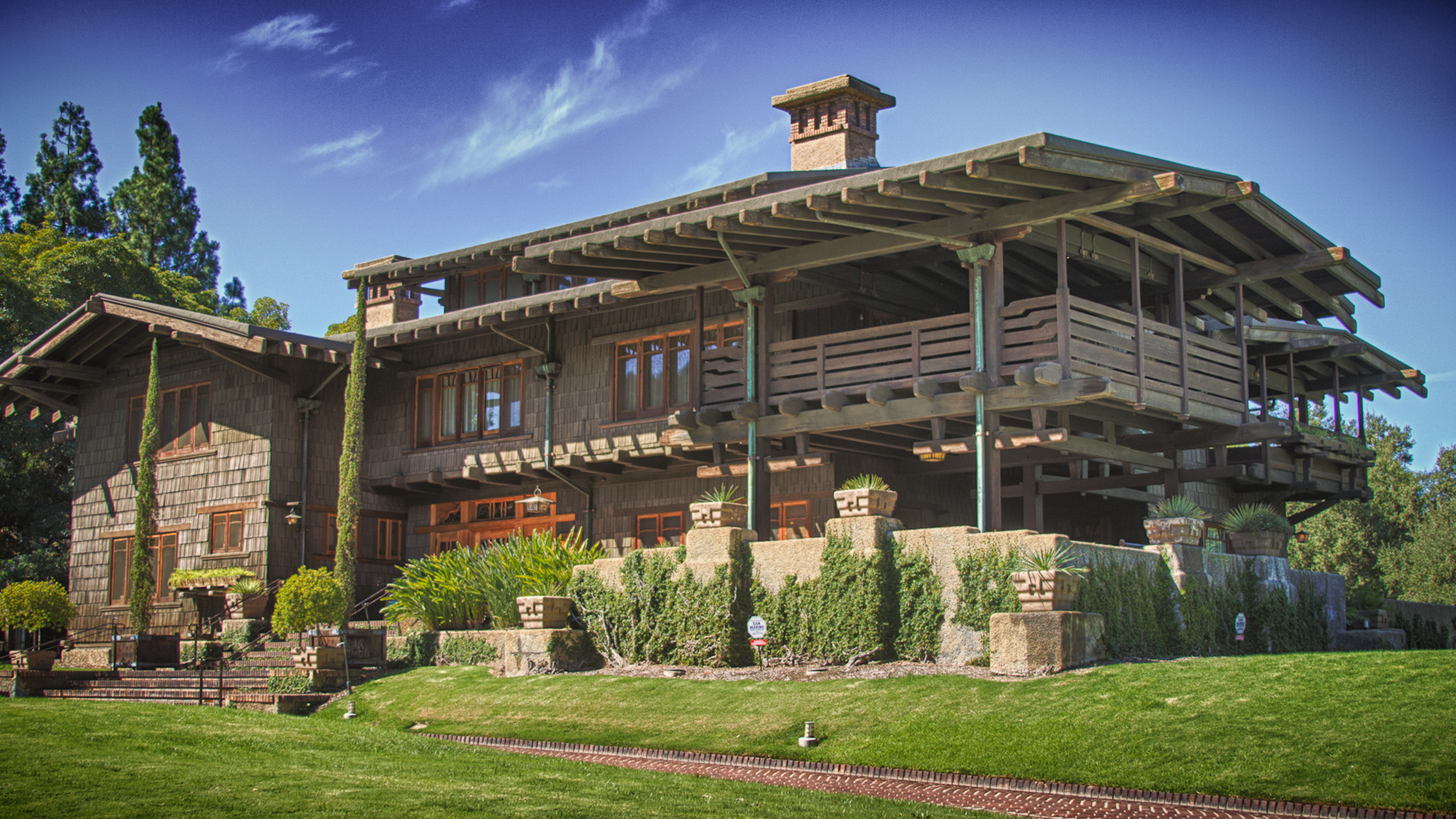
The Gamble House in Pasadena, California, designed by Charles and Henry Greene in 1908, stands as a high point of American Craftsman work. Exposed joinery, broad sleeping porches, and extensive use of teak and mahogany give it a warmth that machine-made housing rarely matched. Every visible connection was resolved by hand, which is exactly the quality the modern movement would soon question on grounds of cost and time.
🏗️ Real-World Example
The Gamble House (Pasadena, 1908): Now a museum operated with the University of Southern California School of Architecture, the house survives largely intact, including its original furniture and light fixtures. It gives students and visitors a rare chance to study a complete Craftsman interior rather than isolated fragments.

Kyoto’s machiya houses tell a parallel story. These narrow wooden townhouses use lattice screens (koshi), sliding partitions (fusuma), and small interior courtyard gardens (tsuboniwa) to balance privacy with light and air. The flexible partitions already hinted at an idea modern architects would later claim as their own: that interior space can open up or close down as daily life requires.
The Shift Toward Modern Residential Architecture
Industrialization changed what a house could be. Steel frames, reinforced concrete, and large sheets of glass let architects carry loads on slender structure rather than thick masonry walls. Once the wall no longer had to hold the building up, it could be moved, thinned, or removed entirely. Open floor plans followed, and with them a fresh interest in daylight, cross-ventilation, and views that traditional room-by-room planning had blocked.
The result was a home stripped of applied ornament and organized around how people actually moved and gathered. Architects treated the plan as a working diagram of daily life, then let the structure serve that diagram. This thinking spread quickly through Europe and North America and became the basis of what many call the International Style, described in detail by the editors of Encyclopaedia Britannica.

📌 Did You Know?
In 2019, UNESCO inscribed eight buildings by Frank Lloyd Wright on the World Heritage List under the title “The 20th-Century Architecture of Frank Lloyd Wright,” including Fallingwater and the Robie House. It was the first modern American architecture to receive that recognition.
A Timeline of Residential Design Across Eras
The change from traditional to modern housing did not happen at a single moment. It unfolded across overlapping periods, each with its own materials, priorities, and signature homes. The table below sets out the broad phases discussed in this article.
| Era | Residential Style | Defining Features |
|---|---|---|
| Pre-1900 | Traditional and vernacular | Local materials, load-bearing walls, separated rooms, hand craft |
| 1900 to 1920 | Arts and Crafts, Craftsman | Exposed joinery, natural finishes, porches, honest structure |
| 1920s to 1930s | Early Modern, International Style | Steel and concrete frames, open plans, flat roofs, ribbon windows |
| 1930s to 1950s | Organic and mid-century modern | Indoor to outdoor flow, cantilevers, large glazing, site integration |
Architects Who Redefined the Modern Home
A handful of designers gave the modern house its vocabulary, and their built work still teaches the ideas better than any manifesto. Frank Lloyd Wright, Walter Gropius, and Le Corbusier each attacked the problem from a different angle, yet all three agreed that the old rules about walls, ornament, and room hierarchy no longer fit modern life.
Frank Lloyd Wright pressed hardest on the bond between a house and its ground. His organic architecture philosophy called for buildings that grow from their site rather than sit on top of it. Wright favored horizontal lines, sheltering roofs, and open interiors that flow from one activity to the next, an approach documented by the Frank Lloyd Wright Foundation.

Fallingwater, completed in 1937 over a waterfall in rural Pennsylvania, is his best-known answer to that idea. Cantilevered concrete terraces reach out over the stream, native stone anchors the house to the rock, and the sound of running water reaches nearly every room. The building reads less like an object placed in the landscape and more like part of it.
🎓 Expert Insight
“A house is a machine for living in.”, Le Corbusier, Toward an Architecture (1923)
The line is often misread as cold, but Le Corbusier meant a home should serve daily life as efficiently as a well-designed tool. That focus on function over decoration became a founding principle of modern residential planning.

Walter Gropius, founder of the Bauhaus, brought a different discipline to the modern home. He wanted art, craft, and industry to work as one, and he stripped away ornament in favor of clear function and simple volumes. His own house in Lincoln, Massachusetts, built in 1938, paired New England materials with a strict modern layout. The Bauhaus Dessau Foundation keeps much of this teaching alive today.
Le Corbusier turned his ideas into a written system. His Five Points of a New Architecture called for pilotis to lift the house off the ground, a free plan, a free facade, ribbon windows, and a roof garden. Villa Savoye in Poissy, France, completed in 1931, applies all five at once. Its white volume floats above slender columns, its windows run in long horizontal bands, and a ramp leads up to a rooftop terrace, a scheme fully described by the Fondation Le Corbusier. His later projects, from the Unité d’Habitation to the Chandigarh Capitol Complex, carried the same logic into larger housing and civic work.
Traditional Versus Modern: What Actually Changed
The deepest change was not the flat roof or the white wall. It was a new way of thinking about how a home should work. Traditional design started with rooms and rituals, then built structure to enclose them. Modern design started with structure and daily use, then let the walls fall where they were most helpful. That reversal explains almost every visible difference, from open kitchens to floor-to-ceiling glass.
The break was never total, though. Wright’s respect for natural materials echoes the Craftsman ethic, and Le Corbusier’s roof gardens answer the same wish for contact with nature that shaped the Kyoto machiya. Many strong houses today borrow from both traditions, pairing warm materials and human scale with open plans and generous daylight. For a fuller account of how these ideas hardened into named movements, the story of modern architecture from Bauhaus to Brutalism picks up where this article leaves off.
💡 Pro Tip
When updating an early 20th-century home, photograph and label original moldings, hardware, and joinery before removing anything. Salvaging these details lets you open up a plan for modern living while keeping the craft that gives the house its character, and it protects resale value in historic districts.
Contemporary residential firms continue to test this balance every day. Project archives such as the residential collections on ArchDaily show how current architects fold traditional cues into thoroughly modern homes.
The Bigger Picture
Seen from a distance, the evolution of residential design is less a clean break than a long conversation between comfort and honesty, between the handmade and the manufactured. The modern movement did not erase the traditional home so much as ask harder questions of it. The most interesting houses being drawn now still answer to both sides of that exchange, which is why studying where the shift began remains useful for anyone shaping the homes of the next century.





Futuro House Production Revived in Finland After Decades-Long Hiatus
A Facebook listing for abandoned moulds led to the first new Futuro...
 illustrarch Editoral Team3 Mins read
Building Your Dream Home in NSW: What You Should Know About Montgomery Homes
Montgomery Homes has been building across Sydney, Newcastle, the Hunter, Wollongong and...
illustrarch Editoral Team4 Mins read
Designing a Home Theater: Where Drapery Fits Into the Plan
In a media room the curtains are a performance layer, not decoration....
illustrarch Editoral Team3 Mins read

Oscar Niemeyer’s Cathedral of Brasília: The Hyperboloid Concrete Hymn
The Cathedral of Brasília reads as a single gesture, yet it stood...
 Furkan Sen7 Mins read


Leave a comment