

Anaglypta Wallpaper: A Short Design History of Embossed Relief
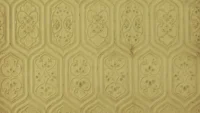
Anaglypta wallpaper is an embossed, paper based wallcovering designed to be painted. The Building Conservation Directory describes it as manufactured from paper pulp that was embossed before drying.
 illustrarch Editoral Team9 November 20262 Mins read21
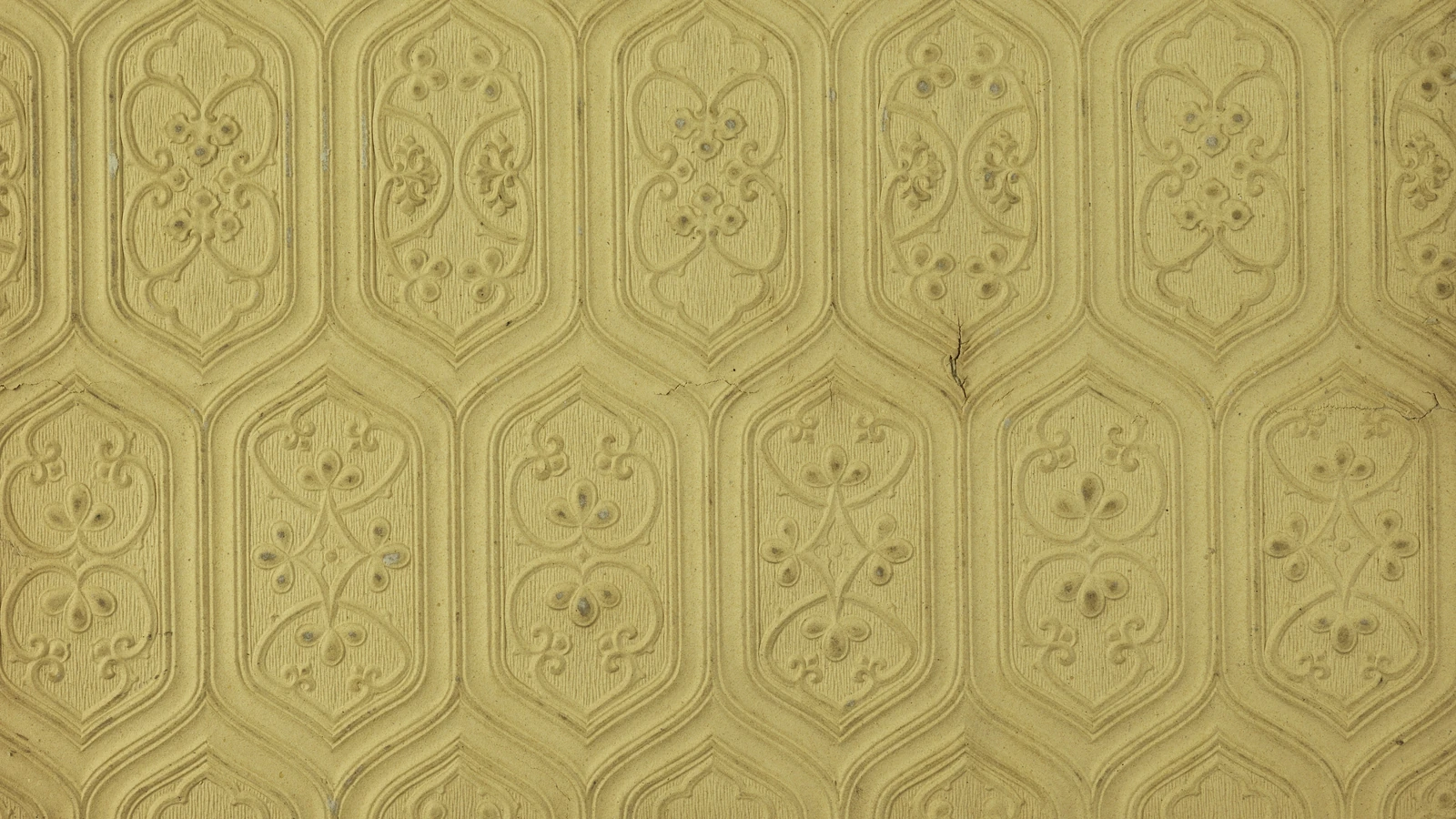
Table of Contents Show
Walls are rarely just surfaces. In Victorian interiors they carried texture, pattern, and a sense of craft, and one material in particular made that depth affordable.
What Is Anaglypta Wallpaper?
Put simply, anaglypta wallpaper is an embossed, paper based wallcovering designed to be painted. The Building Conservation Directory describes it as manufactured from paper pulp that was embossed before drying. That process separates it from Lincrusta Walton, with which it is often confused: the two are made by distinctly different processes, one oil based and one paper based.
Astek Home describes Anaglypta in its collection as launched in the 1800s and “synonymous with paintable wallpaper,” combining centuries old designs with modern technology and materials.
A Rivalry That Shaped the Category
The story begins with Frederick Walton. His relief material was patented as Lincrusta Muralis in 1877 and renamed Lincrusta Walton in 1880, according to the Building Conservation Directory.
Thomas J. Palmer, the former London manager of Lincrusta Walton, then developed a paper pulp alternative. Grace’s Guide to British Industrial History records that Palmer’s design was lighter, more flexible, and cheaper than Lincrusta, and that Walton’s directors rejected it. Palmer took out his own patent and had Storey Brothers of Lancaster manufacture it. Anaglypta became Lincrusta’s main rival.
Sources differ on the exact year. Grace’s Guide gives 1887 for the establishment of Anaglypta, while the Building Conservation Directory says manufacture began in 1888. Either way, the late 1880s is the safest way to date it.
Why Relief Still Earns Its Place
Texture works with light. A deep emboss throws shadow across the surface, so the same wall changes from morning to evening. Painting then becomes a design decision rather than the whole design.
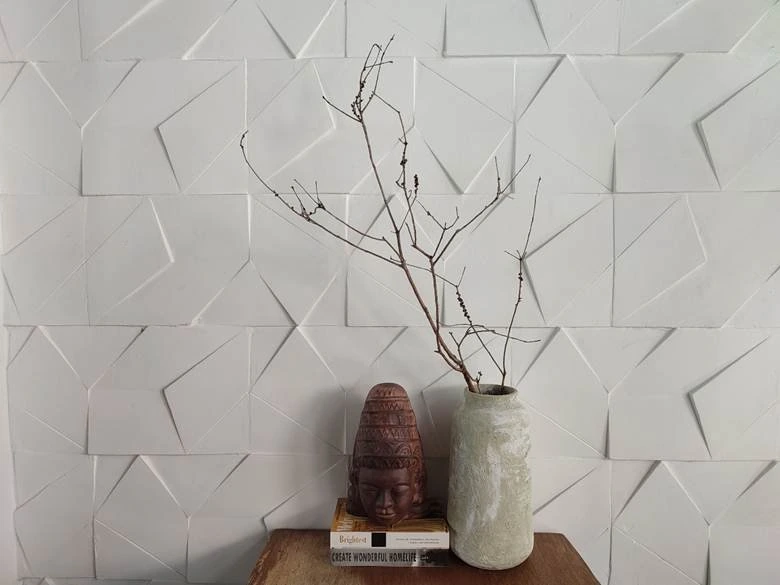
Astek Home’s Anaglypta range is described as washable, paintable, and made with top quality substrates, and it comes in a wide variety of styles and textures. It can be painted any color or left as is for a subtle tonal look. The collection lists style tags that include art deco, art nouveau, botanical, contemporary, geometric, and faux finish, with design names such as Heaton, Original Derby, Artisan Plaster, Folded Paper, and Zircon.
Reading Relief in Contemporary Rooms
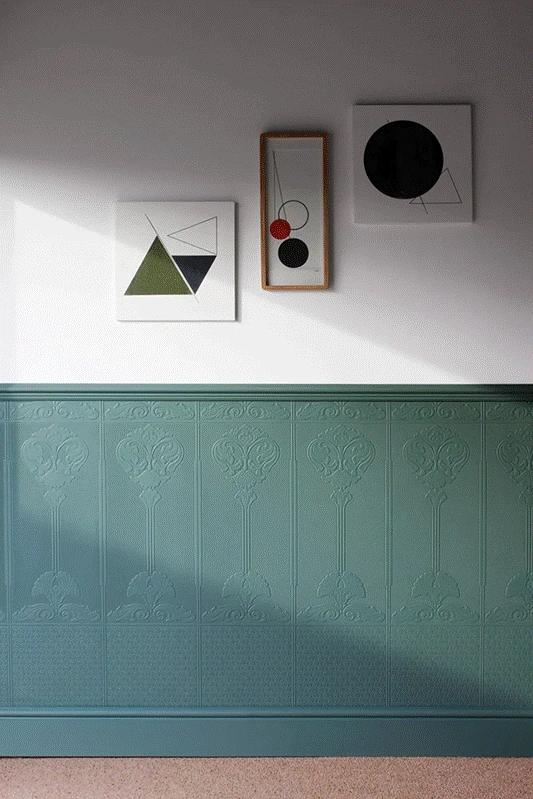
Modern interiors tend to favor restraint, and relief suits that mood. A tonal wall in a single color lets the emboss do the talking, while a deeper shade makes the shadows more dramatic. Pairing a patterned relief wall with simple, uncluttered furniture keeps the texture in charge. The same wallcovering can read as traditional in a period house and quietly architectural in a minimalist one, which is why designers keep returning to it.
Practical Notes for Specifiers
- Identify the material first. In restoration work, confirm whether an existing relief covering is oil based or paper based before choosing a repair method, since the two behave differently.
- Order samples. Astek Home states that wallcovering samples are always recommended, and that its calculator tool and buying guide help with quantities.
- Plan the finish. Decide early whether the relief will be painted or left tonal, because the choice changes the final character of the room.
- Consider the room. The collection page says the designs suit any room of the house, from the dining room to the entryway to the bathroom, so check conditions of use against the manufacturer’s guidance.
A Surface With a Long Memory
Even so, the appeal of embossed wallcoverings is hard to separate from their history. Palmer’s cheaper, lighter paper pulp relief made raised pattern more accessible to ordinary households, and that logic still holds in 2026. As a result, anyone planning a period restoration or a contemporary relief wall can start with the sources cited here, then turn to Astek Home’s Anaglypta collection to see how the material is described today.


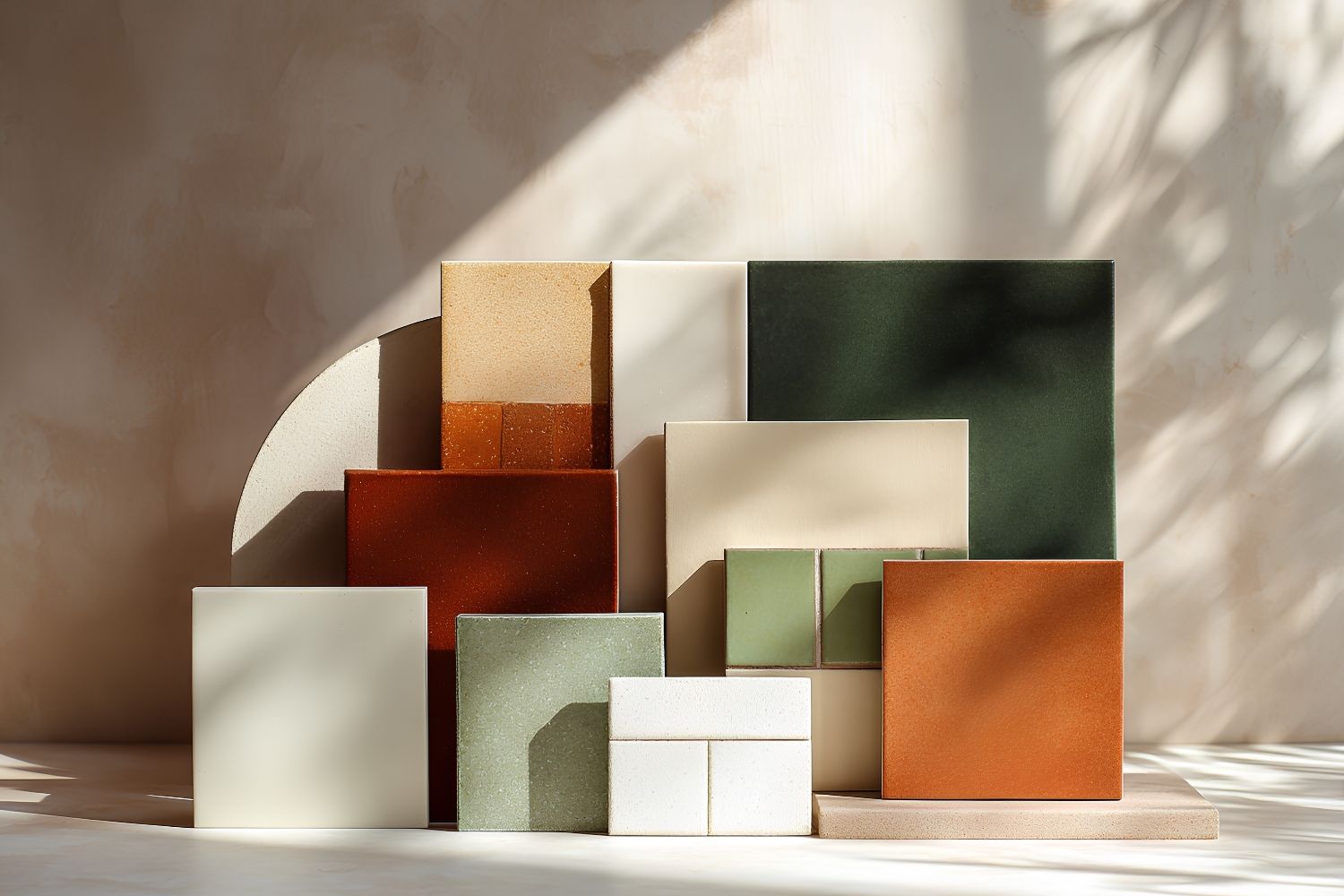
Color Forecast 2026: Tile Palettes Influencing International Design
Warm earth tones, soft whites like Pantone's Cloud Dancer, and grounded greens...
 Sinan Ozen5 Mins read
What Makes American Tile Manufacturers Competitive in 2026
A breakdown of the five key factors helping American tile manufacturers compete...
Sinan Ozen6 Mins read
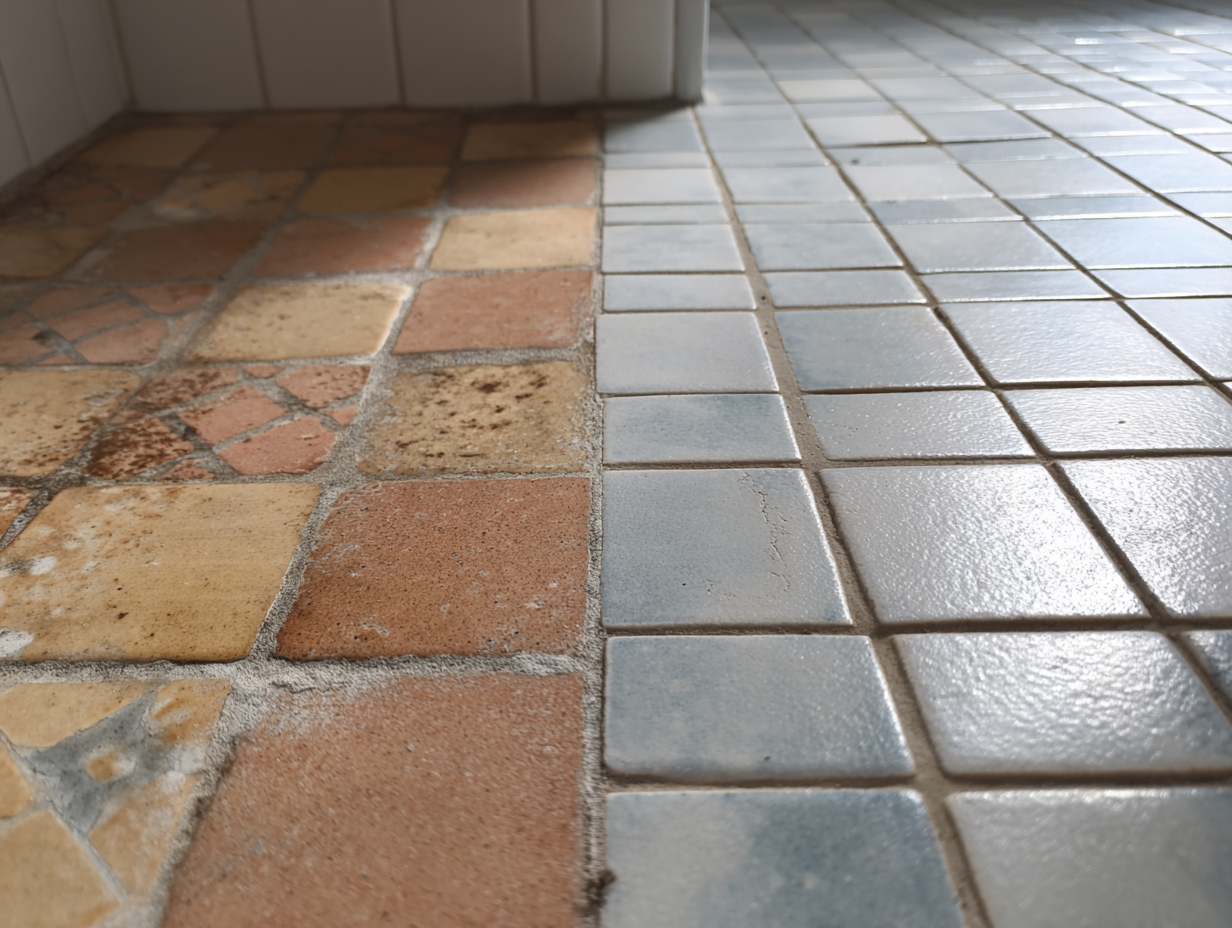
Porcelain vs Ceramic Tiles: Which One Should Architects Specify?
A side-by-side breakdown of porcelain and ceramic tile covering water absorption rates,...
 Furkan Sen6 Mins read
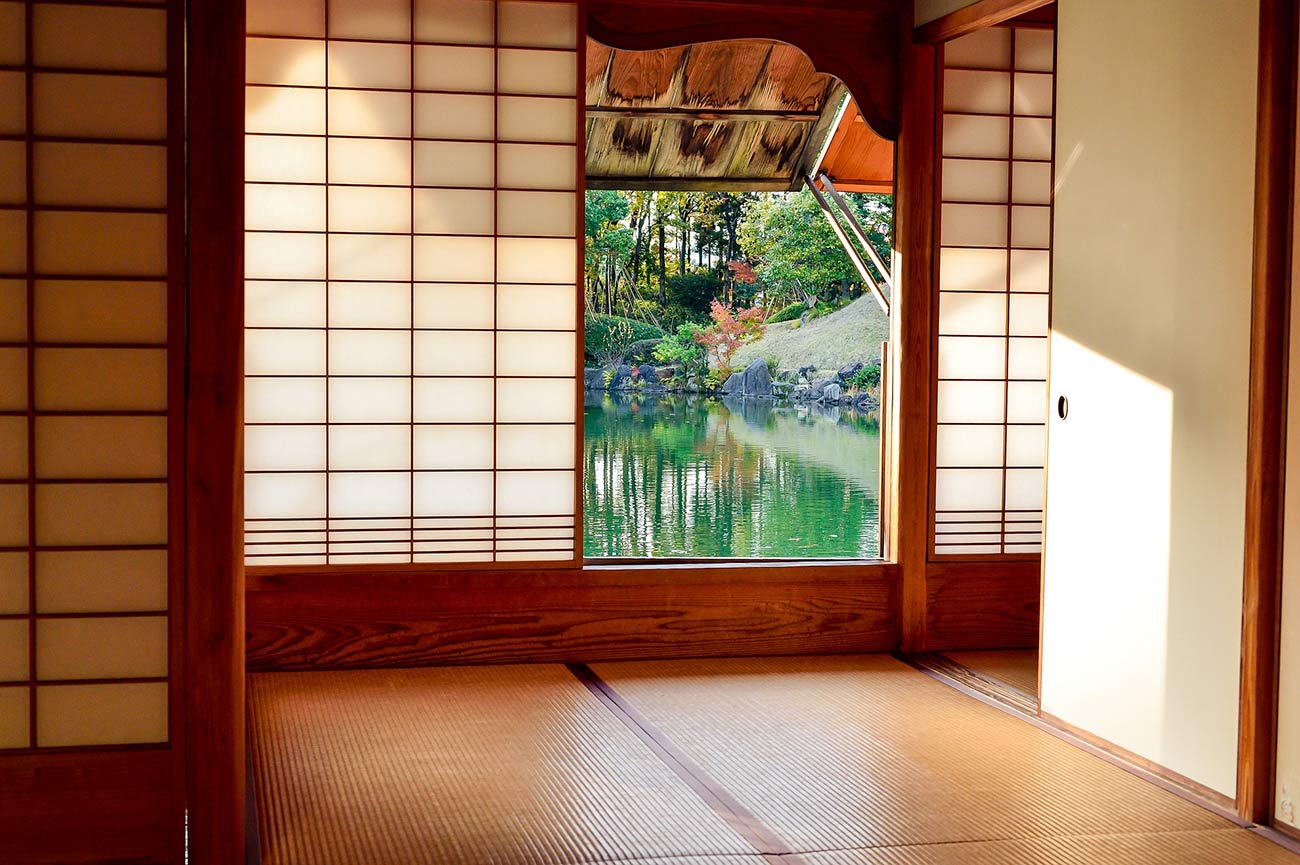
The Impact of Japanese Minimalism on Global Tile Aesthetics
A look at how centuries-old Japanese design principles, from wabi-sabi imperfection to...
Furkan Sen7 Mins read



Leave a comment