

Designing a Home Theater: Where Drapery Fits Into the Plan
In a media room the curtains are a performance layer, not decoration. What to specify for light control and acoustics, from fabric weight to panel width and mounting height.
 illustrarch Editoral Team13 September 20263 Mins read3
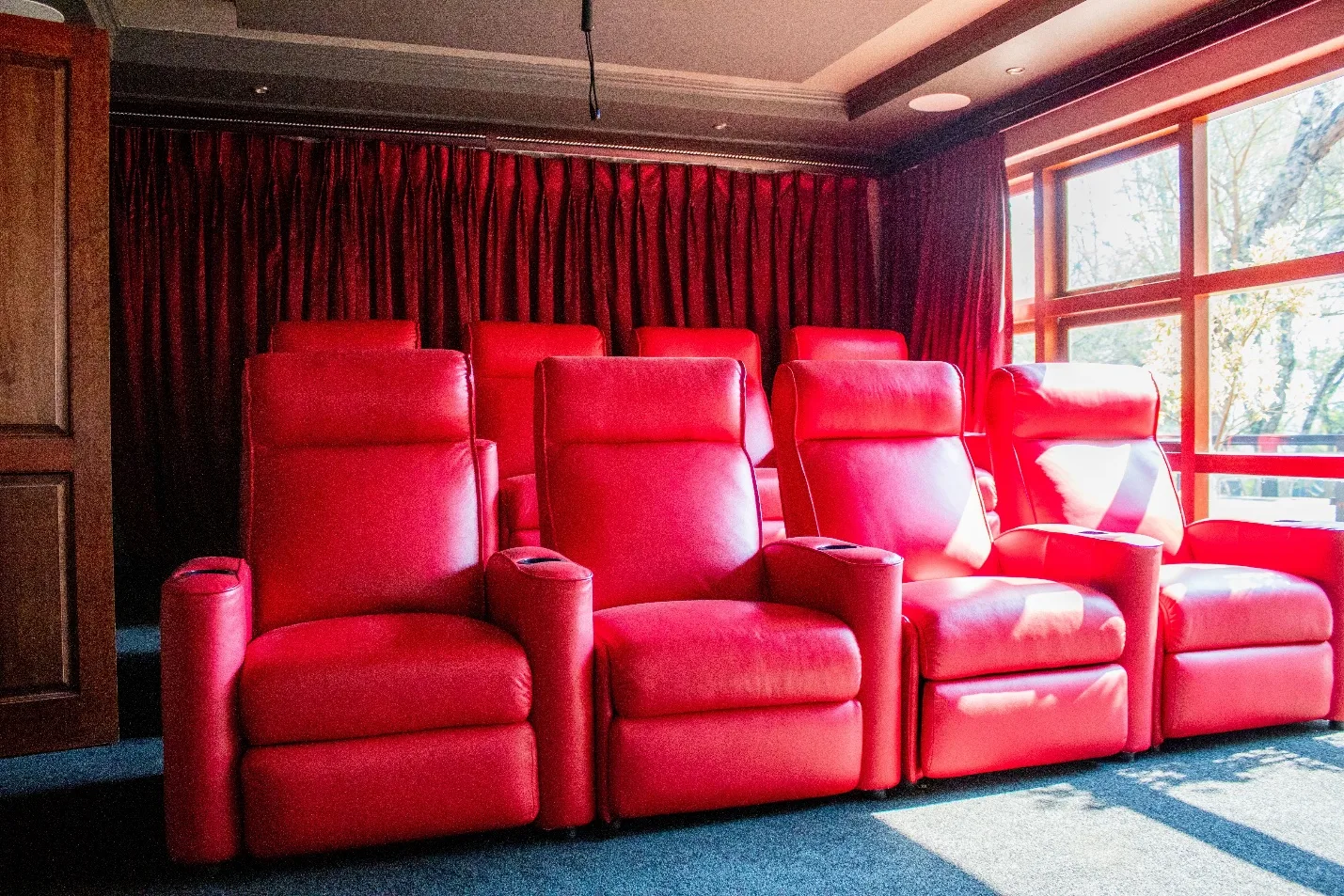
Table of Contents Show
A home theater is one of the few residential spaces where the finishes aren’t just aesthetic decisions, they’re functional ones. Wall material, ceiling height, and window treatment all affect how the room performs, not just how it photographs. Home theater drapery, in particular, tends to get treated as an afterthought once the screen, seating, and sound system are specified, when it should be part of the same conversation from the start.
What a Media Room Actually Needs From Its Walls and Windows
Two problems come up in almost every home theater: stray light and reflected sound. Ambient light, even a thin line of it around a window frame, degrades contrast on a projected image far more than most homeowners expect before they’ve seen it happen. Reflected sound off hard, flat surfaces, glass, drywall, uncovered windows, creates the kind of echo that makes dialogue harder to follow, even in a well specified room with good speakers.
As the Chicago Architecture Center’s overview of acoustic design explains, acoustic design is fundamentally about integrating room layout, materials, and components to shape how sound behaves in a space, a principle that scales down from concert halls to a converted bonus room just as directly as it scales up.
Will Velvet Blackout Curtains Work for Home Theater Rooms?
It’s a fair question to ask before committing to a fabric budget for the room, and one worth asking directly: will velvet blackout curtains work for home theater rooms? The short answer is yes, for reasons that go beyond simply blocking light. Velvet’s dense, napped surface does two things a standard cotton or polyester blackout panel doesn’t do as well: it absorbs a meaningful amount of mid and high frequency sound rather than reflecting it, and its weight and drape read as a considered design choice rather than a functional patch bolted onto a window. Double sided velvet blackout construction, like the panels Premier Table Linens carries, adds a lining layer specifically to eliminate the light bleed that a single-layer curtain lets through at the edges, the detail that separates a genuinely dark room from one that’s merely dim.
Fabric Weight Is a Design Spec, Not Just a Fabric Choice
Specifying drapery for a media room means treating fabric weight the way you’d treat any other acoustic material: heavier, denser textiles absorb more sound energy across more of the frequency range than lightweight fabrics do. This is why a thin sheer panel does almost nothing for a theater room’s acoustics even if it technically covers the window, while a heavy velvet panel does real work alongside dedicated acoustic treatment on the walls and ceiling.
It’s also worth specifying floor to ceiling panels with enough width to fully overlap the window opening at rest, rather than panel sized to just cover the glass, the overlap is what controls both the light gap and the surface area doing the acoustic work. Double sided velvet constructions available as of 2026 make this easier to specify with confidence, since the lining is built in rather than added as a separate blackout layer sewn on after the fact.
Color and Texture Still Matter in a Dark Room
A room designed to be watched in darkness still gets seen in daylight, whether guests are touring the house or the projector is off. Deep, saturated colors, charcoal, deep navy, burgundy, tend to suit a media room better than lighter tones, both because they photograph as intentional rather than utilitarian and because darker fabrics show less light bleed at the seams than pale ones do.

Specifying Home Theater Drapery as Part of the Room
The rooms that read as genuinely well designed treat window treatment as a line item alongside the screen and the seating, specified early enough that the curtain track, the wall finish, and the lighting plan all account for it. Retrofitting drapery after the fact usually means working around fixtures rather than designing with them, which is where the light-gap and echo problems tend to creep back in.
Getting a home theater right comes down to treating every surface as functional, not just decorative, and drapery is one of the few finishes in the room doing double duty for both light and sound. Specified with the right weight, construction, and placement, it earns its place in the plan rather than sitting in it as an afterthought.




Building Your Dream Home in NSW: What You Should Know About Montgomery Homes
Montgomery Homes has been building across Sydney, Newcastle, the Hunter, Wollongong and...
illustrarch Editoral Team4 Mins read

Oscar Niemeyer’s Cathedral of Brasília: The Hyperboloid Concrete Hymn
The Cathedral of Brasília reads as a single gesture, yet it stood...
 Furkan Sen7 Mins read
What Technology Does a Modern Workplace Need?
A modern workplace needs more than fast computers. A framework covering network,...
illustrarch Editoral Team8 Mins read
How Do You Choose Durable Shutters That Suit Your Budget?
Shutters can look identical in a showroom and perform very differently after...
illustrarch Editoral Team8 Mins read


Leave a comment