

Street Art and Architecture: How Murals Transform Urban Spaces
How murals turn blank party walls, warehouse flanks and hillsides into public landmarks, what projects like the East Side Gallery and Philly Painting teach architects, and where mural-led regeneration draws fair criticism.
 illustrarch Editorial Team26 November 20269 Mins read1
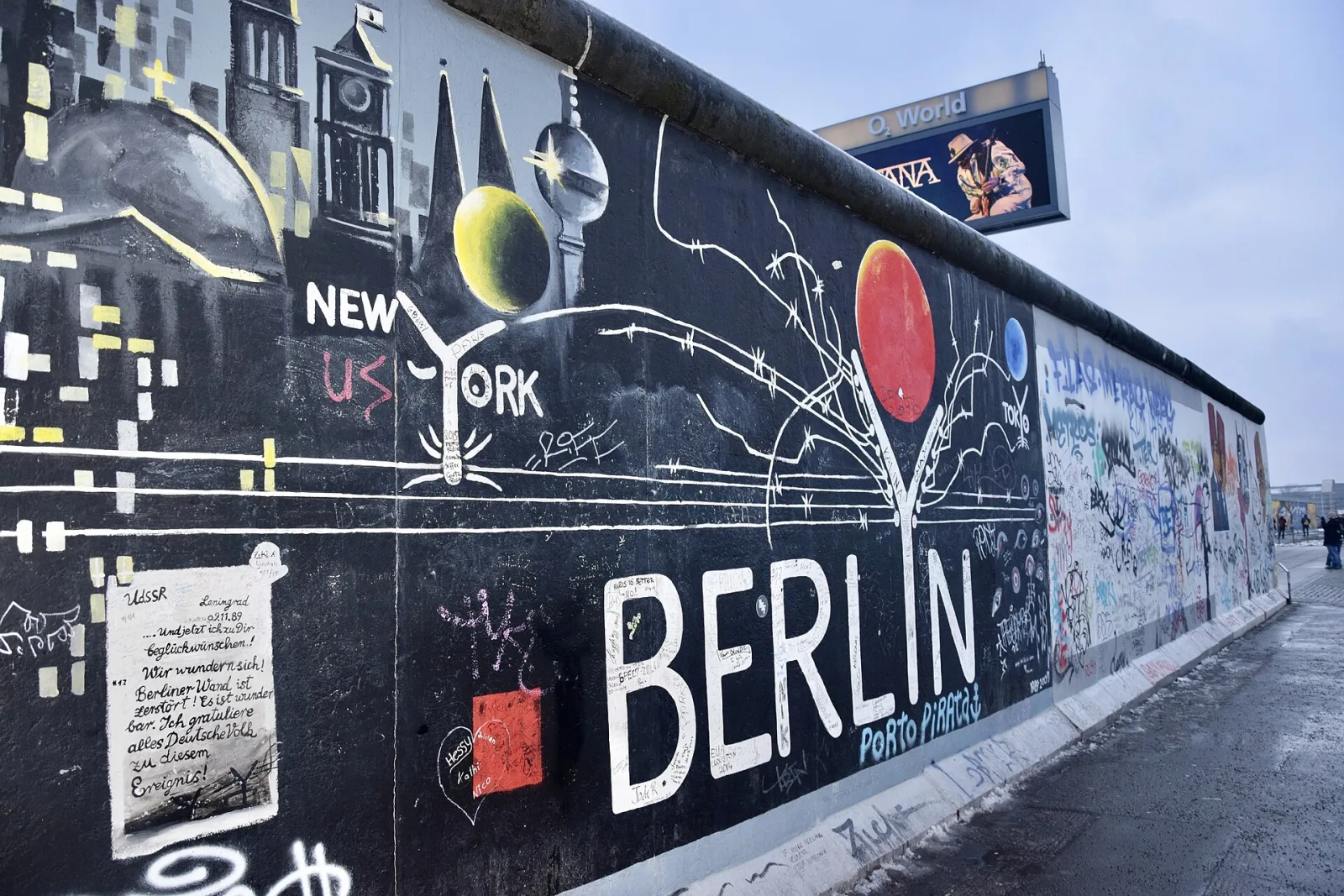
Table of Contents Show
Street art and architecture meet wherever a mural turns a blank wall into a public surface. A well-placed mural changes how people read a building, a block and a route through the city. The strongest projects treat the wall as architecture: they respond to its scale, its material and the community that lives with it every day.

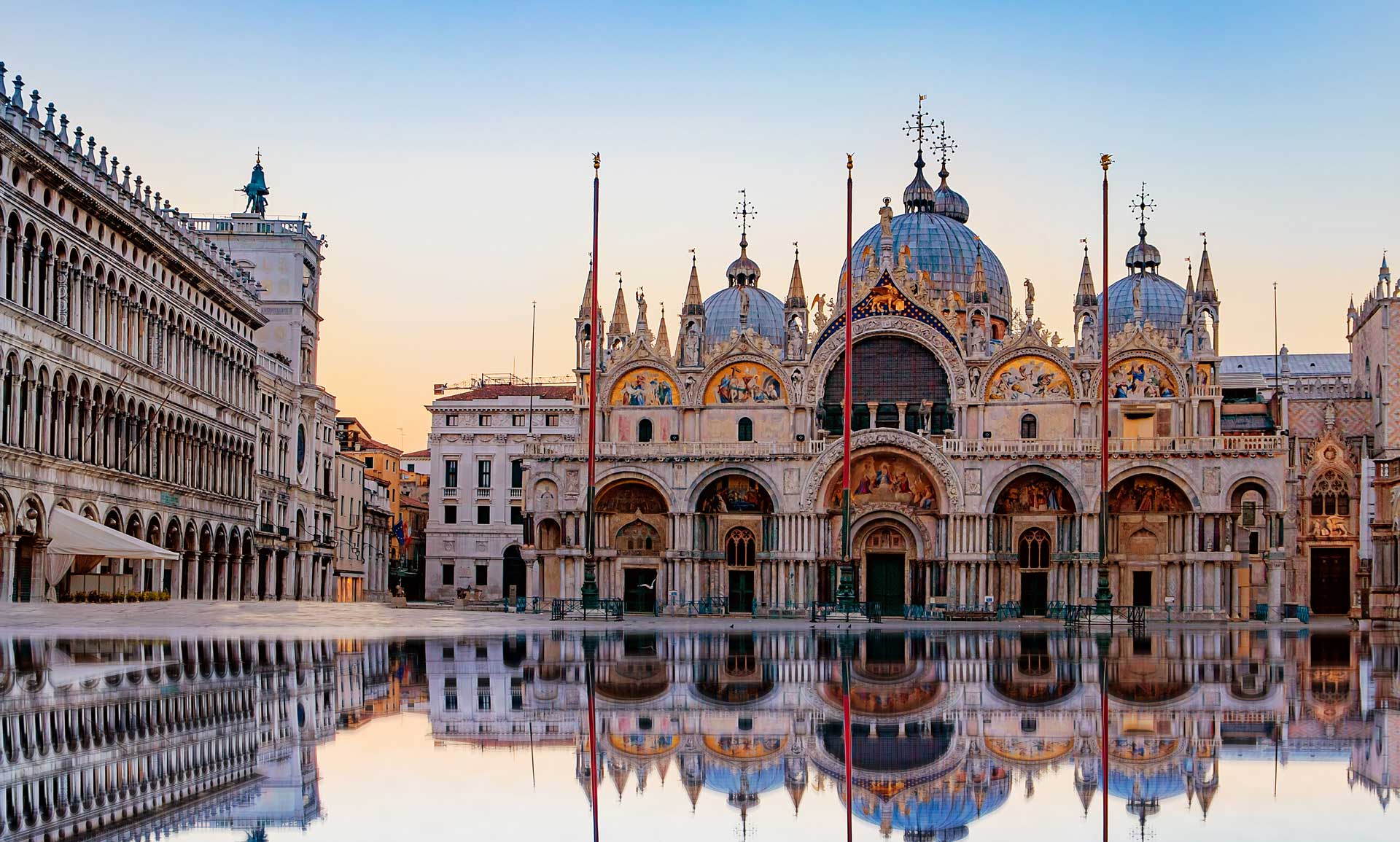

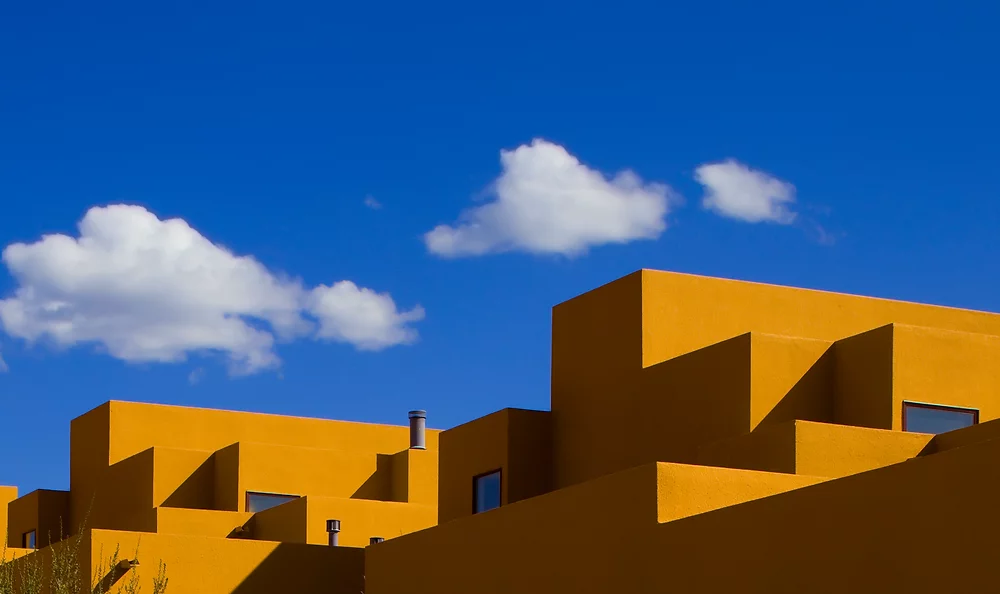
Most buildings have at least one wall nobody designed for looking at: the exposed side of a terrace after a demolition, a windowless warehouse flank, a retaining wall along a road. For decades these surfaces were either left blank or covered by unauthorised tags. The relationship between street art and architecture has since moved from conflict to commission, with cities, landlords and community groups now paying artists to paint the same walls they once scrubbed. What follows covers how murals change urban space, what architects should know about walls, paint and permits, and where the practice draws fair criticism.
Street Art and Architecture: Why Walls Matter
A facade normally communicates through massing, openings and materials. A mural adds a fourth layer, image, which can work with those elements or deliberately against them. On a blind party wall the image becomes the facade. On a storefront row it can tie a dozen unrelated buildings into one street elevation. On infrastructure such as underpasses and flood walls it gives scale and identity to places people otherwise hurry through.
The surfaces that attract murals tell you something about the city. Party walls appear when a neighbouring building is demolished and not replaced, so a city full of murals on gable ends is often a city with gaps in its urban fabric. Retaining walls and blank warehouse flanks appear where topography or industry shaped the plan. Reading where the murals are is a quick way to read where the city has been interrupted. If you are interested in how facades carry meaning more generally, our piece on how facades tell cultural stories covers the wider topic.
There is also a long tradition behind this. Mural painting on public buildings is far older than spray paint. Mexican muralism in the 1920s and 1930s put large narrative frescoes on schools, ministries and museums, and Diego Rivera’s Detroit Industry Murals (1932 to 1933) still cover the walls of Rivera Court at the Detroit Institute of Arts. What changed with contemporary street art is the author and the setting: the walls are now on the street, and the artists often come from graffiti rather than academies. Our longer essay on the intersection of art and architecture traces that history in more depth.
How Murals Transform Urban Spaces
Murals rarely change a city on their own. What they do well is change perception quickly and cheaply compared with building work, and that perception can then attract footfall, investment or attention from the city. The effects tend to fall into a few patterns.
Giving identity to overlooked places
An underpass, a car park wall or a blank flank wall becomes a landmark once it carries a strong image. People give directions by it, photograph it and start to treat the space around it as a place rather than a gap. That is the same effect landscape architects and urban designers chase with paving, lighting and seating, and it works best when the mural and the space around it are designed together. Our guide to designing successful public spaces sets out those wider principles.
Tying a street together
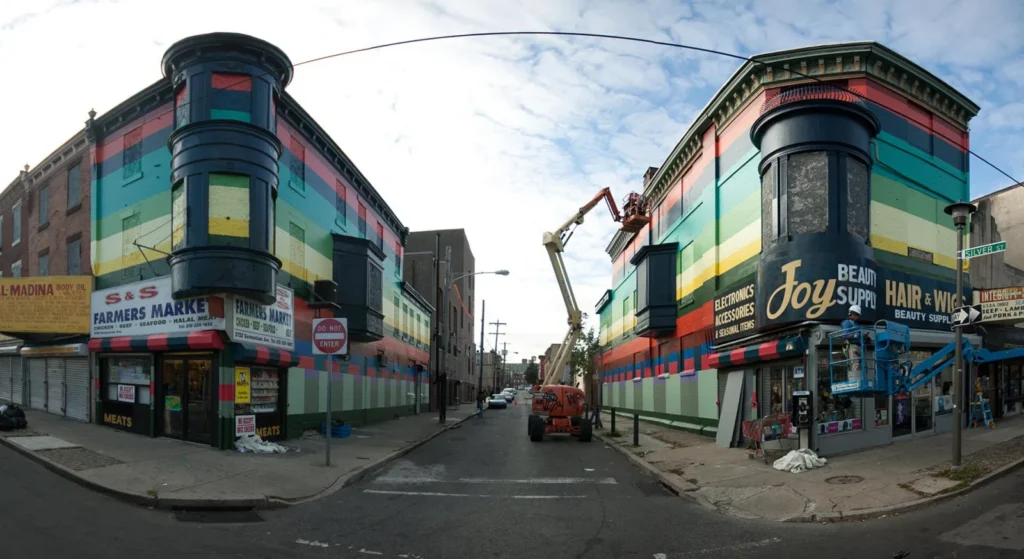
A single mural reads as an object. A coordinated scheme across many buildings reads as a street. The difference matters to anyone who has worked on a high street improvement plan: shopfront grants and repaving rarely give a corridor a recognisable character, but a shared colour system can do so within months.
🏗️ Real-World Example
Philly Painting (Philadelphia, 2012): Dutch artists Jeroen Koolhaas and Dre Urhahn (Haas&Hahn) painted the facades of more than 50 buildings along Germantown Avenue in North Philadelphia for Mural Arts Philadelphia. According to Koolhaas’s project notes, a swatch system based on colours seen on Philadelphia streets let each tenant choose a palette for their own building while bands of colour carried on from one facade to the next. A local crew of about a dozen young residents aged 18 to 30 did the painting.
Making public space legible and safer to use
Murals also work as wayfinding. A painted stair, a coloured route through a housing estate or a sequence of works along a hillside gives people a reason and a direction to walk. In Medellín, the city government’s own reporting on the outdoor escalators of Comuna 13 describes how graffiti tours along the escalator route became a source of income for residents who opened businesses beside them. The same report is candid that many neighbours first felt they had lost privacy and calm when visitors started walking through the barrio, which is a useful reminder that a successful mural route changes daily life for the people who live on it.
Notable Street Art Projects With an Architectural Angle
The projects below show street art and architecture working on each other, and they are useful to architects because each one deals with a specific architectural condition: a historic structure, a corridor of shopfronts, a warehouse district, a retaining wall, or a whole hillside of houses.
East Side Gallery, Berlin
Painted on a surviving stretch of the Berlin Wall along Mühlenstraße, the East Side Gallery opened on 28 September 1990. The Berlin Wall Foundation describes how artists David Monty and Heike Stephan applied for permission to turn the wall into the world’s largest gallery, and how the paintings helped protect the structure from demolition. It is the clearest case of street art changing the fate of a piece of built fabric rather than simply decorating it.
📌 Did You Know?
More than 118 artists from 21 countries painted the East Side Gallery, which runs for more than 1.3 kilometres between Ostbahnhof and the Oberbaum Bridge. In November 1991 it was added to the list of protected monuments of the State of Berlin, so a set of murals made in a few months became part of a listed historic site (Berlin Wall Foundation).
Mural Arts Philadelphia
Mural Arts Philadelphia began in 1984 as the city’s Anti-Graffiti Network, when artist Jane Golden was brought in to redirect the talent of graffiti writers into community murals. Its history page records the change to the Mural Arts Program in 1997, and the organisation now calls itself the largest public art program in the United States. For architects, its value is the model: murals are developed through neighbourhood meetings, not imposed, and the program has worked for decades on walls of rowhouses, schools and commercial buildings.
🎓 Expert Insight
“When you go into neighborhoods, you have to ask questions, understand, don’t assume you have answers.” said Jane Golden, founder and longtime leader of Mural Arts Philadelphia, in a conversation with Global Philadelphia.
The same rule applies to architects briefing a mural on their own building. The image will be seen by neighbours every day for years, so their view of what belongs on the wall is part of the design brief, not a consultation exercise after it.
Wynwood Walls, Miami
Wynwood Walls opened in 2009 in Miami’s former warehouse district, created by the real estate developer and placemaker Tony Goldman of Goldman Properties. The Wynwood Walls site now presents it as a museum dedicated to street art and contemporary art. Architecturally, Wynwood shows what large, low, windowless industrial buildings offer artists: long, uninterrupted walls at street level, viewed from wide roads and open lots.
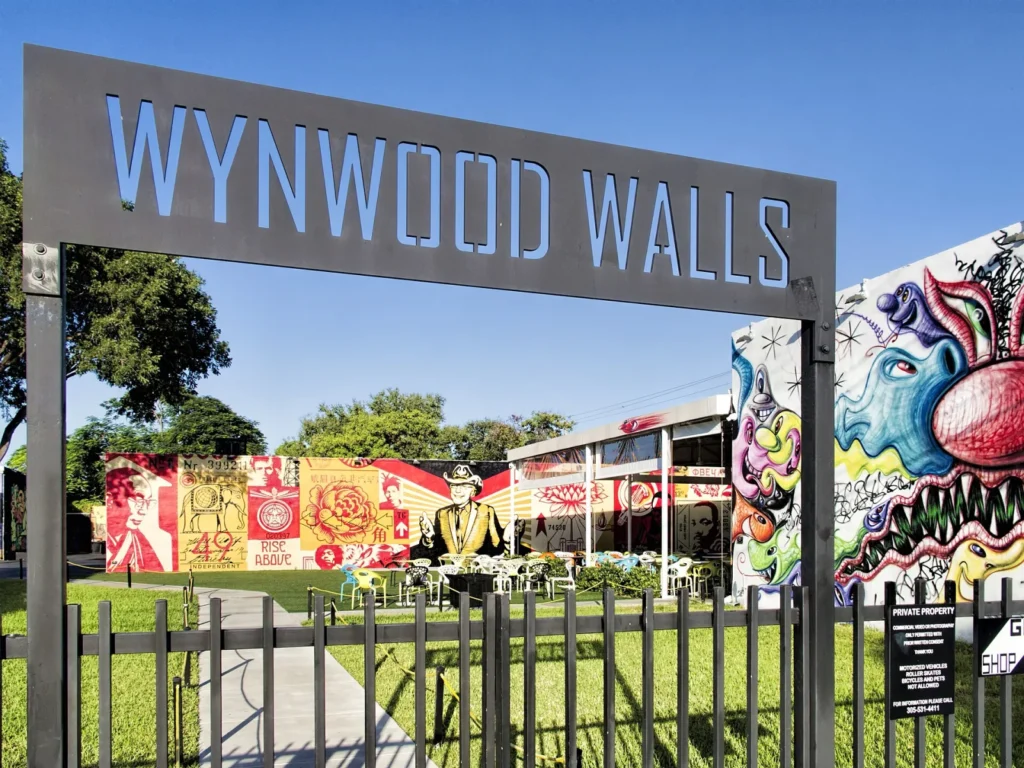
It is also the best known example of the main criticism of mural districts. When a property company commissions art across buildings it owns, the art becomes part of a development strategy. Rising rents and changing land use in a district shaped by murals raise a direct question about who benefits from the transformation, and architects working on similar schemes should be ready to answer it.
Galeria de Arte Urbana, Lisbon
Lisbon took a municipal route. The Galeria de Arte Urbana (GAU), part of the Cultural Heritage Department of Lisbon City Council, was set up in 2008 after a clean-up of illegal tags on the facades of Bairro Alto. Instead of only removing graffiti, the city installed panels on Calçada da Glória, next to the historic funicular, as a legal space for urban art, and GAU later became a facilitator for walls and facades across the city. The model separates protected historic facades from surfaces offered for art, which is a sensible way for heritage cities to handle the issue.
El Macro Mural Barrio de Palmitas, Pachuca
In 2015 the street art collective Germen Crew worked with the Mexican government to paint a mural of about 20,000 square metres across the facades of 209 homes in the Palmitas district of Pachuca, as reported by Colossal. Here the whole hillside became the canvas, so the composition had to be read from a distance across the valley while each house kept its own colours up close. The project also provided temporary paid work for residents during painting.
Designing for Murals: What Architects Should Plan For
A mural on a new or existing building is a finish with a design life, not a one-off gesture. Treating it like any other part of the envelope avoids most of the problems that make murals peel, fade or provoke disputes.
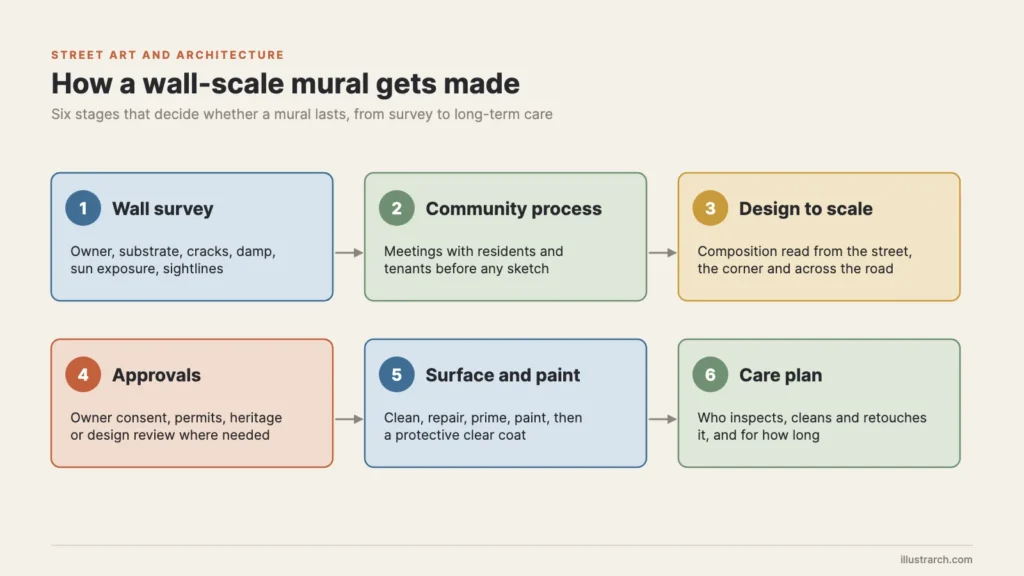
Choosing and preparing the wall
Start with a condition survey. Cracks, damp, salts, loose render and previous coatings will all show through paint within a few seasons. Brick and render need cleaning and repair before priming, and any moisture problem must be solved first, because paint over a damp wall traps water and fails. Orientation matters too: south and west walls in sunny climates get the strongest ultraviolet exposure and fade fastest, while north walls stay damp longer.
Paint systems and protection
Most exterior murals use exterior grade acrylic or mineral (silicate) paint systems matched to the substrate, with a primer specified by the manufacturer. A clear protective coat, often with ultraviolet inhibitors or an anti-graffiti function, makes cleaning easier. Ask the artist and the paint supplier to agree the full system in writing, because mixing products from different systems is one of the most common reasons for early failure.
Scale, viewpoints and openings
A mural is read from specific viewpoints: across the road, from a corner, from a passing car or tram. Composition, line weight and the size of figures should be designed for those distances. Windows, downpipes, vents and signage either become part of the composition or break it, so coordinate them early. For colour choices that sit well with the surrounding street, our guide to colour in architecture is a useful companion.
Permits, ownership and maintenance
Most cities treat a large mural as a change to the appearance of a building. That can mean planning or design review, and heritage consent on listed buildings or in conservation areas. Ownership matters as much as permission: a party wall may belong to the neighbour, and painting it without written consent invites disputes. Agree a maintenance plan before painting starts, covering who inspects the wall, who pays for cleaning and retouching, and what happens if the building is sold or the wall is altered.
Building codes, sign rules and mural regulations vary by city and country. Always check with the local planning authority before painting a building facade.
The Limits and Criticism of Mural-Led Change
Street art has a real effect on how places are perceived, but it is not a substitute for housing, transport or public services. A painted hillside does not fix drainage, and a colourful corridor does not by itself bring back the shops that closed. Projects such as Philly Painting worked because they were tied to a wider economic strategy for the corridor; murals without that support often fade along with the attention.
The second criticism is about who the art is for. Murals that become tourist attractions can push up rents and change the mix of shops, which is the debate around Wynwood. Medellín’s own reporting on Comuna 13 records residents’ early sense of losing privacy to visitors. Commissioned murals can also crowd out the unsanctioned graffiti culture they grew from, which some artists see as the loss of street art’s critical voice. Small, older works like the pixel pieces described in Johan Karlgren’s pixelated street art are a reminder that not every intervention needs a crane and a budget.
Finally, there is permanence. Paint weathers, buildings are sold and walls are demolished. A mural that a neighbourhood loves can vanish with one planning application. If a work is meant to last, its protection has to be written into ownership agreements or heritage policy, as happened with the East Side Gallery, rather than assumed. Thoughtful design of the street itself, the theme of our piece on the art of the streetscape, often lasts longer than the paint.
Looking Ahead
For street art and architecture, the useful shift is to stop treating murals as decoration added after the building is finished. A blank wall is a design decision, and so is the image that may later cover it. The projects that last, from Berlin to Philadelphia, began with a clear answer to three questions: whose wall is it, who lives with it, and who will look after it in ten years.


Not a Museum Will Fill Tokyo’s Former Imperial Hotel Plaza Until the Tower Is Rebuilt
NOT A CITY and SKWAT will run Not a Museum, a four-year...
illustrarch Editorial Team2 Mins read
Michelangelus Turns Michelangelo’s Handwriting Into a Free Font for Microsoft 365
Commissioned by the Fabbrica di San Pietro and designed by studiogusto®, Michelangelus...
illustrarch Editorial Team2 Mins read
Zaha Hadid Foundation Opens Her Former Clerkenwell Office With a Stage Design Exhibition
Ten years after her death, Zaha Hadid's former office in a Grade...
illustrarch Editorial Team1 Mins read
India Art, Architecture & Design Biennale 2026: Ministry of Culture Opens Delhi Monuments
Delhi's monuments, including Purana Quila and the Red Fort, will host the...
illustrarch Editorial Team2 Mins read



Leave a comment