

Relocated Maya Structures at Mexico’s Balam Tun Memory Park Face Legal Challenge
INAH archaeologists have filed a complaint against 26 officials over Balam Tun Memory Park, where 47 Maya structures moved for the Maya Train were rebuilt.
 illustrarch Editoral Team4 October 20262 Mins read1
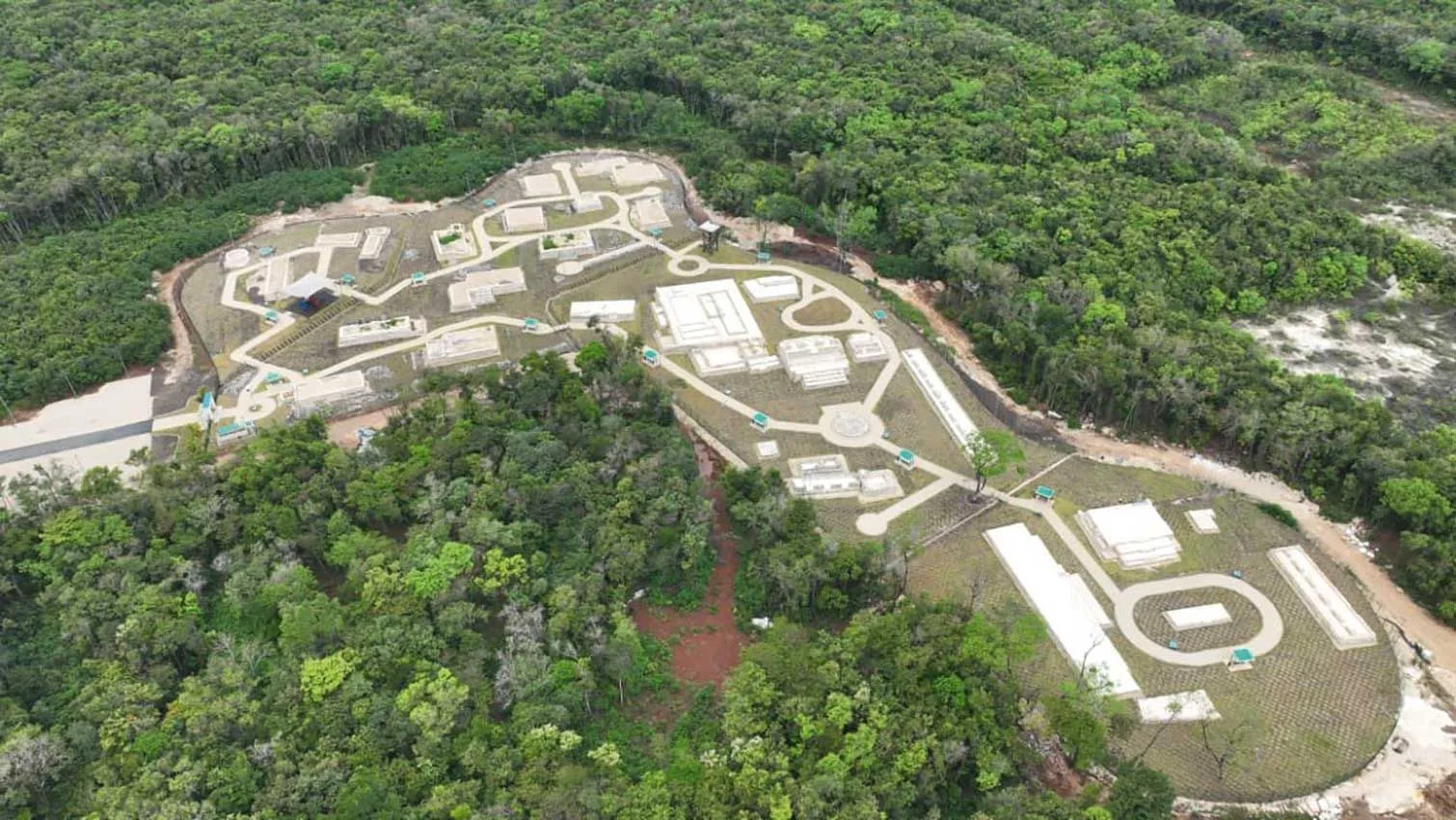
A park built in Chetumal, in Mexico’s Quintana Roo state, to hold ancient Maya buildings removed from the path of the Maya Train is now the subject of a criminal complaint. Archaeologists employed by the National Institute of Anthropology and History (INAH) have started legal proceedings against 26 of the institute’s own officials, accusing them of destroying and falsifying archaeological heritage while creating the Balam Tun Memory Park, The Art Newspaper reports.
The four-hectare site holds 47 Maya structures that INAH says were moved with millimetric precision from locations affected by the railway. The complaint names, among others, Diego Prieto, who previously led INAH, and Manuel Pérez Rivas, who coordinated archaeological preservation for the train project.
A railway through a dense archaeological landscape
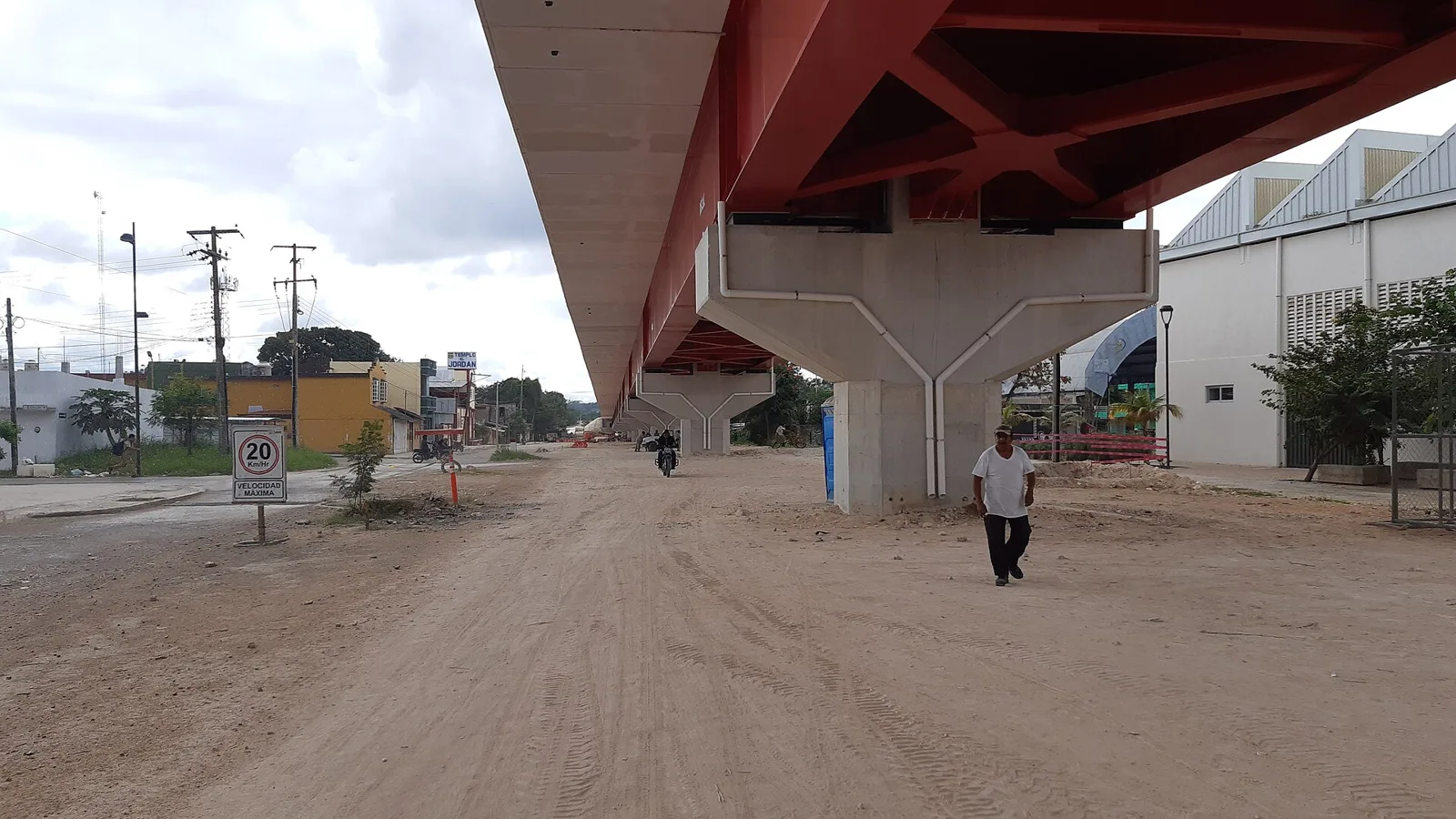
The 1,554 km line opened in December 2023 and crosses one of the richest archaeological regions of the Yucatán Peninsula. INAH’s salvage programme along the route recorded 62,985 archaeological remains across 520 sites. Pérez told the newspaper that more than 100 km of track was rerouted so that over 7,000 monuments could stay where they were, and that protection in place was the priority for the most valuable remains, with 6,120 monuments kept through various measures.
Criticism of the heritage work goes back to 2020, when experts first went to court over what they described as destruction along the route. It sharpened after INAH announced two so-called memory parks on 26 August 2025. The second, K’awiil Memory Park near Xpujil station in Campeche, is set to receive 12 reconstructed structures. Some specialists have described the approach as a “Disneyfication of heritage”.
What the archaeologists allege
A commission from SNPICD-INAH, the union that represents the institute’s researchers, visited Balam Tun on 18 November 2025. Union archaeologist Jesús E. Sánchez says the inspection confirmed their fears: facing stones were taken from 47 pyramidal platforms and brought to the park, where only some of them were set onto newly built cores. When INAH did not act on those findings, Sánchez and a second archaeologist began proceedings on 7 July, backed by a 700-page evidence file compiled by 20 experts.
The plaintiffs argue that pre-Hispanic buildings cannot physically be relocated, because taking down the facades destroys the fill behind them, where offerings were often placed. Sánchez adds that the original cores were left behind, which makes the provenance of the reassembled stones hard to trace. According to INAH, the structures originally stood near Juan Sarabia, González Ortega and Francisco Villa, three rural communities to the west of Chetumal.
INAH defends anastylosis and digital records
Pérez rejects the charge of falsification. He says relocation was a safeguarding measure allowed under Mexico’s 1972 heritage law and consistent with principles promoted by UNESCO and ICOMOS, chosen only because keeping the remains in place was not feasible: the density of sites was so high that more rerouting would have damaged others. Before dismantling, each area was recorded with lidar and photogrammetry, and every stone was catalogued and georeferenced so the structures could be put back together through anastylosis. “We are not creating stage sets, but preserving scientific evidence,” he said.
INAH has pointed to precedents such as the relocation of the Abu Simbel temples in Egypt, a comparison the plaintiffs reject. Their lawyers warn that if Balam Tun is accepted, it would give Mexico its first institutional precedent in which taking monuments apart and partly rebuilding them counts as a lawful relocation. The group plans further action over K’awiil and a second park in Campeche. No opening date has been announced for Balam Tun.






Heather Roberge, UCLA Architecture Professor and Murmur Founder, Dies at 55
UCLA professor and Murmur founder Heather Roberge, a 2026 AIA LA Educator...
illustrarch Editoral Team2 Mins read
MOS Architects Unveils Basket-Like Aluminium Pavilion at Art Omi
MOS Architects built an egg-shaped aluminium pavilion at Art Omi, mixing basketry,...
illustrarch Editoral Team3 Mins read

Danish Architecture Center Marks Jan Gehl’s 90th Birthday with Cities for People Exhibition
DAC in Copenhagen celebrates Jan Gehl's 90th birthday with Cities for People,...
illustrarch Editoral Team2 Mins read
Orhan Ayyüce, Los Angeles Architecture Educator and Writer, Dies at 75
Architect, educator and Archinect writer Orhan Ayyüce, a fixture of Los Angeles...
illustrarch Editoral Team3 Mins read


Leave a comment