

Allies and Morrison Win Approval to Restore Barbican Sculpture Court
City of London Corporation approves Allies and Morrison's plan to restore the Barbican's Sculpture Court by 2030.
 illustrarch Editoral Team23 September 20262 Mins read1
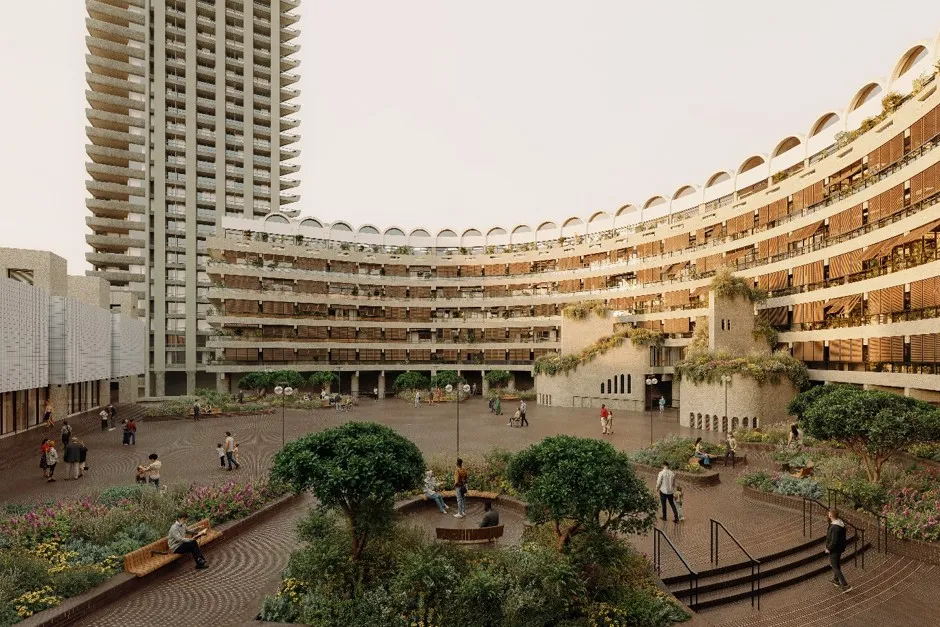
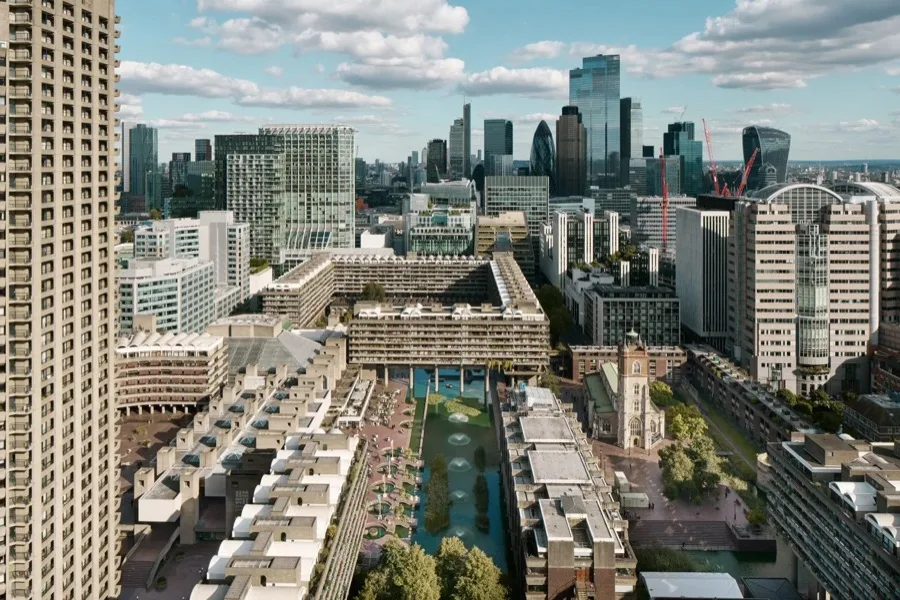
Plans to overhaul the long neglected Barbican Sculpture Court at London’s Barbican Centre have cleared their first planning hurdle, with the City of London Corporation granting consent under delegated powers on 18 September 2026. The scheme, drawn up by Allies and Morrison with Asif Khan Studio, targets the 0.4 hectare semi circular courtyard that sits at the heart of the Grade II listed complex designed by Chamberlin, Powell and Bon.
The proposals were lodged with the Corporation back in February and form part of the first phase of a £230 million programme to renew the Barbican ahead of its 50th anniversary in 2032.
What the Barbican Sculpture Court restoration involves
Work will focus on repairing the fabric of the space: re-waterproofing and repaving the ground plane, restoring the heritage lighting, and swapping out temporary planters for permanent raised brick versions. Allies and Morrison has also designed six wide, gently sloping ramps approaching from every direction, intended to open the court up to visitors who currently struggle to access or linger in the space.
According to the practice, the courtyard has fallen out of everyday use because of poor seating, restricted access and ageing infrastructure. Beyond the visible upgrades, the architects describe the intervention as essential conservation work needed to protect the Concert Hall that sits directly beneath the court. The surrounding Frobisher Crescent, originally designed as a public vantage point onto the architecture, will be left untouched.
Philippa Simpson, the Barbican Centre’s chief operating officer, welcomed the sign off: “The Sculpture Court was originally conceived as a place where people could experience great art in a beautiful Brutalist setting. We’re pleased our plans to bring this extraordinary space back to life have been approved by the City of London Corporation.”
She added that the approval builds momentum for the centre’s broader transformation: “These milestones represent further momentum in the Barbican Centre’s renaissance, securing the future of a cultural icon and global destination as we approach our 50th birthday, and making sure these special spaces continue to inspire people for generations to come.”
Funding and the wider £230 million Barbican renewal
The National Lottery Heritage Fund has put £147,000 toward the Sculpture Court element, while the City of London Corporation has pledged £191 million, covering roughly four fifths of the cost of the first construction phase. The remaining funding still needs to be raised before building work can start, which is currently expected in 2027, with completion targeted for 2030.
The Sculpture Court sits alongside other elements of Phase 1, which also covers upgrades to the Barbican’s Foyers, Lakeside and Conservatory, along with sustainability improvements and behind-the-scenes works. Allies and Morrison and Asif Khan Studio were appointed to lead the renewal in 2022, when the project was valued at up to £150 million, working alongside engineer Buro Happold and landscape architect Harris Bugg Studio. The wider refurbishment replaced an earlier, since abandoned proposal for a £288 million concert hall on the nearby Museum of London site.
With planning consent secured, attention now turns to closing the remaining funding gap ahead of the 2027 start date.
The Barbican is the reference point for post war concrete in Britain, and the restoration question it raises is the one covered in our comparison of brutalism and what followed it. The repair itself belongs to the same discipline as giving old buildings new life.





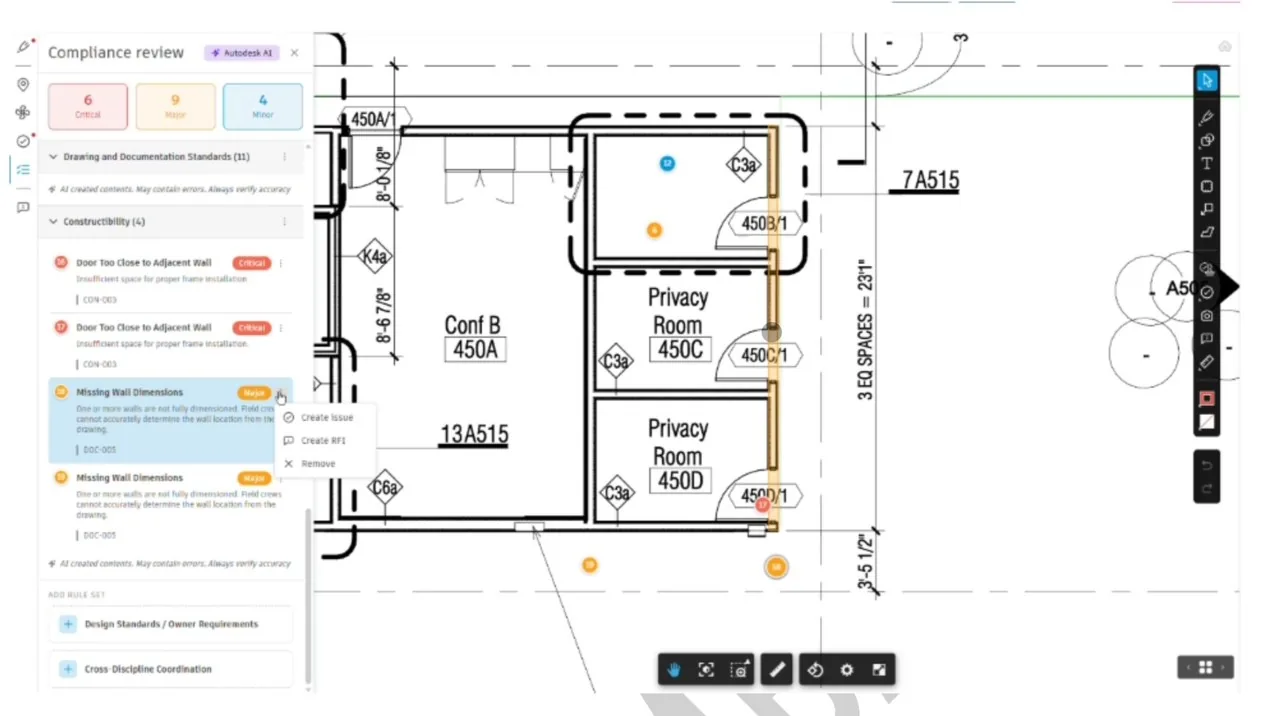
Will Forma Replace Revit? Autodesk Finally Answers
Autodesk's own FAQ says Forma will replace Revit over time, as it...
illustrarch Editoral Team3 Mins read

How HKS Made Astra Tower, Utah’s Tallest Building, Feel Local
Astra Tower, Utah's tallest building since it opened in May 2025, takes...
illustrarch Editoral Team4 Mins read

Manipal University Team Turns Treated Sewage Into Stronger Biochar Concrete
Manipal University Jaipur researchers find biochar from treated sewage can strengthen concrete,...
illustrarch Editoral Team3 Mins read

Ahmedabad Civic Body Plans 3D Digital Twin of Entire City
AMC plans a 625 sq km GIS survey giving 25 lakh properties...
illustrarch Editoral Team2 Mins read


Leave a comment