

AI Education in Architecture: Skills, Tools and Future
AI education in architecture teaches students to design with generative tools, machine learning, and performance analysis, while balancing sustainability, ethics, and the human judgment automated design still cannot replace.
 Sinan Ozen22 March 20259 Mins read633

Table of Contents Show
Architecture is changing quickly, and artificial intelligence sits close to the center of that shift. Architects are no longer tied to a fixed set of drafting tools. AI now shapes how we sketch options, test performance, and plan construction. To make the most of it, schools need to build these methods into the way they train students, which is exactly where AI education in architecture comes in.


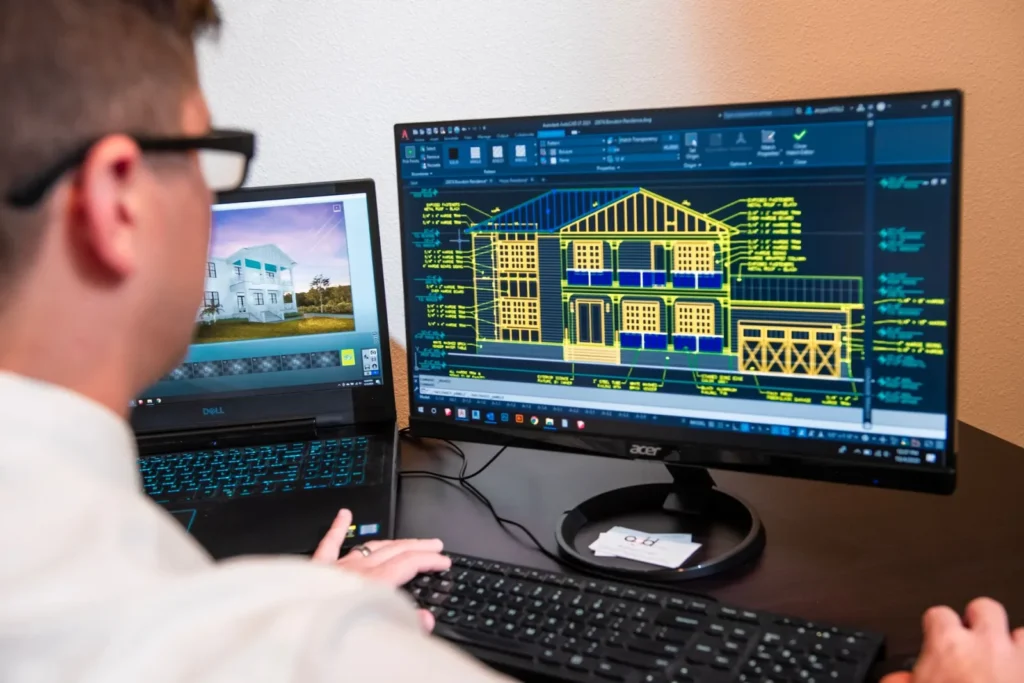

AI in architecture education prepares students to design with generative tools, machine learning, and building performance analysis. It combines traditional studio training with data-driven methods, teaching future architects to work alongside engineers and planners while addressing sustainability, ethics, and the practical limits of automated design.

Blending design thinking with software skills opens real possibilities, from automating repetitive documentation to generating early design solutions. The value is not only speed. The bigger question is how we prepare the next generation to work with AI as a design partner rather than a black box.
Understanding AI in Architecture
AI changes how architects handle design, analysis, and production. In both education and practice, its effect reaches into creativity, teamwork, and sustainability, and it rewards people who understand what the tools can and cannot do.

The Role of AI in Modern Architectural Practices
AI improves precision and speed across many architectural tasks. Generative design software creates layout options from set constraints such as site conditions, program, or material limits. Machine learning models read large datasets to predict energy use, structural behavior, or urban wind flow. Automated documentation and detailing shorten routine work, so architects spend more time on strategy and design intent.
The reach extends into construction too. AI-guided robotics assemble modular parts with tight tolerances, and monitoring systems track site progress and flag likely delays. These uses show how far AI can push established methods, and why students should understand the logic behind them, not just the buttons.
🎓 Expert Insight
“AI handles the repetition, which frees studio time for the parts of design that still need human judgment: context, program, and how a building feels to the people who use it.” This view comes from a studio instructor at an accredited architecture program.
This points to a shift many educators describe: the tool speeds up production, but the design decisions and their reasoning stay with the student.
Why AI Education Is Crucial in Architecture
Architectural education has to grow to include AI-focused training. Students gain from working with Building Information Modeling (BIM) platforms, generative design systems, and energy modeling software. A working knowledge of programming languages such as Python lets future architects adapt tools and build custom models instead of relying only on defaults.
AI skills also help with sustainability. Predictive analysis supports designs with lower environmental impact from the first sketch. Students who use AI in mixed teams learn to work with engineers, urban planners, and data specialists, which is how most real projects actually run.
Current Trends in AI Education for Architects
AI is now common enough in practice that schools treat it as core, not optional. Recent trends center on curriculum design and hands-on learning with real tools.

Integration of AI in Architectural Curricula
Architecture programs increasingly add courses on AI to match industry demand. Universities cover generative design, computational modeling, and machine learning, and connect them to sustainability, complex geometry, and predictive analysis. Cross-department work is common, pairing architecture with computer science, engineering, and data analytics to widen student skill sets.
Some schools offer AI-focused architecture tracks, while others fold AI modules into standard studios. Workshops and live projects let students test applications such as automated planning and performance optimization on real briefs.
📌 Did You Know?
The National Architectural Accrediting Board (NAAB) accredits professional degree programs at more than 130 schools across the United States, and its criteria expect graduates to show competency with current design technology, which now pulls AI and computational tools into accredited coursework.
Popular Tools and Software for AI in Architecture
AI teaching usually centers on a set of platforms that are gaining ground in studios. Autodesk’s Generative Design, Rhino with Grasshopper, and Unity for architectural visualization use algorithms to test structure and performance. Machine learning libraries such as TensorFlow and PyTorch appear in programming-based courses for data-driven analysis.
Platforms like ArcGIS support spatial analysis and urban planning, while BIM software automates parts of documentation and improves accuracy. These tools also let students study energy use and material choices, which connects classroom work to practice.
How AI Fits Into Architecture Education
The table below maps common AI uses in a design program to their main benefit and the point students should watch out for.
| Area of Use | Benefit | Consideration |
|---|---|---|
| Studio design | Generates many layout options fast from set constraints | Students must still own the concept and design intent |
| Rendering and visualization | Turns rough ideas into visual references in minutes | Outputs can drift from buildable geometry and real materials |
| Research | Sorts large datasets and precedents for analysis | Sources need checking, since models can invent references |
| Site and performance analysis | Predicts energy use, daylight, and wind before construction | Results depend on input quality and clean data |
What to Learn in Which Year
You do not need to learn every AI tool at once. Skills build on each other, and the order below follows a typical studio sequence: first learn to question AI output, then use it on your own drawings, then inside your modeling software. Adjust it to what your school teaches and which tools it licenses.
| Stage | What to learn | A practice task |
|---|---|---|
| Year 1 | Prompting basics and reading AI output critically; basic data literacy (spreadsheets, charts, sources) | Ask a chatbot to summarize a precedent, then check every claim against the original source |
| Year 2 | Image-to-image tools for concept visuals made from your own sketches and models; first steps in Grasshopper | Feed a hand sketch into an image tool, compare three outputs with your intent, and note what you would change by hand |
| Year 3 | AI inside your modeling software (for example RhinoAI in Rhino 9) and AI features in your BIM tool; daylight and energy analysis | Use an assistant to set up a simple Grasshopper definition, then rebuild it yourself and explain each step |
| Thesis | Data-driven design questions, documenting your process, and judging where AI helps or misleads | Keep a short log of every AI tool you used, for what, and what you kept or rejected |
Two habits matter more than any single tool. First, start from your own work: a sketch, a model or a plan you drew. AI output that grows from your design is easier to defend in a review than an image that came from a blank prompt. Second, rebuild what the tool gives you. If an assistant writes a Grasshopper definition, take it apart and recreate it, so you understand the logic and can fix it when it breaks. Our comparison of Dynamo vs Grasshopper helps you choose which visual programming tool to start with.
Software makers are now building AI into the programs students already use. McNeel’s New in Rhino 9 page describes RhinoAI, which connects an AI assistant to your open Rhino and Grasshopper document, and notes that the assistant can only use the tools you allow. That makes data literacy part of design literacy: you need to know what the assistant is changing in your model and why. For a short list of tools worth trying, see our picks of AI tools for architecture students.
How Schools Are Setting AI Rules
There is no single rule across architecture schools. Most leave the decision to each course, so the same student can be encouraged to use image generators in one studio and forbidden from using them in another. Harvard’s Graduate School of Design is a clear example. Its page on generative AI in teaching and learning at the GSD (updated September 2026) says that instructors determine what counts as appropriate use in their courses, that the school’s academic integrity rules apply to AI tools just as they apply to human help, and that students should always be prepared to disclose their use of any such tool. It also warns against uploading work you do not have rights to, and offers instructors sample syllabus policies ranging from restrictive to fully encouraging.
Practice is moving in the same direction. The RIBA AI Report 2025 announcement says the share of UK architects’ practices using AI rose from 41% in 2024 to 59% in 2025, while 67% of respondents worry that AI will increase the risk of work being imitated. Students will meet both sides of that picture in internships.
Until your school publishes its own rules, these steps keep you on safe ground:
- Read the AI section of every syllabus and brief, and ask your tutor when it is missing or unclear.
- Keep a simple process log: tool, prompt or input, date, and what you kept.
- Label AI-assisted images on your boards and in your portfolio, the same way you credit a photo or a precedent.
- Do not upload classmates’ work, client material or anything you lack the rights to into public AI tools.
- Check facts, references and dimensions that an AI tool gives you against a real source before you use them.
Benefits of AI Education in Architecture
Training in AI gives future architects skills that help them design, analyze, and build with more control. It supports innovation and widens the kinds of work a graduate can take on.

Enhanced Design Efficiency and Accuracy
AI tools speed up design by automating repetitive tasks and reading large datasets. Generative algorithms test thousands of options in minutes, which sharpens both structural and visual decisions. Machine learning models check material behavior and environmental impact early. Autodesk’s Generative Design and Rhino with Grasshopper, for example, help students optimize structure while cutting errors, so studios move faster without losing rigor.
🏗️ Real-World Example
Autodesk Toronto Office at MaRS (Toronto, 2017): Autodesk used its own generative design software to plan the workspace layout, feeding in goals such as daylight access, adjacency, and low distraction. The software produced and ranked thousands of floor plan options, a workflow that now appears in many academic studios.
Expanding Career Opportunities for Architects
AI skills open a wider set of roles. Employers look for architects who understand generative design, computational modeling, and AI-connected software. New openings appear in smart city planning, parametric design, and sustainable architecture. Roles that sit between architecture, software, and engineering are growing, and AI training helps graduates stay competitive as those markets shift.
Challenges of Implementing AI Education in Architecture
Bringing AI into architecture programs is not simple. Several obstacles slow adoption, and schools need to plan around them.

Barriers in Adoption and Training
Limited faculty expertise, the cost of AI-connected tools, and dated curricula all restrict uptake. Many instructors have little formal AI training, which makes strong course design harder. Budgets are tight, so investment in software, computing power, and staff training competes with other needs.
Resistance to change also plays a part, since long-held frameworks bring doubt about AI’s place in design. Without steady curriculum updates and support for faculty training, programs risk losing technical relevance.
💡 Pro Tip
If you are a student easing into AI, start with visual programming in Grasshopper before jumping to Python. Rebuild one of your existing studio projects as a parametric model first. Working from something you already understand makes the logic click faster than starting from a blank script.
Addressing Ethical and Technical Concerns
AI in architecture education raises ethical and technical questions. Data privacy and algorithmic bias need direct attention so AI stays fair and clear in use. Biased datasets, for instance, can skew generative design results and lead to unequal outcomes in urban planning.
On the technical side, complex AI tools present a steep learning curve for both students and staff. Teaching Python and machine learning workflows takes real time and effort. Without shared guidelines for balancing design intuition with algorithm-driven methods, students can struggle to adapt.
Steady work between schools, tool developers, and regulators helps here. Clear standards for ethical AI use, plus technical support, let programs prepare architects for what practice now expects.
Future Prospects of AI Education in Architecture
AI keeps reshaping how architecture is taught and practiced. Newer trends point to more advanced tools and flexible learning models built around how the field actually works.

Innovations Shaping AI Learning for Architects
AI adds interactive, immersive ways to learn. Virtual and augmented reality let students simulate design and construction scenarios, which sharpens problem solving. AI-driven platforms read performance data to personalize coursework and point out skill gaps.
Generative AI supports fast idea exploration during design stages, helping students produce many iterations quickly. Tools such as Midjourney and DALL-E turn rough concepts into visual references (our Midjourney architecture guide covers prompts and limits), while AI project management tools give insight into timelines and resource use, connecting study to practice.
Evolving Educational Models and Resources
AI is reshaping teaching models around flexibility and access. Online platforms such as edX and Coursera run courses on computational design and AI, giving students worldwide access to new material. Universities adopt modular structures that pair core theory with electives on data analysis, coding, and AI applications.
Bodies such as the Association of Collegiate Schools of Architecture (ACSA) and accreditors like the NAAB shape how these skills enter formal programs. Open tools such as Google Colab and industry platforms like Grasshopper widen student access at low cost, while hackathons and webinars push hands-on, team-based work. For a wider view, ArchDaily’s coverage of AI in architecture tracks how firms are adopting these methods.
The Bigger Picture
The point of AI education in architecture is not to turn students into programmers. It is to raise a generation of architects who can direct these tools with a clear design mind, question the outputs, and keep responsibility for the built result. The studios that get this balance right will produce architects who use AI to ask better questions, not just to draw faster.








How AI Is Reshaping Audio and Visual Content: From Voice Changers to Image Enhancement
Voice changers and AI image enhancement rely on the same pattern-learning models....
 illustrarch Editorial Team4 Mins read

Seedance 3.0 for Home and Garden Concepts: Making a Renovation Story Easier to Discuss
Seedance 3.0 can turn a renovation idea into a short concept video....
illustrarch Editorial Team5 Mins read

Best AI Interview Assistant for Architects: 9 Tools Compared
We compare nine AI interview assistants for architects on speed, drawing awareness,...
illustrarch Editorial Team12 Mins read

The Nano Banana Prompt: Mastering Micro-Bionic Architecture in Midjourney v6
Nano Banana Prompt explores the innovative fusion of biomimicry and architectural design...
 Bahattin Duran3 Mins read






Leave a comment