

Peter Zumthor on Film: Wim Wenders Captured in “From Inside Out”
Wim Wenders spent six years filming Peter Zumthor's buildings in 3D, and the project changed shape along the way. A look at the working titles, the eight confirmed shooting locations, and why the finished film is about occupancy rather than construction.
 Elif Ayse Sen18 August 20269 Mins read256
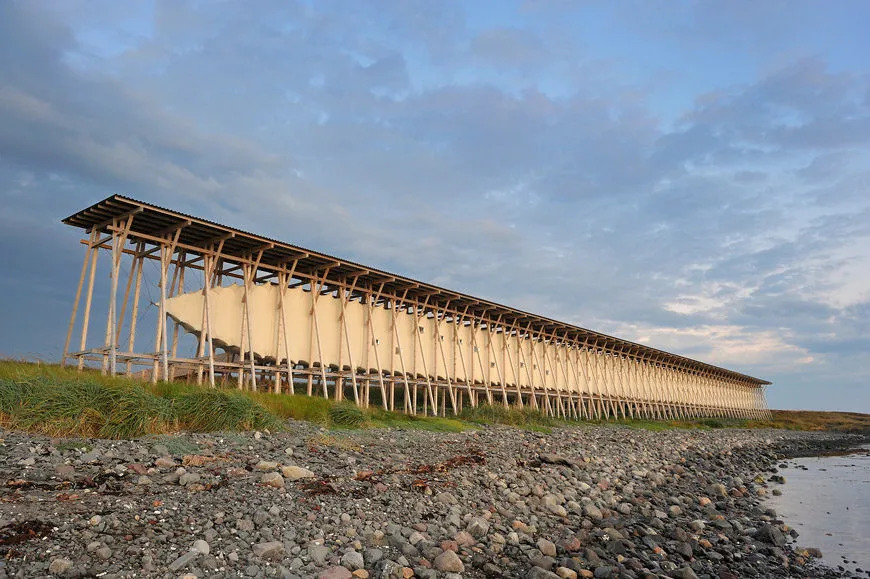
Table of Contents Show
Peter Zumthor is the subject of “From Inside Out,” a 114 minute documentary written and directed by Wim Wenders. Shot in 3D across more than a dozen locations, the film premieres out of competition at the Venice International Film Festival in September 2026 and presents Zumthor’s buildings through the people who visit, inhabit, and build them.
What Is “From Inside Out, The Architecture of Peter Zumthor”?
It is a feature documentary directed and written by Wim Wenders, produced as a German and Swiss co-production, running 114 minutes. La Biennale di Venezia lists it in the Venice Open, Out of Competition section of the 83rd Venice International Film Festival, with a public screening scheduled for 6 September 2026 at 14:00 in the Sala Grande. The film is presented in English, Swiss German, and German.
The premise is stated in the Biennale’s own log line: the 3D camera moves through the buildings as though the audience could walk around inside them alone, and the argument being made is about how architecture shapes perception and daily life rather than how it looks. Wenders takes his starting point from a line of Zumthor’s, “We all come from houses…”, which frames buildings as the structure of ordinary life rather than as objects to be admired.
That framing matters, because it rules out the format most architecture documentaries default to. There are no drawing boards driving the narrative and no procession of models and renders. If you want the drawings and the design theory behind the work, the philosophy behind Zumthor’s approach to space and silence covers that ground. This film sets the drawings aside and follows the finished rooms.
Why Did Wenders Shoot Peter Zumthor Architecture in 3D?
Because he has argued for two decades that architecture is the art form with the strongest claim on the third dimension. When Road Movies announced the project in July 2020, Wenders put it plainly: no art besides dance needs the third dimension as clearly as architecture does. Speaking to Screen Daily in 2023, he was blunter about the technical decision.
🎓 Expert Insight
“It is also in 3D because architecture needs it.” , Wim Wenders, film director, speaking to Screen Daily in 2023
The remark explains a production choice that added years to the schedule. Stereoscopic capture is slower, heavier, and more expensive than conventional shooting, and Wenders accepted all of it to preserve the one quality a flat image destroys, which is the sense of how far away a wall actually is.
This is not a first experiment. Wenders shot Pina in 3D in 2011, contributed to the 3D omnibus Cathedrals of Culture in 2014, and returned to the format for Anselm in 2023. Among directors working today, no one has spent more time testing what stereoscopic film does to the perception of a physical space. A 2D version of the Zumthor film has also been confirmed, so the release will not be limited to 3D-equipped cinemas.
The stakes for architecture are practical. A photograph flattens a threshold into a graphic edge, which is exactly why buildings that photograph well often disappoint in person. Depth is the thing photography cannot deliver, and it is the thing Zumthor designs with. Readers who follow how buildings get represented will find the same tension in the work of the photographers who have shaped how contemporary architecture is seen, several of whom built their reputations on Zumthor’s buildings.
What 3D Actually Changes Inside a Building
Stereoscopic capture recovers one specific piece of information that both photography and standard film discard, which is parallax, the small difference between what each eye sees. Parallax is how a viewer judges that a stone wall is two metres away rather than six, and it is the reason a corridor read on screen in 2D feels like a pattern while the same corridor in 3D feels like somewhere you could walk.
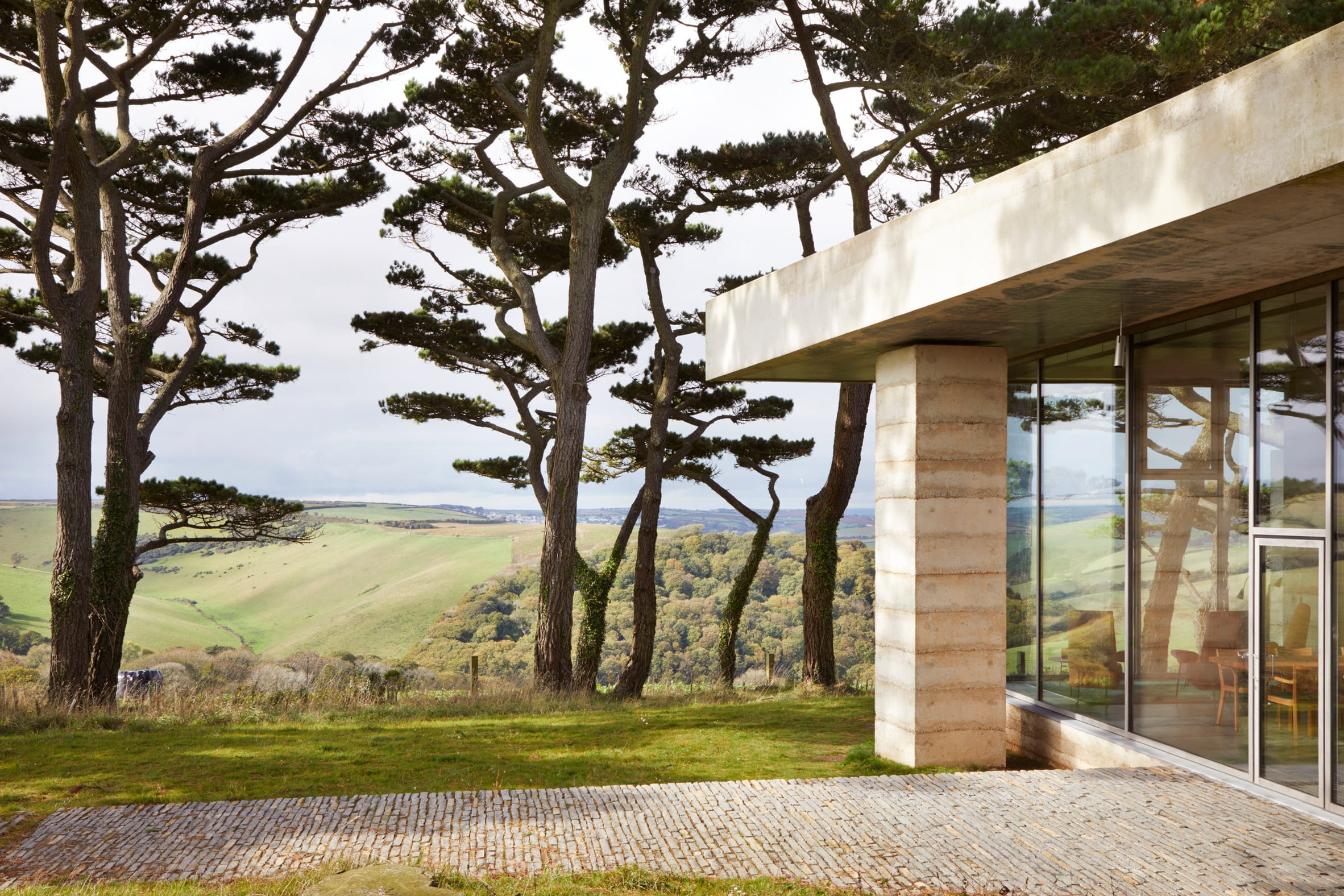
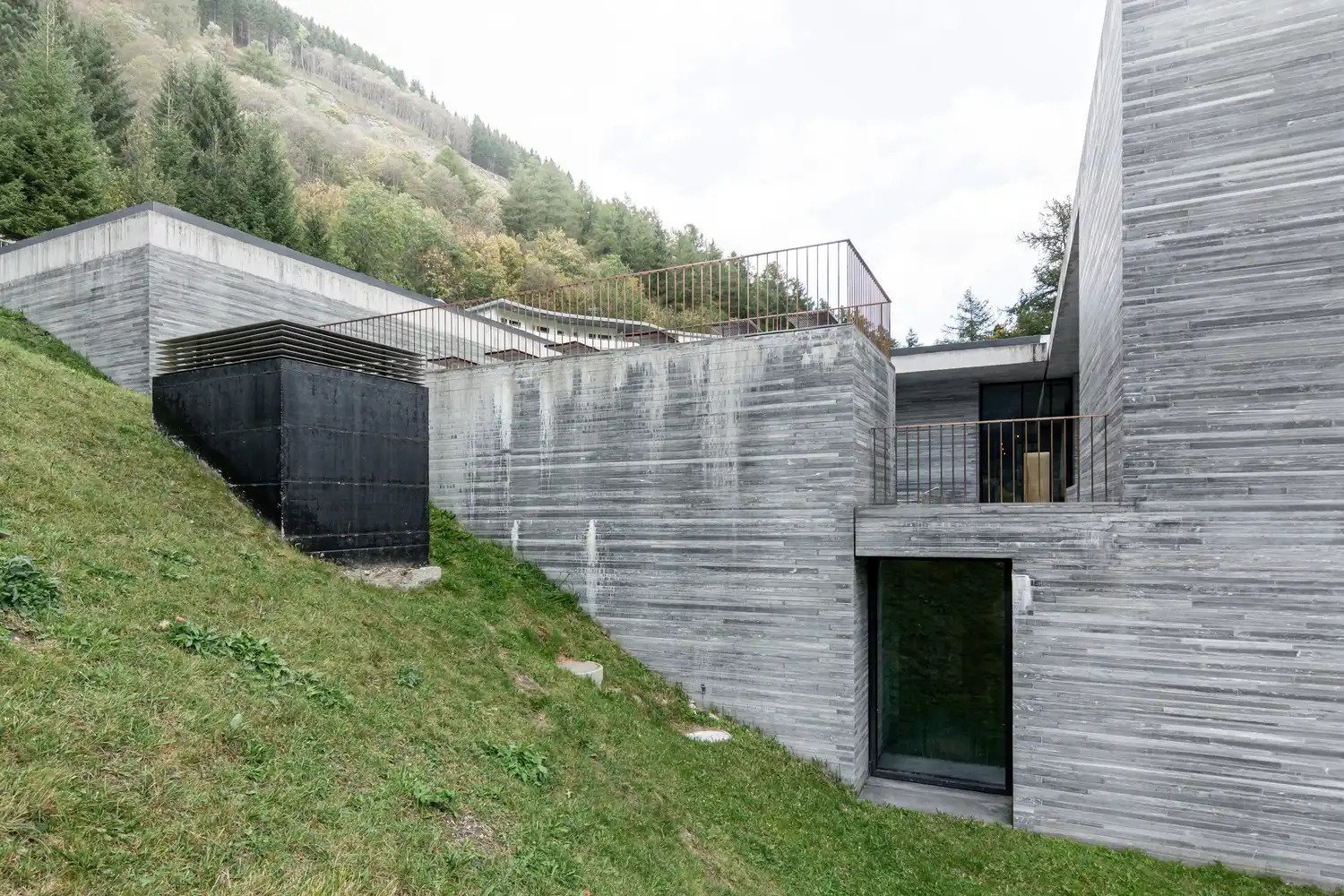
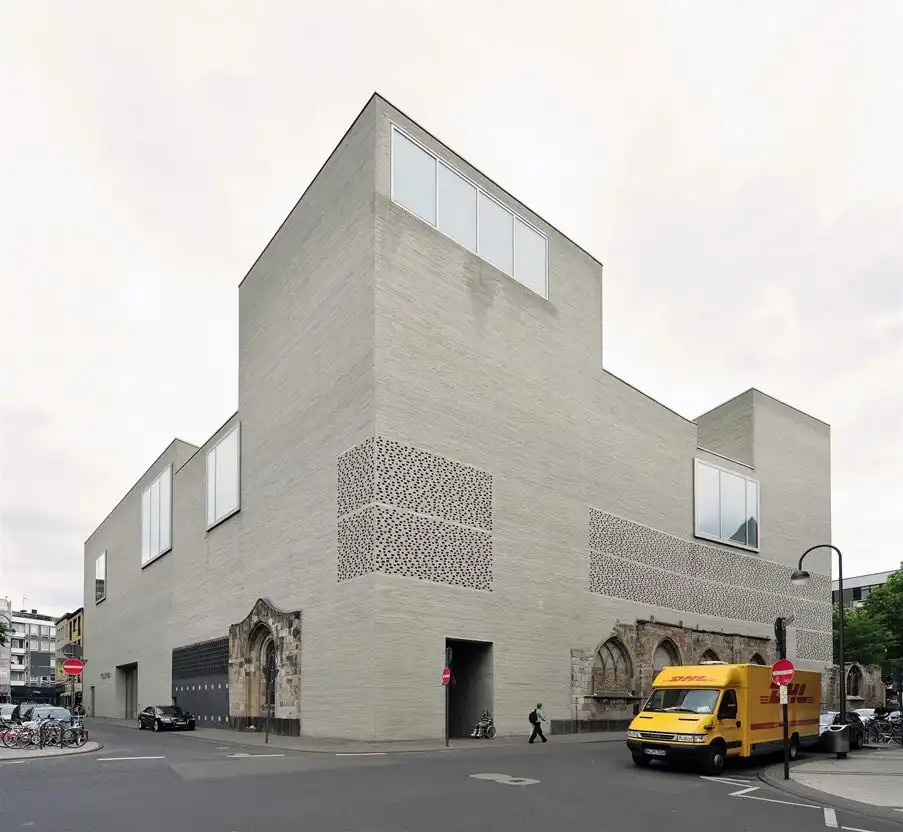
For most building types the loss barely registers, because their interest is in plan, facade, or programme. For this body of work it is close to fatal. The bathing sequence at Vals is built from thresholds, low ceilings opening into tall ones, and pools set at different distances from the light. Kolumba works through the depth between a perforated brick screen and the ruins standing behind it. Strip out the depth cues and what remains is a set of handsome grey surfaces.
There is a cost, and it is worth being honest about it. Stereoscopic rigs are bulky, they need more light than a single camera, and they restrict how fast a shot can move before the image becomes tiring to watch. In a working bath or an occupied family house, that equipment is difficult to hide. Whatever intimacy the finished film achieves will have been won against the hardware rather than with it.
A Fourteen-Year Project That Started at the Venice Biennale

The film returns to the city where the idea was born. Wenders and Zumthor have known each other for years, and their first collaboration was a short film made for the Venice Architecture Biennale.
📌 Did You Know?
In the summer of 2012, the two men made a short film together called “Notes from a Day in the Life of an Architect,” produced at the invitation of David Chipperfield, who was curating that year’s Venice Architecture Biennale. Wenders’ own foundation describes that short as the trigger for the idea of making a full film together. The 2026 premiere therefore brings the project back to Venice fourteen years after it started there, though this time at the film festival rather than the architecture exhibition.
The two events are separate programmes under the same institution. The architecture exhibition runs in odd-numbered years and the art edition in even ones, which is why 2026 in Venice belongs to the 61st International Art Exhibition while the Zumthor film sits in the cinema programme a few months later.
The public record also shows the film changing its name more than once. Road Movies and Wenders’ foundation both announced it under the working title “The Secret of Places” in 2020, and Screen Daily reported it as “The Secrets of Places” in 2023. La Biennale’s own image file for the 2026 listing is still named after another version, “Place and Space.” The released title, From Inside Out, is the only one of the four that names an approach rather than a subject, and that shift tracks a real change in what the film ended up being.
Which Buildings Does the Camera Visit?

When shooting began, Wenders’ foundation published the intended itinerary. It named eight buildings across four countries, describing filming spread over the following two years at more than a dozen locations in total. The list is worth reading closely, because six of the eight were already finished and open when the cameras arrived.
Confirmed Filming Locations
| Building | Location | Status when filmed | Why it belongs in the film |
|---|---|---|---|
| Steilneset Memorial | Vardø, Norway | Open since 2011 | Where shooting started, in September 2024 |
| Bruder Klaus Field Chapel | Eifel region, Germany | Open since 2007 | Single room, single light source, built by local farmers |
| Kolumba Museum | Cologne, Germany | Open since 2007 | Built over the ruins of a bombed Gothic church |
| Secular Retreat | Chivelstone, Devon, UK | Completed 2018 | A holiday house guests actually book and sleep in |
| Haus Luzi | Jenaz, Graubünden | Completed 2002 | The only private family home on the list |
| Therme Vals | Vals, Graubünden | Open since 1996 | Bathers, not visitors, and no cameras allowed inside |
| Fondation Beyeler extension | Riehen, near Basel | Under construction | Opening in phases from autumn 2026 |
| David Geffen Galleries, LACMA | Los Angeles, USA | Under construction | Opened to the public on 19 April 2026 |
Four countries, one memorial, one chapel, one museum, two houses, one bath, and two building sites. The range is unusual for a single architect, and it is possible only because the body of work is small enough to be covered in one film. The eight projects that define Zumthor’s built output overlap heavily with this shooting list, which tells you how completely the film maps onto the career.
🏗️ Real-World Example
Steilneset Memorial (Vardø, Norway, 2011): Filming opened here, at the far northeastern edge of Norway, in early September 2024. The memorial commemorates the 91 people tried and executed for witchcraft in Vardø in 1621, and it pairs a 120 metre timber structure of sixty bays, holding a suspended fabric cocoon, with a separate smoked glass room containing Louise Bourgeois’ installation, her last major work before her death in 2010. Starting a film about domestic life in a building about mass execution is a deliberately hard opening move.
How the Brief Changed Between 2020 and 2026
Read the announcements in sequence and a shift becomes visible. In July 2020, Road Movies described the project as guided by two upcoming architectural works: the Fondation Beyeler extension and the new LACMA building. The plan, in other words, was to follow two unbuilt buildings from concept through to completion. A first research and test shoot in 3D took place at the Fondation Beyeler that same month, with real filming scheduled to begin in 2021.
It began in 2024 instead, in Norway, at a memorial that had already been standing for thirteen years. By then the itinerary was dominated by buildings that had been in use for decades, with the two construction projects listed last as future work. And the two projects that were supposed to anchor the film arrived at the wrong end of the schedule for a construction chronicle. LACMA’s David Geffen Galleries opened to the public on 19 April 2026, roughly four and a half months before the Venice premiere. The Fondation Beyeler campus opens in stages from autumn 2026, with the full ensemble scheduled for January 2027, which is after the premiere.
So the film could not be what it was first pitched as. A documentary that set out to watch two buildings being made became a documentary about occupancy, what happens to buildings once people are inside them, which is a different and arguably more difficult subject. The released title says so directly. “From Inside Out” describes a vantage point, not a place, and the earlier titles all described places.
None of this is a failure of the production. It is what happens when a film’s schedule runs against a construction schedule, and Zumthor’s construction schedules are famously long. The LACMA project alone took roughly two decades from first appointment to opening day, longer than the film had. The interesting outcome is that the delay pushed the project toward the stronger idea.
Occupancy Is Harder to Film Than Construction
Construction has a built-in narrative. Something is not there, then it is, and the camera can simply record the sequence. That structure is why so many architecture documentaries are really about deadlines and budgets. Occupancy has no such shape. A woman swimming in a thermal pool is not a plot.
Getting occupancy on screen means solving problems that have no obvious solution. Zumthor’s buildings are designed around sequences that only reveal themselves through movement, through changes in temperature, sound, and the weight of a floor underfoot. A camera can follow movement, but it cannot transmit temperature, and it can only suggest weight. The film’s answer, judging from how the Biennale describes it, is to hand the point of view to specific people and let their paths through a building carry the information a wide shot would flatten.
The four groups named in the description are worth noting: visitors, users, inhabitants, and craftspeople. That last category is the one most architecture films leave out. Zumthor trained as a cabinetmaker before he trained as an architect, and his buildings depend on trades that can execute unusual details, from hand-rammed concrete at Chivelstone to the stone coursing at Vals. Putting the people who made the surfaces on the same footing as the people who use them is a real editorial position, not a courtesy.
This is also where the subject and the medium meet. Zumthor has been openly critical of buildings conceived as images for reproduction, structures that perform in photographs and fail in person, and his practice has never run a public website. A three-dimensional moving image is the closest thing to a rebuttal of the flat photograph that currently exists. For the wider design question underneath all of this, our breakdown of how atmosphere gets built into a space sets out the tools that a film like this has to translate.
Where This Sits Among Architecture Documentaries
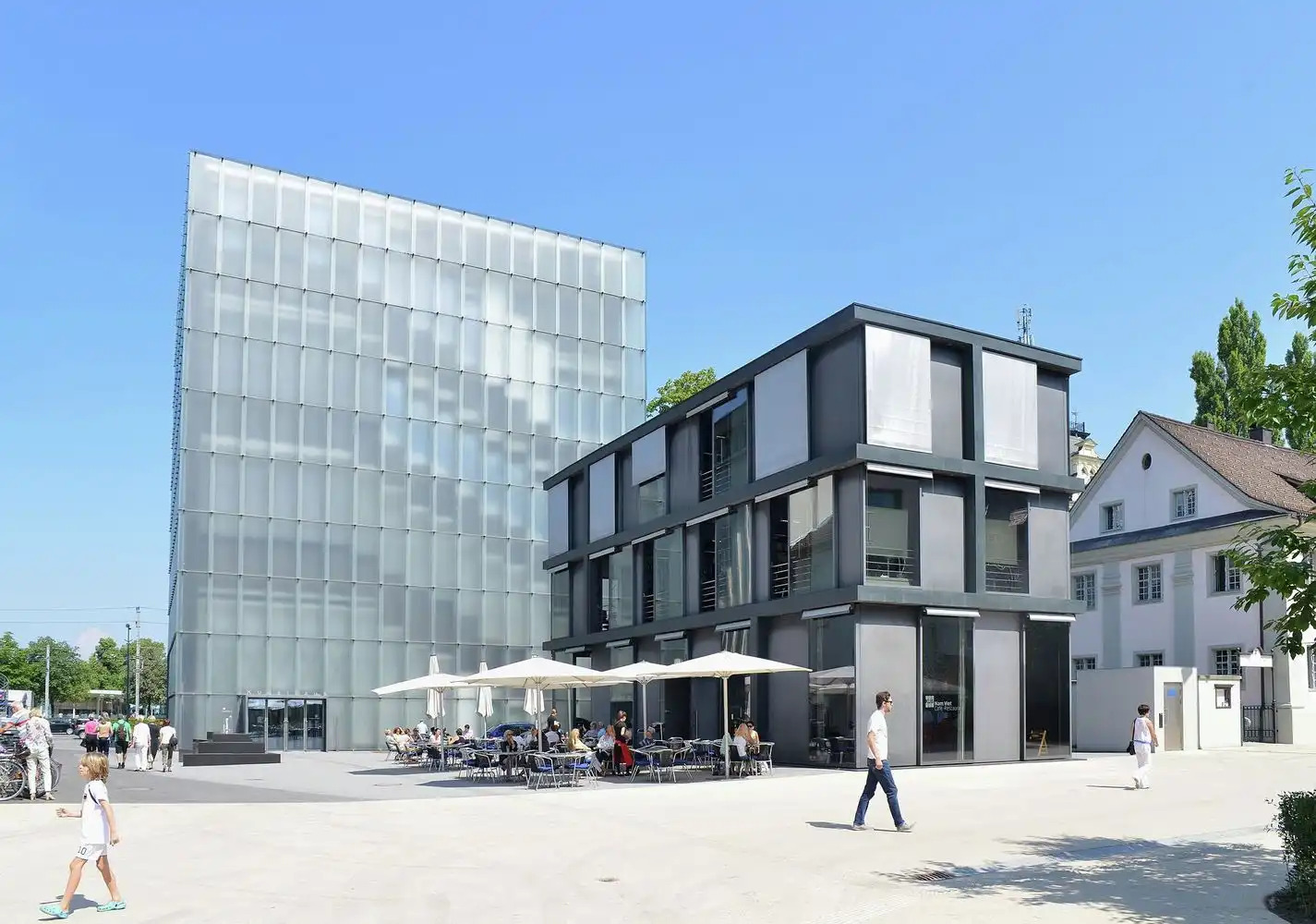
Films about architects usually take one of three shapes. There is the biography, in which the buildings illustrate a life. There is the process film, following one commission through its crises. And there is the survey, moving through a body of work with commentary from critics and peers. Most of the titles on our list of architecture films worth watching belong to one of those three.
“From Inside Out” fits none of them cleanly. It is not a life story, it abandoned the single-commission structure when the construction schedules slipped, and it is not a critical survey because the perspectives belong to occupants rather than experts. The nearest comparison in Wenders’ own filmography is Cathedrals of Culture, where six directors each gave a building a voice, though that project ran to short segments and this one runs to a feature.
What that means for a viewer is a film that will probably reward patience over anticipation. The Venice screening is out of competition, so it is not chasing a prize, and a 114 minute running time in a documentary about six quiet buildings suggests Wenders has resisted the urge to speed it up. Anyone who has spent forty minutes in one of these rooms will recognise the pace as accurate.
Screening dates and programme details are set by the festival and can change. Check La Biennale’s official listing for current times and any additional screenings.
Wrapping Up
There is a quiet irony in all of this. Zumthor built a career on the argument that his work cannot be understood at a distance, that you have to stand in the room, and he has declined the usual machinery of architectural publicity accordingly. Now a film will put those rooms in front of more people in one evening than will ever make the trip to Vardø, Chivelstone, and Vals combined. Whether that counts as a translation or a substitute is the question the film is actually asking, and the honest answer is that nobody will know until the lights go down in the Sala Grande.
Further reading on the subject: Zumthor’s career and sensory approach and the design thinking behind his key projects. Primary sources for this article include La Biennale di Venezia’s film listing, Wim Wenders’ own announcement of the shooting start, Road Movies’ project kick-off notice, the Pritzker Architecture Prize record of Zumthor’s 2009 award, and Living Architecture’s account of the Secular Retreat.


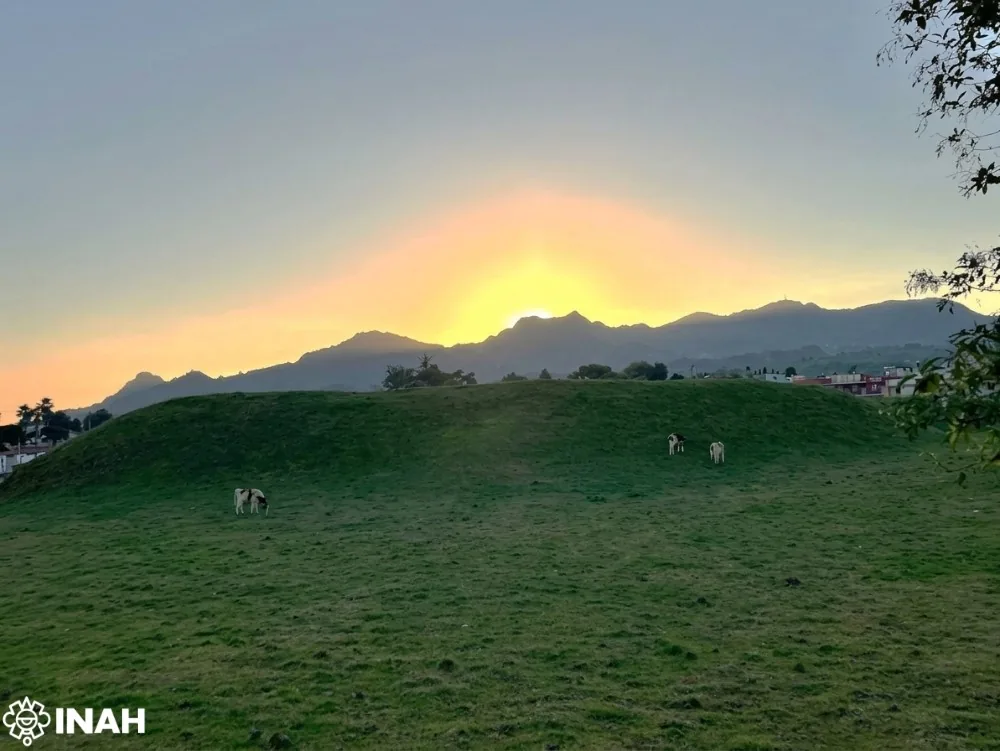
A 2,500-Year-Old Solar Observatory in Puebla Is the First Group E Complex Found Outside the Maya Area
Archaeologists working for Mexico's INAH have confirmed that two platforms at Teteles...
 illustrarch Editoral Team2 Mins read
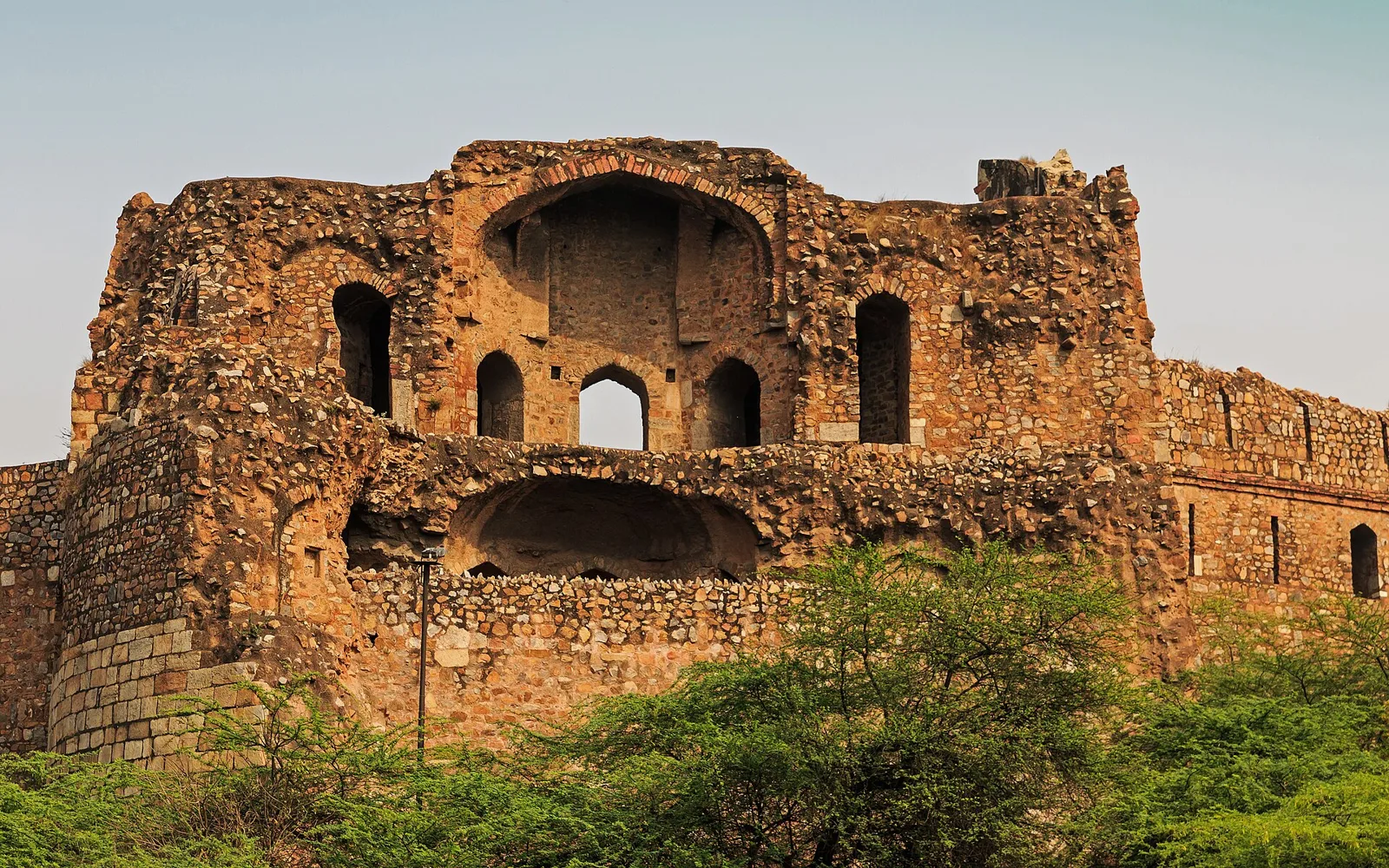
India Art, Architecture & Design Biennale 2026: Ministry of Culture Opens Delhi Monuments
Delhi's monuments, including Purana Quila and the Red Fort, will host the...
illustrarch Editoral Team2 Mins read
Allentown Art Museum Leaves Its Venturi, Scott Brown Addition for a New Studios Architecture Building
The Allentown Art Museum is moving to a new Studios Architecture building...
illustrarch Editoral Team2 Mins read
Donald Insall, the Conservation Architect Who Led Windsor Castle’s Restoration, Dies at 100
Donald Insall, the British architect who turned conservation into a planning discipline...
illustrarch Editoral Team2 Mins read


Leave a comment